


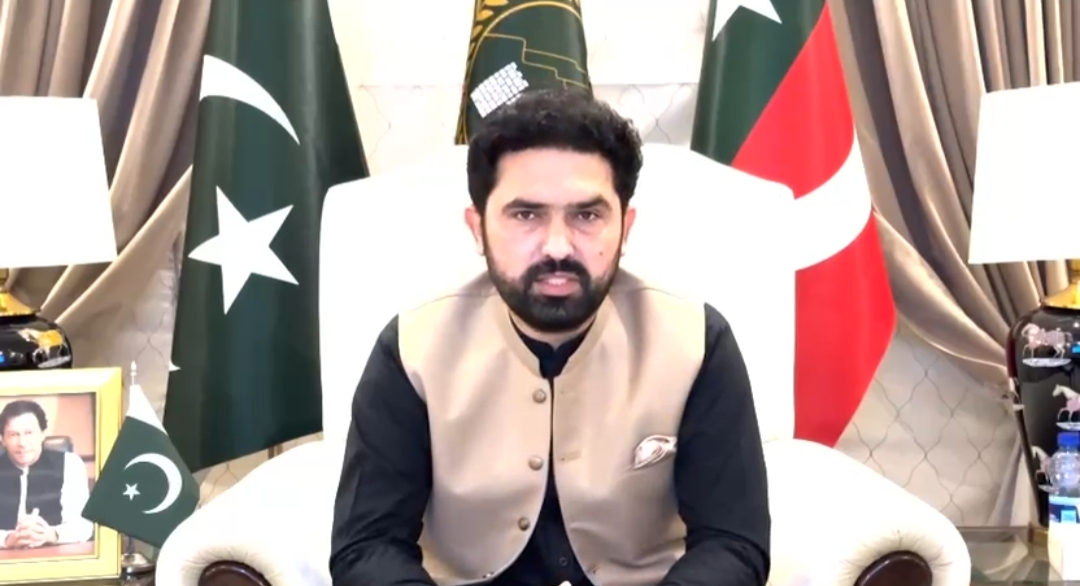
Khyber Pakhtunkhwa Chief Minister Muhammad Sohail Afridi has said that this is the government of Imran Khan and Pakistan Tehreek-e-Insaf (PTI), and there is no room for wrongdoing or violating merit. He said there would be no objection to awarding contracts to companies that meet the criteria of merit and transparency, but attempts to secure contracts through improper means would not succeed.
Addressing a meeting of the provincial cabinet, Sohail Afridi said companies for Asian Development Bank-funded projects had been thoroughly scrutinized, and only those meeting merit-based criteria and having complete documentation qualified. Companies with incomplete documents, fake bank guarantees or those relying on recommendations were disqualified.
He said irrelevant individuals were continuously interfering in government and departmental affairs and threatening government officers. He added that, as a special assistant, he had cancelled some contracts in NLC's C&W projects over poor performance and failure to carry out the work.
The chief minister said KP officers were performing their duties to ensure merit, transparency, good governance and better public services. “I stand like a rock with my cabinet and officers,” he said, adding that no one would be allowed to intimidate or threaten government officials.
Sohail Afridi said the Khyber Pakhtunkhwa government was moving in the right direction in the public interest. He said the province collected more than Rs150 billion in revenue against a target of Rs130 billion in the last fiscal year, while a target of Rs180 billion had been set for the current fiscal year.
He said the provincial government would collect more than Rs200 billion in revenue without imposing any new taxes, adding that this was the real form of public service and protection of public interests.
Also Read : ANP Draws Line on Tirah Crisis, Announces Major Protest Plan
The chief minister said those making wrong decisions in Pakistan should think about where they were taking the country and its people.
Criticizing the federal government's repeated increases in petrol prices, he said the additional burden was being placed on the poor. He said petrol prices were rising so rapidly that it appeared the federal government had no clear policy.
Sohail Afridi said that while petrol prices were increasing, the country was also being run through loans. He claimed that Pakistan had accumulated Rs43 trillion in debt over 74 years, while the current government had increased the debt to Rs97 trillion in five years. He said the current government had added more debt in five years than had been accumulated over the previous 74 years, and the burden would ultimately have to be borne by the poor.
He said those who had come to power by “stealing the public mandate” were focused on filling their own pockets rather than providing relief to the people. He said the poor, middle class and lower-middle-income segments were facing severe difficulties, with many people struggling even to afford two meals a day.
The chief minister also condemned the recent statement by the Punjab chief minister, saying that harming national interests for personal interests was unacceptable. He said the Punjab chief minister's statement was not merely against one province but also against Pakistan's position as a state. He added that such statements were among the reasons why India's anti-Pakistan narrative received support internationally.
Sohail Afridi also condemned statements by federal ministers against Khyber Pakhtunkhwa, saying there was growing concern among the people and government of the province about what was being planned for them. “Do they consider Khyber Pakhtunkhwa a part of Pakistan?” he asked.
He said a director general of an institution was holding press conferences and releasing videos against the chief executive of Khyber Pakhtunkhwa, while, on the other hand, a judge of the judiciary was passing comments. “Do they want to divide Pakistan, or where do they want to take Pakistan?” he questioned.
The chief minister said Pakistan belonged to everyone and that discriminatory treatment towards smaller provinces would increase hatred and resentment, which was neither in the interest of Pakistan nor its institutions.
.jpg)

Comments
No comments yet. Be the first 🙂