


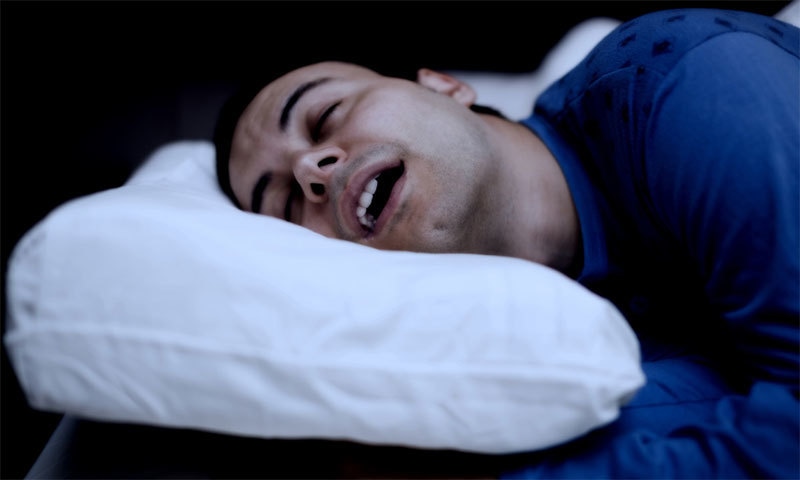
Most of us have probably noticed at some point that our mouth stays open while sleeping, or we may have seen someone else in this condition during sleep.
At first, this may seem like a minor issue and is often ignored as just a habit. However, if it happens repeatedly, it could actually be a sign of an underlying health problem. Sometimes even a seemingly small symptom can point to a bigger issue inside the body.
In this regard, Dr. Saadat Ullah William, a well-known ENT specialist associated with Lady Reading Hospital, says that sleeping with an open mouth is mostly linked to problems related to the nose, throat, or respiratory system. According to him, if the issue is identified in time, future complications can be prevented.
One of the major causes of sleeping with an open mouth is nasal blockage. When breathing through the nose becomes difficult, the body naturally starts breathing through the mouth. This is also commonly seen during colds or flu. The same process continues during sleep, often without the person realizing it.
Also Read : Economic Growth or Economic Burden? The Common Man’s Reality
Allergies are another important cause of this problem. Dust, pollution, or seasonal changes can cause swelling inside the nose, narrowing the airways. As a result, a person starts breathing through the mouth instead of the nose, and this habit becomes more noticeable during sleep.
This issue is more commonly seen in children. In many cases, enlarged tonsils or adenoids (extra tissue at the back of the nose) block the airflow. Such children cannot breathe properly through the nose, causing their mouths to remain open during sleep. If ignored, it may negatively affect their sleep, health, and growth.

Sleeping position can also play a role. Some people experience breathing difficulty when lying flat on their back, while sleeping on one side may improve breathing. In addition, the jaw or facial structure of some individuals may naturally cause the mouth to open during sleep.

If symptoms such as snoring or pauses in breathing appear during sleep, it may indicate Sleep Apnea, which is a serious medical condition. Such individuals often feel tired, weak, and restless in the morning even after getting enough sleep.
One of the most common effects of this problem is dry mouth. Keeping the mouth open during sleep reduces saliva production, allowing bacteria to grow and causing bad breath.
Along with this, dryness, irritation, and soreness in the throat may also occur because the throat remains dry throughout the night. If this happens repeatedly, throat health may be affected.
Dental health can also suffer from this condition. Reduced saliva decreases the mouth’s natural cleaning process, increasing the risk of cavities and gum diseases.
It also directly affects sleep quality. Feeling tired despite a full night’s sleep may indicate disturbed breathing during sleep, preventing deep and restful sleep.

Treatment always depends on the underlying cause. If the nose is blocked, it is treated accordingly; if allergies are the issue, they are controlled; and if the condition is more serious, proper medical treatment is recommended. Improving sleeping posture, keeping the room clean, and drinking enough water can also help improve the condition.
In the end, it can be said that although sleeping with an open mouth is a common issue, it should not be ignored as something minor. Sometimes it is simply a habit, while at other times it may be an important signal from the body that requires timely attention.
Note: This article reflects the personal opinion of the author, which may not necessarily represent the views of the organization.

.jpeg)
.png)
1.jpeg)



Comments
No comments yet. Be the first 🙂