
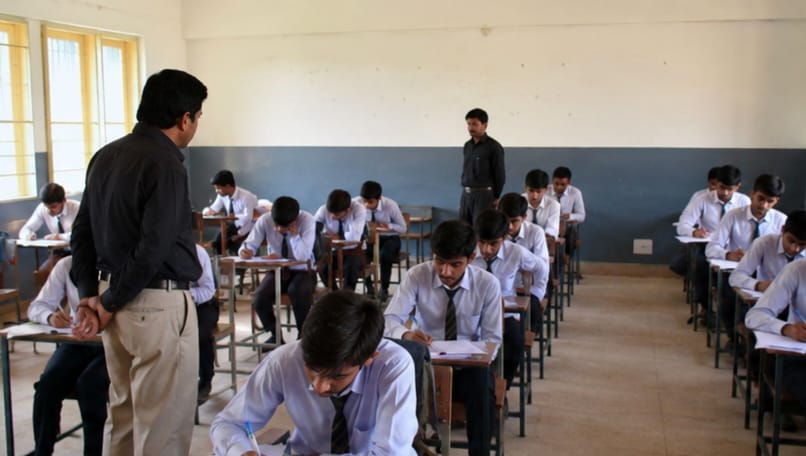
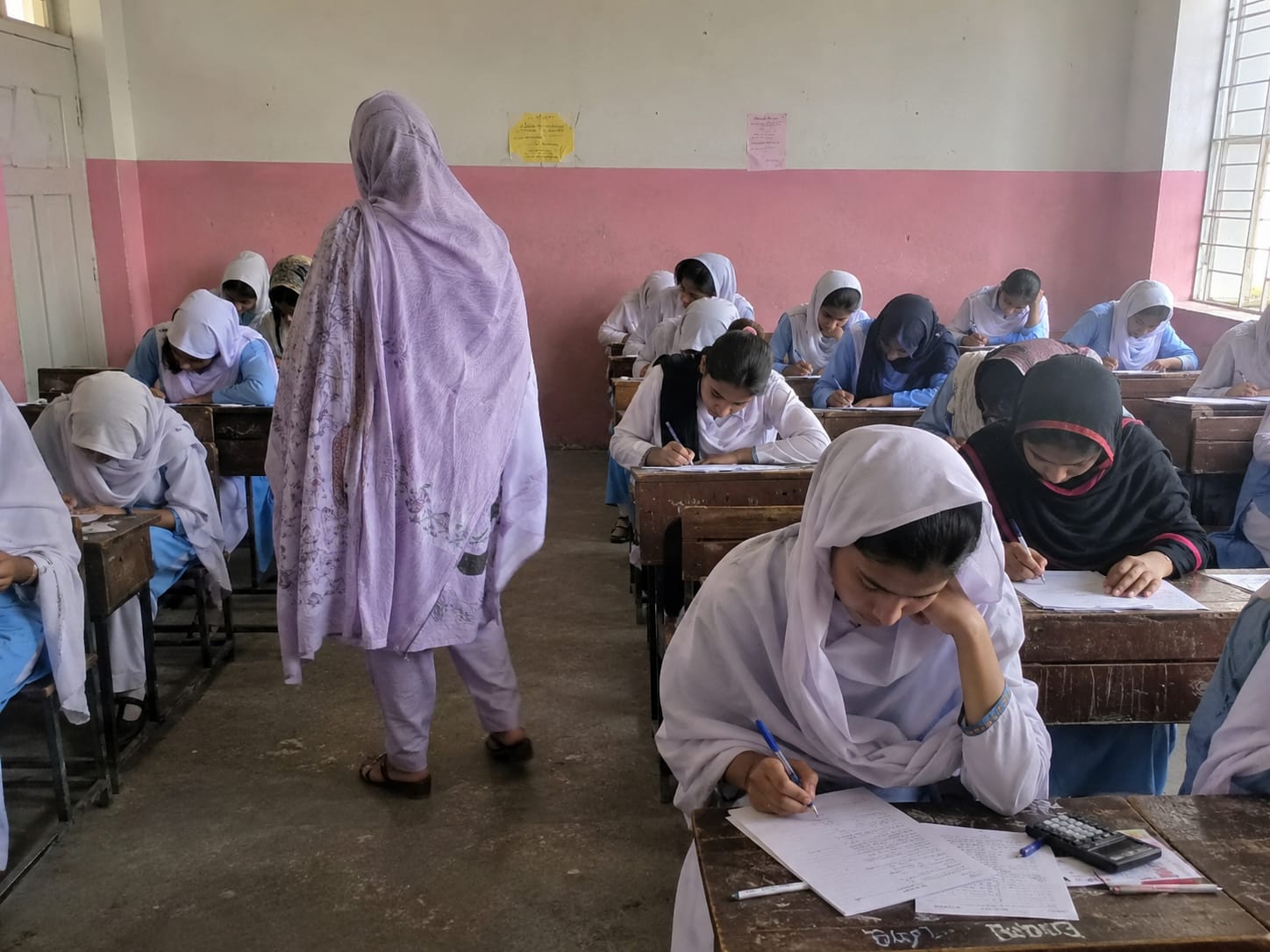
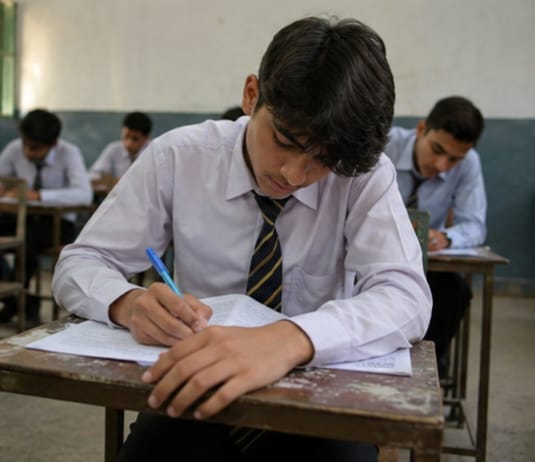
The recent board examinations for grades 9, 10, FA and FSc revealed far more than just an assessment process; they exposed the broader realities of our education system. Serving as an invigilator during these exams provided a firsthand view of the strengths and weaknesses deeply rooted within the system.
This year, extraordinary measures were introduced to ensure transparency and eliminate cheating. Strict monitoring was enforced in examination halls, and for the first time, BS graduates were appointed as invigilators.
According to the Swat Board, the initiative aimed to promote merit, discourage favoritism, and improve the overall standard of education.
At first glance, these reforms appeared to be a positive development. However, the situation inside examination halls revealed several harsh truths. As cheating was completely curbed, the performance of students — particularly those from government schools — dropped noticeably.
Many students remained seated for the entire duration of the paper yet struggled to write meaningful answers. Some even submitted blank answer sheets. This was not merely the result of strict supervision, but a reflection of a system where students often lack proper academic preparation.
A deeper look shows that the issue extends far beyond examination halls. The teaching system in government schools appears weak overall.
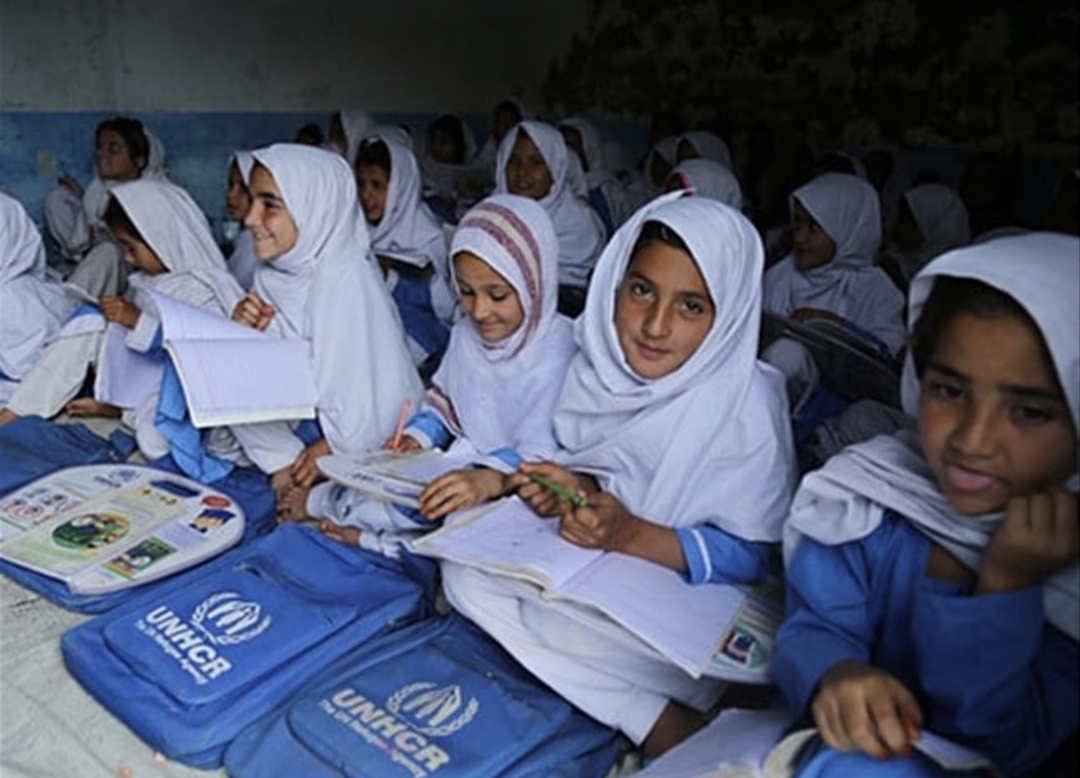
According to female students from government schools, they attend school daily from 7am to 2:30pm, and teachers are generally present, yet regular and effective classes are often not conducted. The situation is particularly alarming in science subjects.
In some schools, subject specialists are completely absent, while in others, classes are irregular despite the presence of teachers. As a result, students spend the entire academic year in school but remain deprived of basic concepts and understanding.
Also Read : Branded Dreams, Borrowed Pressure: How Youth Are Losing Themselves in the Race for Status
Students also reported that they rarely face regular tests throughout the year, nor is the syllabus fully covered. Consequently, when strict examination conditions are enforced and cheating is prevented, solving questions becomes extremely difficult for them.
Government teachers, however, present a different perspective. According to them, students in public schools often face little academic pressure from either their families or educational institutions.
Teachers say that when they attempt to enforce discipline or encourage students to focus on studies, they are sometimes advised by the administration to adopt a softer approach.
They further argue that many parents, since they are receiving free education for their children, tend not to monitor academic performance closely. The same parents, however, become highly concerned about tests, studies, and overall progress when their children attend private schools.
Some teachers also point out that when students do not attend classes regularly outside examination periods, completing the syllabus becomes a serious challenge.
On the other hand, students from private schools appeared relatively better prepared. It is true that private institutions often seek leniency during examinations, and many private school students are accustomed to relying on cheating. However, even under strict monitoring and without cheating, they continued attempting questions based on their own understanding and concepts.
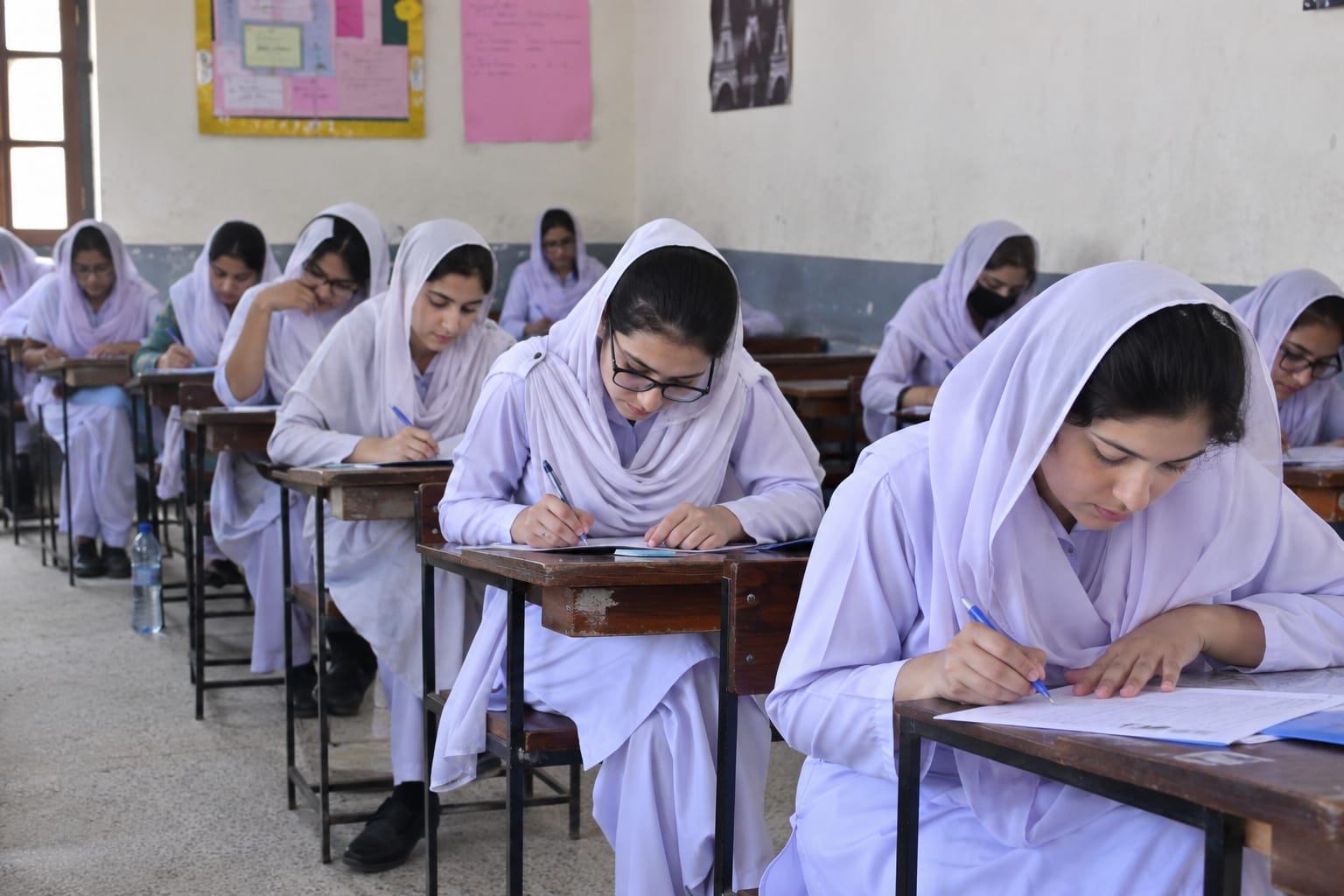
The primary reason is that private schools generally complete the syllabus on time, conduct regular tests, and keep students under consistent academic pressure throughout the year.
Another major development this year was the introduction of the e-marking system. Under this system, students were required to answer questions according to a specific pattern and structure. Government school students were largely unfamiliar with this format.
They not only struggled to solve questions but also demonstrated weaknesses in answer presentation. In contrast, private school students were comparatively familiar with the pattern because similar examination methods had already been practiced in their institutions, enabling them to perform relatively better.
It is also important to acknowledge that not every parent can afford private schooling. Due to economic hardships, many families have no option but to rely on government schools. In such circumstances, a weak public education system directly harms students who are already disadvantaged by limited resources.
According to education experts, the issue is not merely about cheating; it is about the entire educational structure. If students are not provided proper teaching, guidance, and assessment throughout the year, expecting strong performance in examinations is unrealistic. Therefore, immediate reforms are necessary.
Regular monthly test systems should be introduced in government schools, complete syllabus coverage must be ensured, shortages of science teachers should be addressed, and effective monitoring of teachers’ performance should be implemented.
Unnecessary holidays should be minimized, and a more serious academic environment must be created. At the same time, students should be encouraged to value learning rather than relying on cheating.
The recent examinations delivered a clear message: when cheating is eliminated, the true level of academic performance becomes visible. The need of the hour is to accept this reality and strengthen the foundations of the education system so that in the coming years, students can not only sit exams without cheating but also succeed through genuine knowledge and understanding.


.jpg)

5 Comments
La popularidad de la <a>pin up casino no puedo entrar</a> en Mexico ha crecido rapidamente gracias a su accesibilidad y variedad de juegos en linea.
El mercado de diversion en linea en Mexico ha experimentado un crecimiento notable, especialmente en relacion con las estilo pin up en linea.
Las plataformas de pin up en linea son populares en Mexico por su confianza y innovadoras.
Los usuarios en Mexico experimentar una amplia variedad de juegos en plataformas de que cumplen con sus expectativas.
Para los jugadores en Mexico, la seguridad de las plataformas de estilo pin up en linea resulta ser fundamental.
La popularidad de <a>pin up casino ios</a> sigue creciendo entre los jugadores mexicanos que buscan entretenimiento seguro y confiable en linea.
La inclusion del pin up en linea en varios sitios de juego ha contribuido al crecimiento del sector en Mexico.
My next business trip involves three days of meetings, so I want a compact wardrobe with a few useful combinations. I already have navy trousers and a grey jacket, plus comfortable shoes for the walks between our meeting locations. Choosing a few interchangeable tops is harder than expected, especially when I also want each outfit to feel different. I have been reading about <a>color analysis</a> yet my priority is checking existing combinations instead of replacing my wardrobe to match a seasonal label. Does alternating light and deeper tops create enough variety, or would you choose a narrower range of shades? One evening includes a casual dinner, so I hope the same jacket can work with a slightly more relaxed combination. If you were working with these pieces and limited luggage space, which two outfit decisions would you settle first?
I have been asked to adjust my hair color for a community play and we are trying to choose between a deep cool brown and a warmer copper-brown effect. The choice must read clearly from the seats without becoming distracting in close photographs. Under rehearsal LEDs my face loses definition, but daylight photographs make the warmer option appear much stronger than it does from the audience. The wardrobe uses aged green, cream, and burgundy, so the hair choice also needs to work beside those fabrics and the planned makeup. I found this <a>skin tone chart</a> as a reference while we compare the full character look. Would a temporary spray on two hidden sections be useful if evaluated with costume and makeup under the actual lighting cues? I want the experiment to remain fully reversible. Any advice from performers or costume teams would be welcome.
I am having trouble separating Deep Winter from Deep Summer because the obvious signs do not all point in one direction. My hair and brows are quite dark but my eyes are lighter and slightly muted rather than bright. I can wear black, although it sometimes overwhelms me while charcoal and deep navy are easier. Dusty blue looks calm but sometimes dull so softness alone has not settled the question. I organized my test drapes around a <a>deep winter color palette</a> and selected comparable summer shades rather than judging unrelated colors. At the moment icy pink beats dusty mauve but cobalt is much stronger on me than smoky blue. I photographed every comparison in the same daylight with a bare face and kept the camera exposure fixed. Could depth be my dominant feature without making me a Winter or do the clearer colors carry more weight than eye softness? What comparison would you consider most decisive before spending money on a professional consultation?