


By Iman Zahir Shah
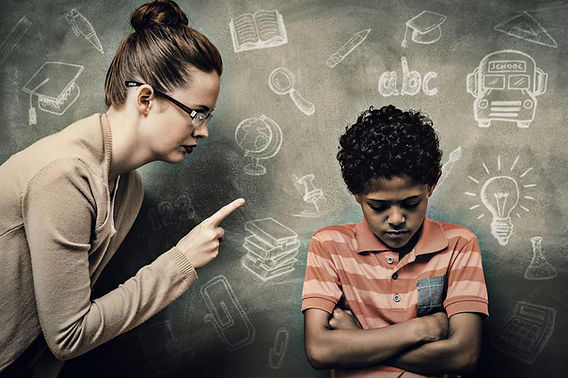
The role of a teacher is important in the life of every child who receives an education. A teacher’s attitude plays a significant role in shaping a child’s personality and developing their self-confidence.
Support, encouragement, and respect from teachers can motivate children to move forward, while being constantly ignored or subjected to negative behavior can affect a child’s ability to learn and their self-confidence.

According to a report from the Organisation for Economic Co-operation and Development (OECD) based on the Programme for International Student Assessment (PISA), students who feel supported, encouraged, and respected by their teachers tend to perform better academically, feel more connected to school, and have relatively stronger self-confidence. In contrast, students who experience constant neglect or negative behavior may suffer from reduced learning abilities and confidence.

Twenty-eight-year-old Khadija Sheikh, who is from Peshawar, says that she was never the top student in her class and considered herself an below-average student. She says that whenever she tried to ask her school class teacher a question, she was often ignored, while at times the teacher would also laugh at her sarcastically.
She says that no matter how hard she worked, the teacher never appreciated her efforts, while all the praise and attention was always reserved for the top-performing students in the class.
Khadija recalls that when she was in sixth grade, she had prepared extensively for an English exam. However, she was unwell on the day of the exam and could not perform well, resulting in low marks. Her teacher then told her, “You will never succeed in life; you will always fail.”

Also Read : After the 2022 Floods, Swat Families Are Rethinking What Makes a Home Safe
According to Khadija, those words had a deep impact on her self-confidence. Throughout her academic life, she continued to feel that she would fail every time. Despite working hard, she never achieved good marks because even while writing an exam, she would doubt her answers and wonder whether she was answering the questions incorrectly.

She says the effects of that experience are still present in her life today. Whenever she goes for a job interview, she already believes that she will not be selected. Because of this feeling, she has also avoided applying for many jobs and has missed numerous opportunities.
Clinical psychologist and head of the Institute of Public Mental Health and Behavioral Sciences at Khyber Medical University in Peshawar, Huma Kanwal, says that when a child repeatedly experiences neglect or rejection from a teacher, they initially become confused about why their efforts are not being appreciated.
Gradually, the child may begin to perceive this unfair treatment as a reflection of their own shortcomings, developing thoughts such as, “I am not intelligent” or “There is something wrong with me.”

Huma Kanwal says that over time, children may stop raising their hands, asking questions, or expressing their opinions in class. Some children constantly monitor their teacher’s reactions to determine whether they are about to become the target of criticism again. Eventually, they may reach the conclusion that no matter how hard they work, nothing will change.
This feeling does not remain limited to academic activities; it can also affect their social lives, employment, and professional relationships.
According to Huma Kanwal, even a single negative statement from a teacher can remain in a child’s mind for years. When criticism comes from an authority figure, the brain does not treat it as an ordinary remark; instead, it stores it as an important and emotional experience for a long time.

Even after a child leaves school, the relationships they develop with teachers can continue to influence their practical and professional life. If a teacher consistently encourages a student, listens to them, and respects their opinions, the student may be more confident in expressing themselves in front of a boss or supervisor in the future.
On the other hand, if a teacher’s behavior is consistently based on scolding or intimidation, the student may hesitate to express their opinions, seek guidance, or accept new opportunities in professional life.
The effects of a teacher’s behavior are not limited to academic performance or the classroom. They can also affect a child’s confidence in speaking in front of others and expressing their opinions.

Twenty-seven-year-old Javed Khan, who is from Malakand and is currently pursuing a master’s degree in public administration in London, says that he was never able to speak Urdu fluently.
He recalls that during the third semester of his undergraduate studies, he once asked his professor a question in class. The professor mocked him in front of the entire class and sarcastically said, “Please be quiet. Don’t ask me questions in your broken Urdu.”
According to Javed Khan, the incident completely destroyed his confidence. After that, he stopped giving presentations because he was constantly afraid that everyone would laugh at him. Even today, when he speaks Urdu, he feels embarrassed and insecure.

Huma Kanwal says that many adults who come to her for help still remember, even decades later, the exact words spoken by their teachers, the tone of their voice, and the classroom scene in which the incident took place. According to her, this is because children internalize such statements and make them part of their identity.
If a teacher tells a child, “You can never be good at mathematics,” or “Your language is wrong,” the child may begin to see these statements as a permanent part of their identity. Huma Kanwal says that if a child sees every day that their classmates are being praised while they are being ignored, they do not simply think that another student is better than them. Instead, they may begin to believe that perhaps that other person is also more important than them as a human being.

Similarly, regarding criticism of a child’s way of speaking, Huma Kanwal says that language is not merely a means of communication; it is also part of cultural identity. If a teacher mocks a child’s accent or mother tongue, the child may begin to feel inferior not only about their language but also about their culture, family, and identity.
According to her, this feeling can later prevent them from speaking publicly, expressing their opinions, or moving forward confidently in their professional life.

Huma Kanwal emphasizes that the solution to this problem is not difficult. According to her, teachers can make every child feel valued by adopting a few simple principles in their everyday teaching practices.
These include giving equal attention to all students, appreciating effort and hard work rather than focusing only on grades, respecting children’s language and cultural identity, providing corrections privately, and having at least one positive and personal interaction with each student every day.

She says that if every child leaves school feeling that they are worthy of respect and that their presence matters, this sense of worth can play the most effective role in supporting their mental well-being, academic success, and the development of their personality in the future.
.jpeg)
.png)
1.jpeg)



Comments
No comments yet. Be the first 🙂