


.jpeg)
Swat’s orchards become laden with orange-coloured persimmons with the arrival of September and October. Seen from a distance, the orange fruit peeping through the green leaves fills the orchards with colour. After months of hard work, farmers prepare to harvest the crop and transport it to markets, but untimely hailstorms have changed the landscape of several orchards this year.
In many orchards, the fruit has developed marks, while some fruit fell from the trees and others were completely damaged. The situation has affected not only farmers but also the income of labourers working in these orchards. In several areas, blemished fruit was sold at lower prices, while in some orchards the crop was completely lost.
Persimmon is commonly known as the “Japanese fruit” in Swat. According to various accounts, Prince Sardar Abdul Rehman Effendi brought red persimmons from Japan to Swat in 1910. His son, Prince Ghazi Sardar Arham Khan Effendi’s wife, Begum Bilqees Effendi, was also known for her role in agricultural activities in Swat. The Japanese fruit, or persimmon, is also associated with Begum Bilqees. Over time, persimmon cultivation spread to different parts of Swat.
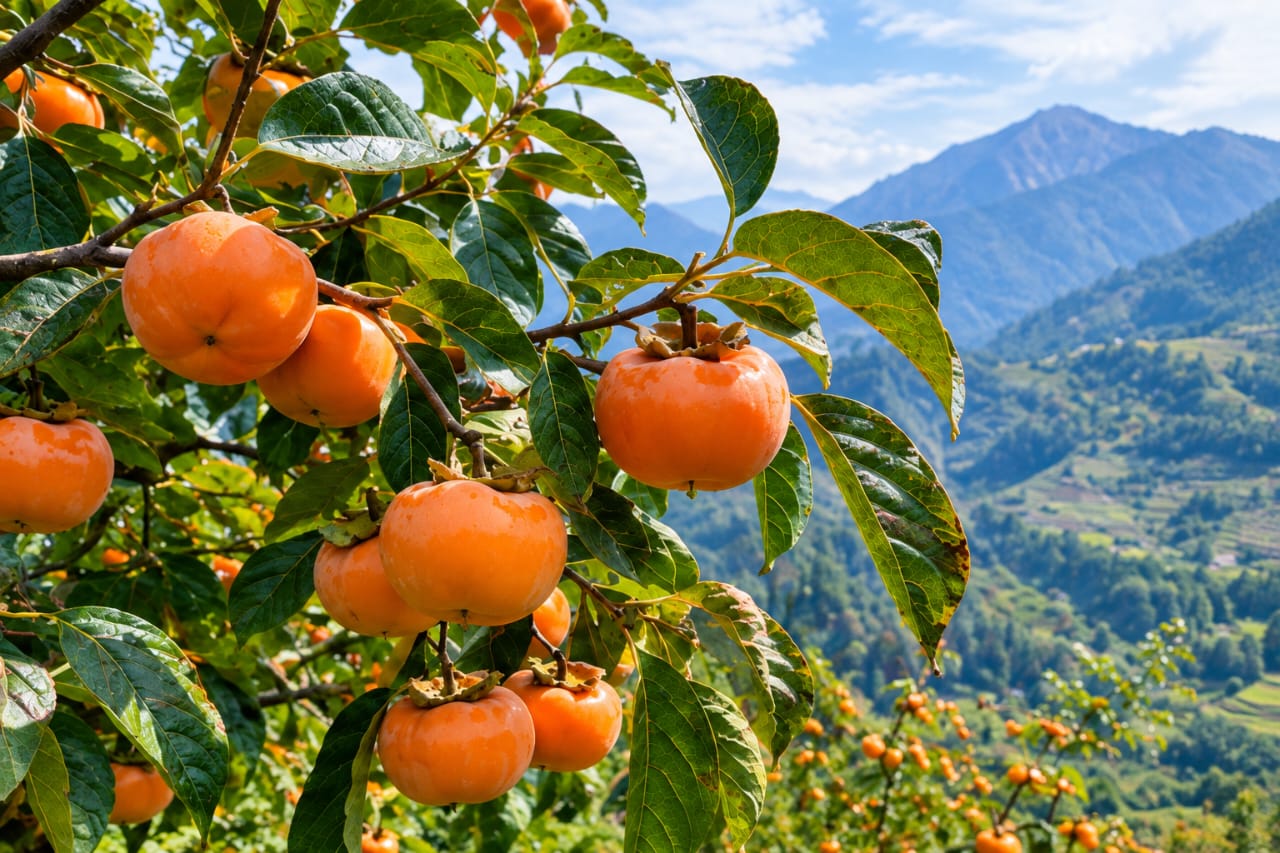
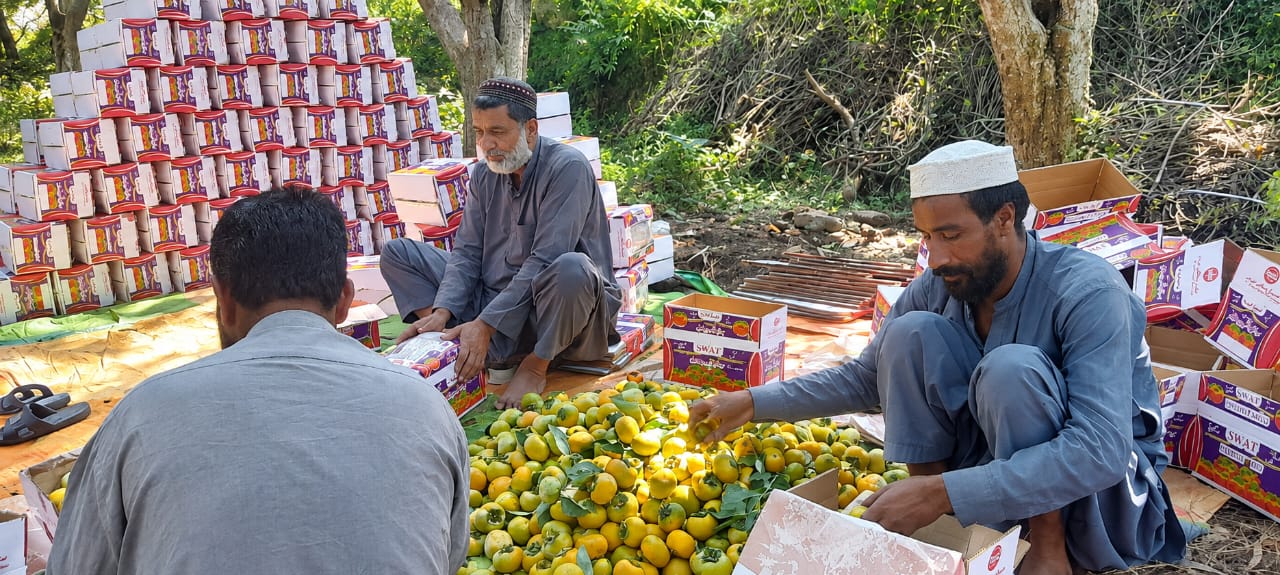
Persimmon is the third-largest fruit crop in Swat after apples and peaches. In Pakistan, most persimmons are produced in Swat, Chitral and Murree, while around 80 percent of the country’s total persimmon production comes from Swat. Persimmons from Swat are also transported to other cities across the country for sale.
Persimmon is not only popular for its taste but is also considered nutritionally important. Dr Sajid Ali, a medical expert from Swat, says the fruit contains vitamin A, vitamin C and fibre, which are beneficial for health.
Meanwhile, Jahanzebabad farmer Muhammad Akhtar has been cultivating persimmons for the past 15 years. He says his production has fallen by half compared with last year.
According to Muhammad Akhtar, “In the past three years, there has been repeated hail in September and October, causing severe damage to the orchards each time. Hailstorms leave marks on 60 percent of the fruit. Good-quality fruit sells for Rs200 per kilogramme, while blemished fruit is sold for Rs70 to Rs80.”
Calling changing weather patterns a major problem for his crop, Muhammad Akhtar says, “Previously, winter used to arrive on time, but now untimely rain and hailstorms have become more frequent. If we do not receive support, we may be forced to cut down the orchards because it has become difficult to make a living from persimmons.”
Mingora-based farmer Muhammad Saeed also looks after six persimmon orchards. According to him, a normal year produces 200 to 250 crates, but this year the production was limited to just 140 crates.
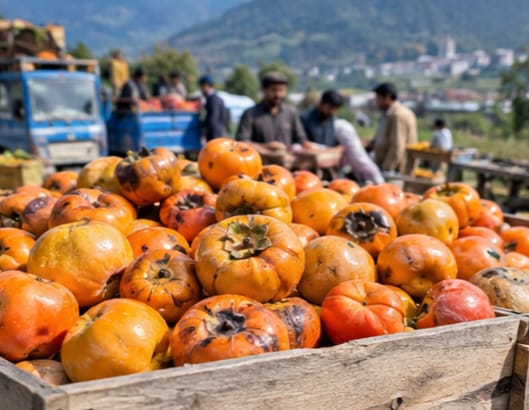
Muhammad Saeed says, “This year, production has fallen by more than 50 percent because of hailstorms. I suffered a loss of around Rs300,000 to Rs500,000. The damaged fruit was sold at very low prices in the market, while even the costs of labour and transportation were not recovered.”
Also Read : Is Fast Food Really the Problem—or Is It How Much We Eat?
He says some fruit is not only blemished by hail but is completely destroyed. According to Muhammad Saeed, “The price falls to less than half when the fruit is blemished. Hail also causes the fruit to split, after which it rots. This year, around 50 percent of my fruit was completely damaged and fell from the trees.”
He says one way for farmers to protect orchards from hailstorms is to install anti-hail nets, but their cost is a major obstacle.
Muhammad Saeed says, “Installing anti-hail nets on one acre costs around Rs200,000 to Rs500,000. We are small-scale farmers and cannot afford that much. If the government provides the nets at subsidised rates, we would definitely install them.”
The damage to persimmon orchards has also affected the livelihoods of labourers. Hassan Khan, a labourer from Mingora, says the decline in fruit production has reduced the number of working days in the orchards.
He says, “Previously, we worked a full day in the orchards and earned Rs1,200 to Rs1,400 per day. Now, we do not get full-day work. There is no work in many orchards during this season because the fruit has been damaged by hailstorms, so our daily wages have also decreased.”
Environmental experts say climate change causes farmers to suffer losses of around 30 percent every year. Dr Fayyaz Amin, a lecturer in the Department of Environmental Sciences at the University of Swat and a PhD scholar, says climate change is affecting fruit production in Swat.
Dr Fayyaz Amin says, “Climate change has caused significant damage to Swat’s fruit crops. The production of apples and peaches has also been affected, and now persimmons and other fruits are also facing the impacts of climate change.”
According to him, rain and snowfall used to occur during their normal seasons in the past, but weather patterns are now changing.
He further says, “Previously, rain and snowfall occurred on time, keeping moisture in the soil for several months. Now snowfall has decreased, temperatures are rising, and the timing of rain and hailstorms has also changed. As a result, the rise in temperature has affected fruit production. This year, hailstorms during the fruit development stage caused some persimmons to fall, damaged others and left marks on some of the fruit.”
He adds that climate change has affected 80 percent of Swat’s fruit crops, while farmers suffer losses of around 30 percent every year. According to him, these losses are sometimes caused by hailstorms damaging the fruit and at other times by diseases, while fruit diseases have also increased significantly over the past five years due to climate change.

However, regarding persimmon production, the Agriculture Department says cultivation has increased in several areas of Swat in recent years, while it has declined in some other areas. According to Dr Iftikhar Ahmed, District Director Agriculture Extension Swat, persimmon orchards are found in various areas, including Dara, Malki Dam, Shah Dherai, Sar Bala, Sami, Totano Bandai, Charbagh, Malam, Ser Teeligram, Bishbanr, Banjoat, Malalai, Mingora, Jahanzebabad, Matta, Alam Ganj and Zare.
According to the Agriculture Department, Swat has more than 100,000 fruit-bearing persimmon trees, with the crop cultivated over approximately 9,000 acres and annual production reaching up to 80,000 metric tonnes.
Regarding losses caused by hailstorms, Dr Iftikhar Ahmed says, “Over the past three years, damage to persimmons caused by hailstorms has been reported in different areas, reaching up to 35 percent.”
The Agriculture Department says farmers are being guided through field monitoring, weather awareness and climate-resilient agricultural practices. Under various projects, saplings, fertilisers and agricultural medicines have also been provided to farmers.
According to Dr Iftikhar Ahmed, the department continues to guide farmers through field monitoring, weather awareness, integrated pest management (IPM) and climate-smart agriculture. He says various projects have been launched for this purpose, while subsidies will also be provided for anti-hail nets and cold storage facilities. The department is providing free saplings under projects aimed at addressing climate-related impacts, along with fertilisers and other agricultural medicines.
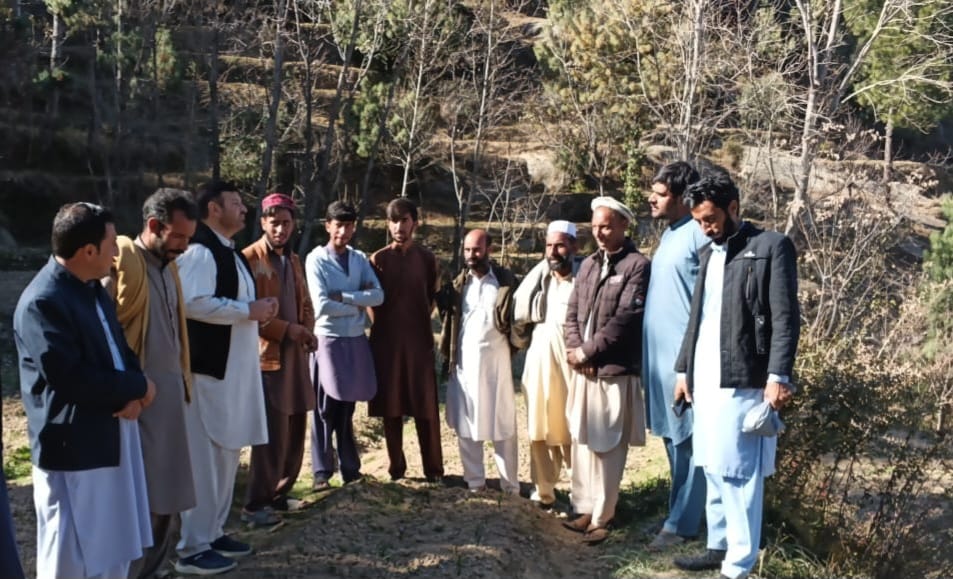
Farmers say that facilities such as anti-hail nets, advance weather information and cold storage can help reduce losses caused by hailstorms. For them, the persimmon crop is not just a fruit but also a source of livelihood for families and labourers associated with the orchards.
Amid changing weather patterns and increasingly frequent hailstorms, Swat’s farmers are now looking for agricultural facilities and government support that can help protect their crops, incomes and livelihoods associated with this traditional fruit from climate-related risks.

.jpg)

.jpg)


Comments
No comments yet. Be the first 🙂