


1.jpeg)
Journalism has always been about people. Behind every headline, there is a human being. Behind every statistic, there is a family. Behind every breaking-news alert, there may be someone waiting for answers, justice, or hope. For generations, journalists have carried the responsibility of telling these stories. They have gone into communities, spoken to people, checked facts, investigated problems, and sometimes worked in difficult and dangerous circumstances to bring the truth to the public.
Today, journalism is entering a new era. Artificial Intelligence, or AI, is changing the way journalists search for information, conduct research, transcribe interviews, translate stories, analyze data, write drafts, and distribute news. As someone working in journalism and digital storytelling, I have seen how quickly technology is becoming part of our everyday work.

AI can make some tasks easier and faster. But my experience has also taught me something important: technology can support journalism, but it cannot replace the human heart behind a story.
AI: A New Assistant for Journalists
In today’s fast-moving media environment, journalists are expected to work quickly while maintaining accuracy. A journalist may have to research a topic, conduct interviews, record video, write a story, translate it, edit visuals, prepare social media content, and meet a deadline—all in the same day. AI can help with some of these tasks.
It can transcribe interviews, summarize lengthy documents, organize information, suggest headlines, translate text, and help journalists analyze large amounts of data. For a journalist working in digital media, these tools can save valuable time.
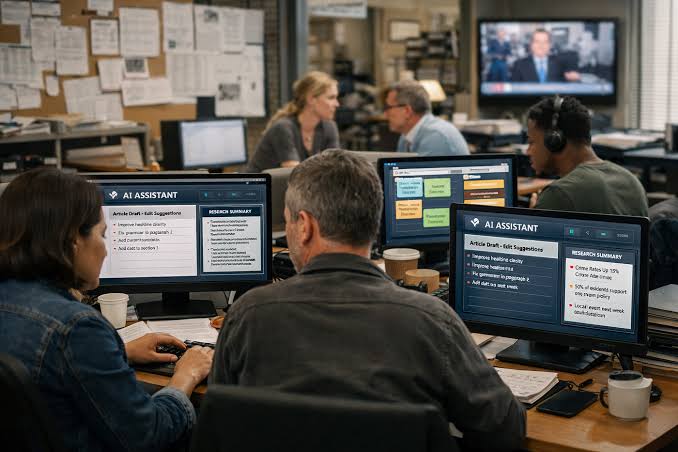
For example, instead of spending hours manually transcribing an interview, a journalist can use AI to create a transcript and then spend more time checking the quotes and understanding the interviewee’s story. This does not mean the journalist is no longer needed. It means the journalist has more time to do the work that matters most.
Also Read : Trapped Between Poverty and Danger: The Story of Shangla’s Coal Miners
My Experience: AI Makes the Work Easier, But Not the Story
As a journalist and digital storyteller, I have learned that technology can make the process of storytelling easier, but it cannot create the relationship between a journalist and a source.
When I speak with someone about their life, I am not only listening to their words. I am watching their expressions. I am noticing pauses in their voice. I am trying to understand what they are not saying. Sometimes, the most powerful part of an interview is not a sentence. It is a silence, a tear, a smile, or a moment when someone gathers the courage to share something painful.

AI can transcribe that person’s words. But it cannot truly experience that moment. This is why I believe journalists should use AI as a tool, not as a replacement for human judgment.
From Information to Meaning:
Journalism is surrounded by information. There are government reports, research papers, social media posts, public records, statistics, videos, photographs, and countless online sources. AI can help journalists process this information much faster. Imagine a journalist investigating climate change.
They may need to examine years of temperature records, rainfall data, flood reports, agricultural losses, and population statistics. AI can help organize this information and identify patterns.

But a journalist must still ask the most important questions: Who is affected? Why does this matter? What are people experiencing? Who is responsible? What solutions are possible? These questions require human curiosity and judgment.
Numbers can tell us that thousands of people were displaced by a disaster. But only human stories can help us understand what it feels like to leave behind a home, a school, a business, or a lifetime of memories.
AI and the Fight Against Misinformation:
One of the biggest challenges facing journalism today is misinformation. False information can spread across social media within seconds. A manipulated photograph, fake quote, edited video, or fabricated story can reach thousands of people before a journalist has even started verifying it.
AI can help journalists identify suspicious content, compare information, analyze images, and monitor large amounts of online material. But there is another side to this technology. The same AI that can help journalists fight misinformation can also be used to create it. Today, artificial intelligence can generate realistic photographs, videos, voices, and written stories.

This makes it increasingly difficult for ordinary audiences to distinguish between what is real and what is artificial. For journalists, this makes verification more important than ever. A journalist should never publish information simply because AI produced it.
Every fact must be checked. Every quote must be verified. Every photograph must be questioned. Every source must be examined. In the age of AI, the journalist’s most important skill may not be writing quickly. It may be knowing when not to believe something.

The Human Story Behind the Numbers:
For me, this is where the real value of journalism exists. A report may say that thousands of families are facing economic difficulties. But journalism asks: Who are these families? What does their daily life look like? How are parents feeding their children? How are young people continuing their education? What dreams are being delayed? What solutions are available? When we meet people and listen to them, statistics become human stories.
This is especially important when reporting on communities whose voices are often missing from mainstream media. People do not want to be treated as numbers. They want to be heard.
They want their experiences to be understood. And sometimes, simply telling someone’s story with dignity can remind them that their voice matters.
Can AI Replace Journalists?
This is perhaps the biggest question surrounding the future of journalism. Will AI take journalists’ jobs? Some routine journalism tasks may certainly become automated. Basic data reports, transcription, summaries, and other repetitive work can increasingly be assisted by AI.
But journalism is much more than producing text. Investigative journalism requires patience. Community journalism requires trust. Human-interest reporting requires empathy. Conflict reporting requires courage. Ethical journalism requires judgment. A journalist may have to decide whether publishing a particular detail could put someone’s safety at risk.
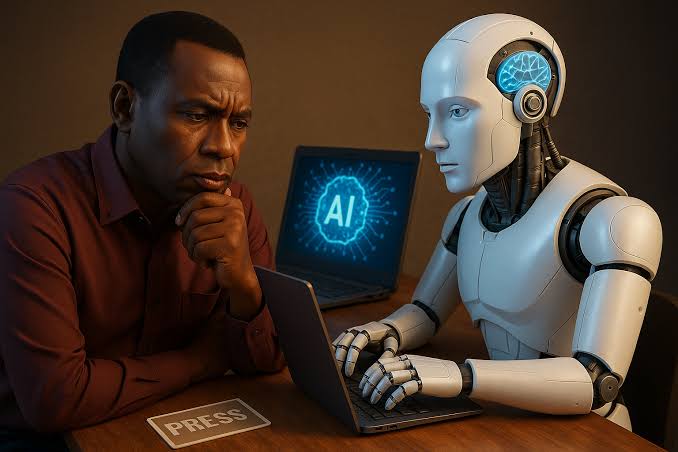
A machine can provide information. But a human must take responsibility for the consequences. That is why I do not see the future as AI versus journalists. I see it as journalists using AI responsibly to become better journalists.
Journalism Must Not Lose Its Ethics:
Technology can make journalism faster, but speed should never become more important than accuracy. The pressure to publish first can be dangerous. If a journalist publishes an incorrect story, deleting it later does not always erase the damage. People may have already believed it.

Someone’s reputation may have already been harmed. A community may already have been misrepresented. That is why journalists must remember the basic principles of journalism: accuracy, fairness, verification, independence, accountability, and humanity. AI should strengthen these principles—not weaken them.
AI Can Make Journalism More Inclusive:
Another important opportunity is language. In multilingual societies, people consume news in different languages. AI-powered translation and transcription can help journalists reach wider audiences. A story can potentially be translated into different languages and shared with communities that might otherwise never see it. This is particularly important for local and community journalism.

A powerful story should not remain inaccessible simply because of a language barrier. However, journalists must still review AI translations carefully. Language is not just vocabulary. It carries culture, emotion, history, and identity. A machine can translate a sentence, but a journalist must make sure the meaning and dignity of the story remain intact.
My Advice to Young Journalists:
As someone who is also learning and working in the changing world of digital journalism, my advice to young journalists is simple: Do not be afraid of AI. Learn it. Understand it. Use it—but never depend on it blindly. Learn how AI tools work. Learn how to write good prompts. Learn how to verify AI-generated information. Learn digital fact-checking. Learn video editing, data journalism, mobile journalism, and digital storytelling.
But at the same time, strengthen the skills that no machine can replace. Learn how to listen. Learn how to ask difficult questions respectfully. Learn how to build trust with communities. Learn how to recognize the emotions behind people’s words.
And most importantly, learn how to care about the people whose stories you tell. Because journalism is not just a profession. It is a responsibility.
My Advice: Let Technology Serve Humanity
My biggest advice is that we should never allow technology to become more important than the people we are trying to serve. AI should help us tell stories—not erase the storyteller. It should help us find information—not decide what is true. It should help us save time—not replace our responsibility. And it should help us reach more people—not make journalism less human.
We are entering a future where technology will become increasingly powerful. The question is not whether AI will change journalism. It already is. The real question is what kind of journalism we will create with it. Will we create journalism that is faster but less thoughtful? Will we create content that looks perfect but lacks a human voice? Or will we use technology to build journalism that is more accurate, more inclusive, more accessible, and more connected to ordinary people? I believe the choice is ours.

AI can process millions of pieces of information. But it cannot understand the value of a single human life in the same way a compassionate journalist can. It can generate a story. But it cannot sit beside someone who is crying and understand why their story needs to be told. It can produce words. But it cannot replace empathy.
That is why, in the future of journalism, our greatest strength may not be competing with machines. It may be remembering what makes us human. Behind every statistic is a person.Behind every headline is a story.And behind every story is a human life that deserves to be heard.
As journalists, our responsibility is to make sure that in this age of artificial intelligence, the human voice never becomes artificial.

.jpeg)
.png)
1.jpeg)



Comments
No comments yet. Be the first 🙂