


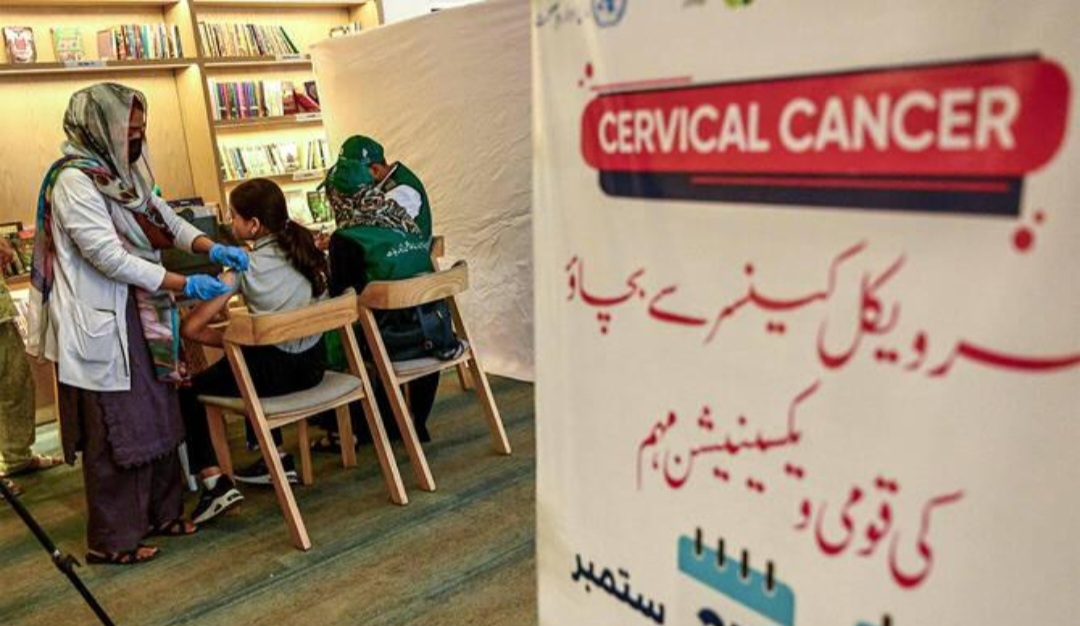
The human papillomavirus (HPV) vaccine is an important vaccine used to prevent cervical cancer. Cervical cancer affects the cervix, or the opening of the uterus, and infection with human papillomavirus (HPV) is one of its major causes. To help prevent the disease, HPV vaccination campaigns are being conducted for girls in different parts of the country.
However, discussions around the vaccine in communities are not limited to medical information. Parents also have questions and concerns about its benefits, necessity, possible side effects and potential long-term effects.
The Link Between Cervical Cancer and HPV :
According to Dr. Kainat, a gynecologist from Mardan who works at a private hospital in the city, cervical cancer is cancer of the cervix, the lower part of the uterus.
Dr. Kainat says that infection with human papillomavirus (HPV) is one of the major causes of cervical cancer. HPV is a virus that can spread through skin-to-skin contact, while sexual contact is also one of the ways it can be transmitted.
According to her, some types of HPV are linked to an increased risk of cervical cancer. Therefore, preventing HPV infection and raising awareness about the virus are important for preventing cervical cancer.
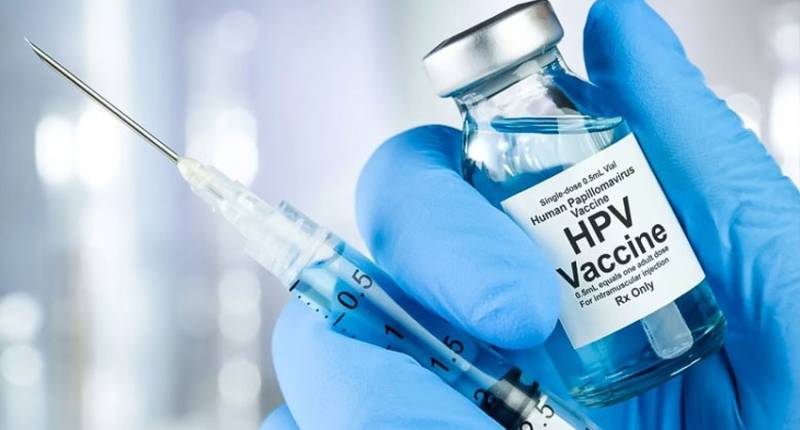
She says awareness, timely screening and HPV vaccination all play an important role in preventing cervical cancer. Both vaccination and screening are important measures for cervical cancer prevention.
Dr. Kainat further explains that the HPV vaccine is not intended to treat the disease. Rather, its purpose is to provide protection and reduce the risk of developing cervical cancer in the future. This is why preventive measures are important before the disease develops.
Importance of Vaccination at a Young Age :
According to Dr. Kainat, one of the main reasons girls aged 9 to 14 are targeted for HPV vaccination is that the vaccine can be given before possible exposure to HPV. The aim of vaccinating girls at this age is to provide protection against possible HPV infection in the future before exposure occurs.
She says that at this age, the body develops a strong immune response to the vaccine and has a good ability to produce antibodies. Therefore, vaccination at a younger age provides an opportunity for better protection against HPV in the future.
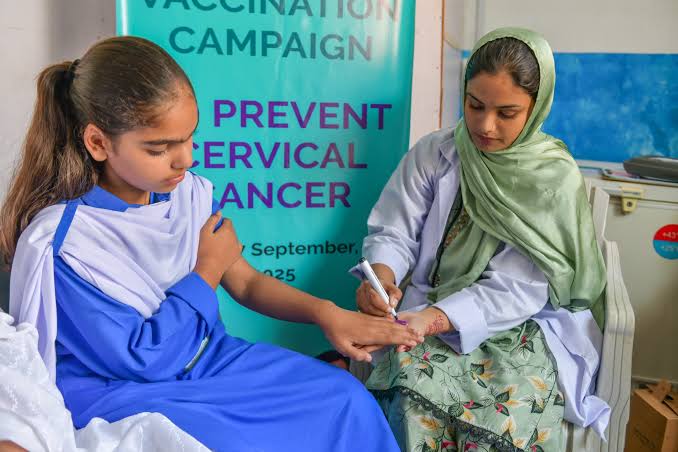
She explains that prioritising girls aged 9 to 14 does not mean that HPV vaccination cannot be given after this age. However, in public health campaigns, girls aged 9 to 14 are the primary target because the aim is to protect as many girls as possible before potential exposure to HPV.
Why Is Screening Still Necessary After Vaccination?
Gynecologist Dr. Kainat says that getting the HPV vaccine at the age of 9 to 14 does not mean that cervical cancer prevention ends there. Vaccination and screening are two important parts of a comprehensive cervical cancer prevention strategy.
According to her, cervical cancer screening is important in adulthood because it can help identify precancerous changes in the cervix at an early stage, allowing them to be treated when necessary.
She explains that the HPV vaccine is a preventive measure, not a treatment for the disease, while screening is aimed at detecting the disease or precancerous changes at an early stage. Therefore, along with vaccination at the recommended age, cervical cancer screening later in life is also necessary.
Also Read : Is Fast Food Really the Problem—or Is It How Much We Eat?
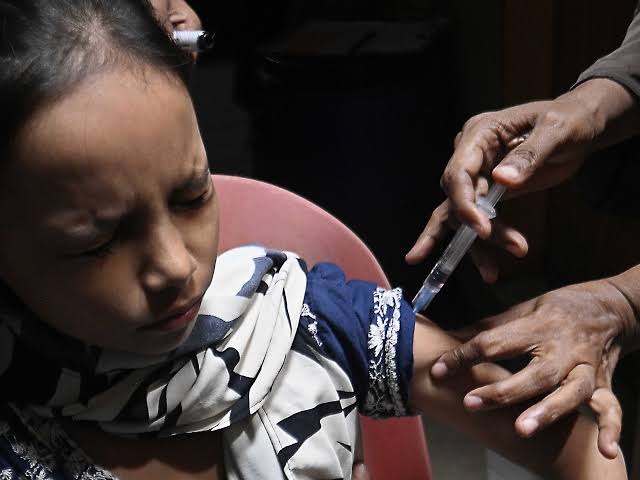
She also stresses that any questions or concerns about the vaccine should be addressed through reliable medical sources rather than unverified messages circulating on social media.
Parents’ Concerns About the Vaccine:
“We will not vaccinate our children because it causes infertility.”
This was the first response a community outreach worker encountered during a field visit, reflecting one of the major challenges facing the campaign. The health worker at the doorstep had information about the vaccine, but the family had questions, concerns and hearsay about it.
When a community outreach worker visits homes to discuss the HPV vaccine for cervical cancer prevention, not every household responds in the same way. Some parents agree immediately, some ask for more information, while others raise concerns they already have about the vaccine.
According to the outreach worker’s experience, some people say they will not vaccinate their children because they fear it could affect their ability to have children in the future.
This is where simply encouraging people to get vaccinated is not enough for a health worker. They first have to listen to people’s concerns and then answer their questions.

The issue was not only why the vaccine was being given. People also asked, “Why are we being given this particular vaccine? Why are other facilities and basic needs not being addressed?”
People in the community also question why the focus is on this particular vaccine when there are so many other health problems. Some ask, “Why don’t we have other basic healthcare facilities? Why are we only being given a vaccine?” These questions are not limited to the vaccine itself but are also linked to people’s overall experience with the healthcare system.
Some people viewed the campaign as an agenda and questioned why so much emphasis was being placed on the vaccine. In some families, there were also claims that the vaccine could cause infertility in the future.
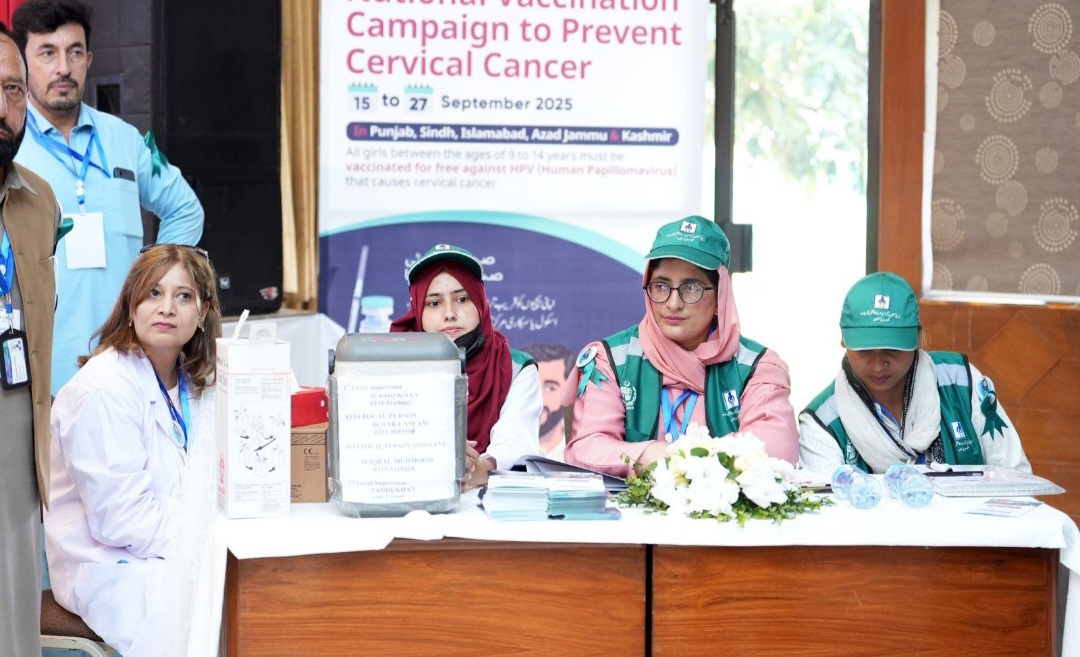
These concerns reflect rumours and questions circulating within the community rather than established medical facts. However, for health workers involved in the field, these questions are a major challenge because the success of any vaccination campaign depends not only on vaccine availability but also on public trust.
HPV Vaccine and Concerns About Infertility:
Speaking on the issue, gynecologist Dr. Kainat says there is no proven link between the HPV vaccine and infertility. She says research has been conducted on the vaccine’s effectiveness and potential effects, but no scientific evidence has emerged to prove that receiving the HPV vaccine causes infertility.
According to her, claims linking the HPV vaccine to infertility are largely based on rumours and misconceptions. She advises people to verify any claims about the vaccine through reliable medical sources before believing or sharing them.

However, for a health worker in the field, simply saying, “It is a rumour,” is not enough. Parents want to know why the vaccine is being given, at what age it is administered, what its benefits are and what possible side effects it may have.
The Role of Trust in the Community:
According to Kashif, a local influencer from Sher Garh village in Mardan, trust is essential for the community to accept any new health campaign.
In his observation, people do not make decisions simply by seeing a government announcement or poster. They ask people they know, listen to the opinions of locals and sometimes also look for information on social media.
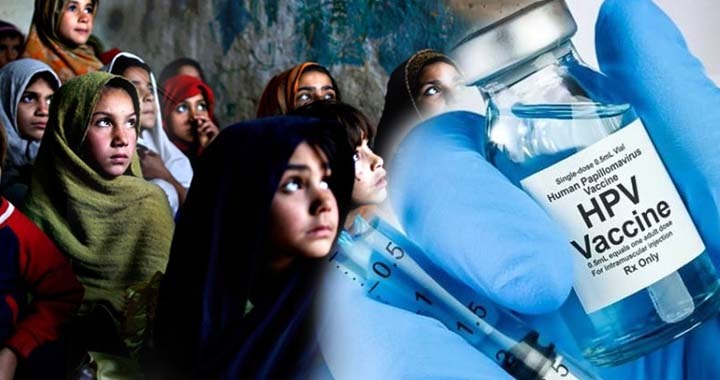
He says that if a family hears only one side of the information about the vaccine, it is natural for concerns to arise. Therefore, it is important to clearly explain to parents the purpose of the vaccine, the age group of girls for whom it is recommended and its role in preventing cervical cancer.
According to the local influencer, the campaign needs to reach people through members of the community itself. Communication in the local language, involvement of local people and the presence of trusted health workers can help understand and address people’s questions.
The Field Experience of a Lady Health Worker:
The role of Lady Health Workers (LHWs) in the community is also important because they already have established relationships with families. In many households, their visits are not seen as something new but as a continuation of an existing connection related to healthcare.
According to LHW Bushra Bibi, instead of ignoring parents’ questions, it is important to listen to them. Particularly when it comes to vaccinating girls, parents want to know the purpose of the vaccine and what benefits it may provide in the future.
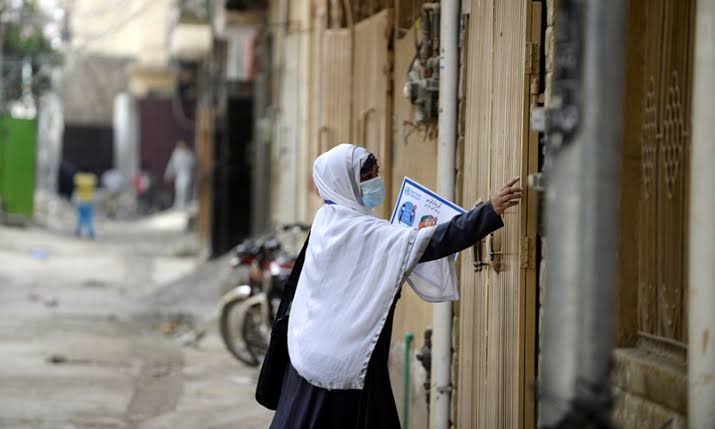
She says that information already present in the minds of some families can influence their decisions. In such situations, if health workers patiently answer their questions and provide reliable information, it can open the way for dialogue.
She believes that a vaccination campaign should not be viewed as an activity limited to one day or a few days. Continuous engagement is necessary to build trust among people.
Awareness Efforts Before Vaccination:
The HPV vaccination campaign for cervical cancer prevention will run from November 2 to 14. However, preparations for the campaign have already begun. Before the campaign starts, focus is being placed on demand generation in communities to provide people with basic information about the vaccine and address parents’ questions and concerns in advance.
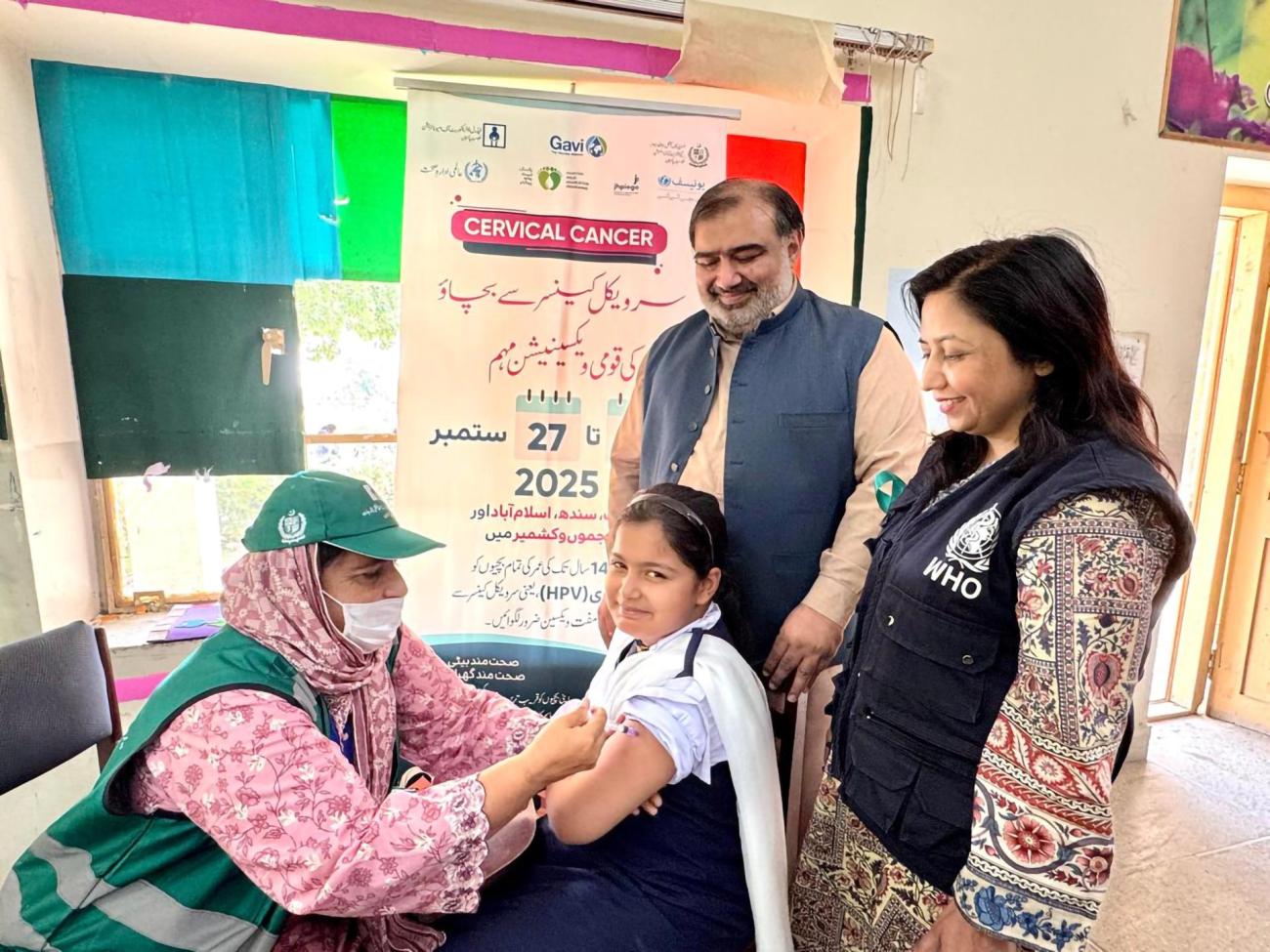
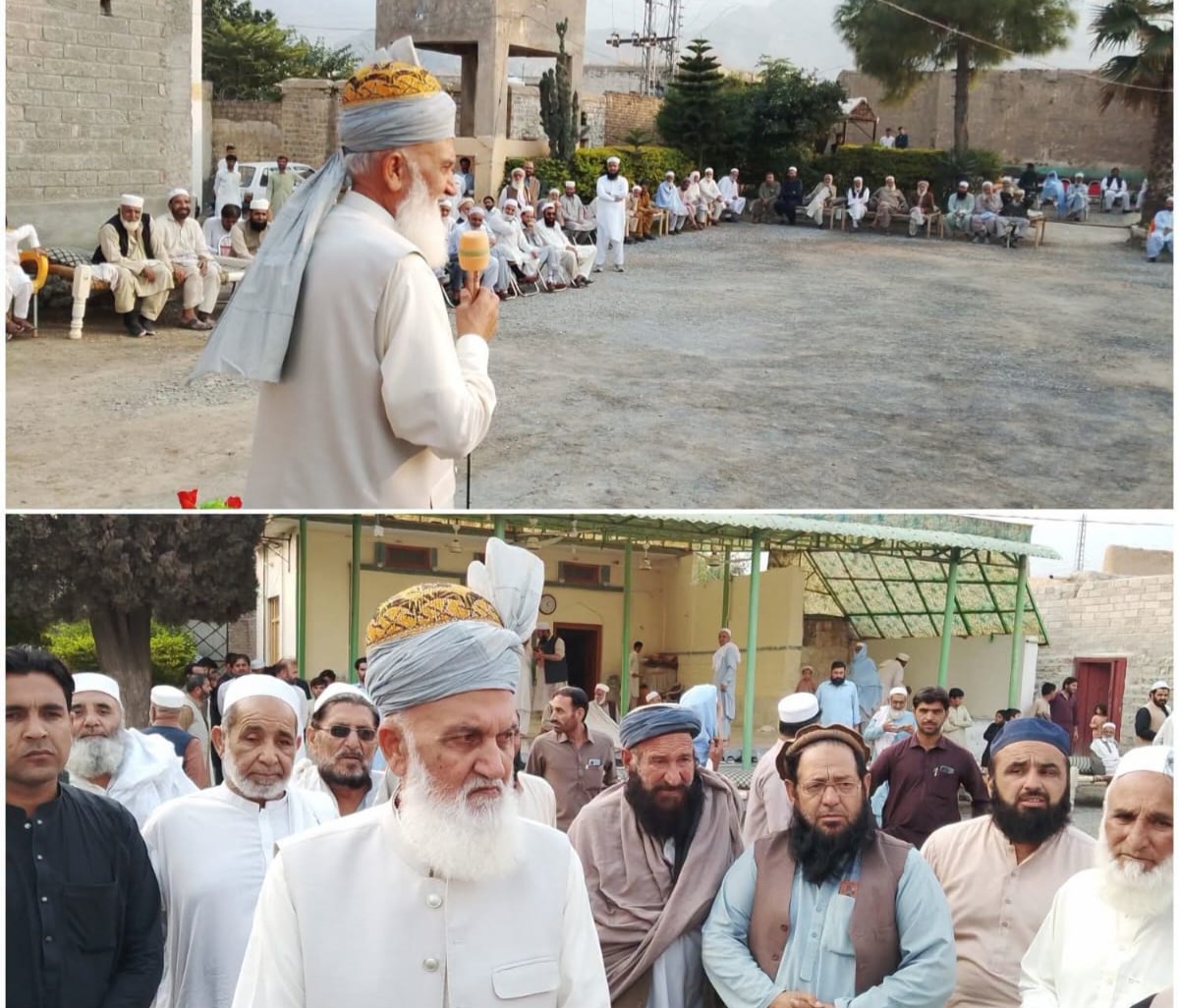
As part of these efforts, awareness sessions are being held in different areas, where community members are being provided with information about cervical cancer, the purpose of the HPV vaccine and the vaccination process.
Non-governmental organisations are also playing a role in these activities. Khyagra Development Organization is among the organisations working at the community level on awareness and demand generation with the support of the Medical Emergency Resilience Foundation.
Through the organisation, efforts are being made to address misconceptions and concerns about the vaccine through community awareness sessions and direct engagement with people, while providing them with reliable information.
Meanwhile, the government is also conducting various awareness activities to ensure that accurate information reaches as many families as possible before the campaign begins.
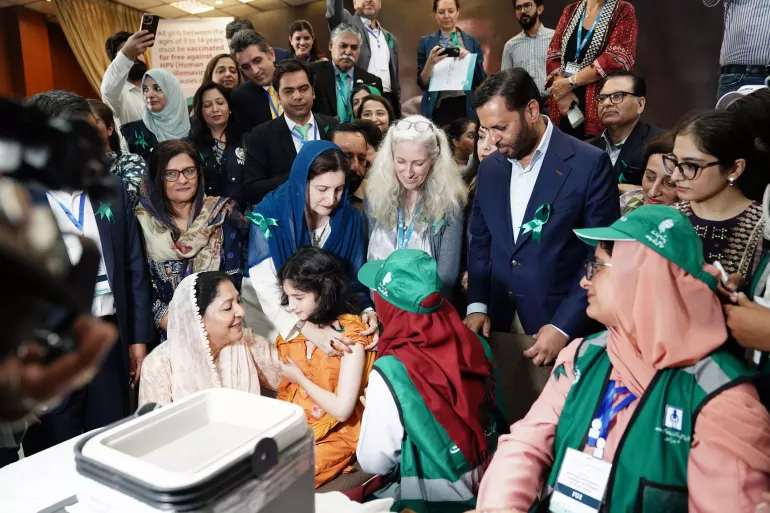
This is why demand generation and awareness sessions are considered important before the campaign. These sessions give people an opportunity to ask questions, while health workers can address concerns that, if raised on vaccination days, could influence parents’ decisions.
The overall aim is to ensure that when the vaccination campaign begins on November 2, parents and community members already understand why the HPV vaccine is being given and what its purpose is.
Rebuilding Trust Before the Campaign :
The ongoing demand-generation activities for the HPV vaccination campaign, which will run from November 2 to 14, are part of this broader effort. During community sessions, people are being engaged directly, their questions are being heard and information about the vaccine is being provided.
Non-governmental organisations, including Khyagra Development Organization, are participating in community-level awareness efforts, while the government is also continuing its own awareness activities.

These activities are important because they allow people’s questions and concerns to surface before vaccination day arrives.
In one household, questions arise about the vaccine. In another, concerns about infertility are raised. Somewhere else, people ask why the focus is only on this particular vaccine, while others link it to a specific agenda. After addressing all these questions, the community outreach worker moves on to the next house.
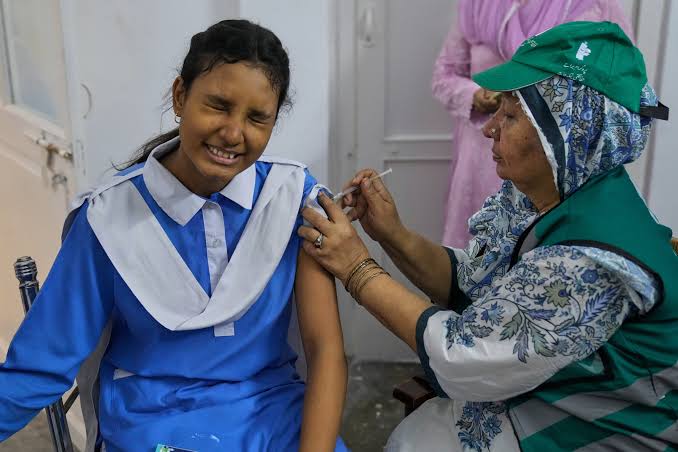
The worker has information about the vaccine, but understands that information alone is not enough. They also need to listen to people. Perhaps the biggest lesson from the cervical cancer vaccination campaign is that trust cannot be built in a single day.
This is not just the story of a vaccine; it is also a story of the questions and concerns in parents’ minds. A mother’s question, a father’s concern, a health worker’s explanation, the views of local people and medical information from a doctor are all part of the same conversation.
When a rumour about a vaccine emerges, the response should not simply be a denial. It should be addressed with accurate and reliable information. Because when questions are answered instead of being ignored, it becomes easier to understand misconceptions and create a path towards the truth.

.jpeg)



1 Comments
I know this iif offf topic but I'm loojing into starting my own log annd
was curious whaqt aall iis newded tto get set up? I'm assauming having a blog like yours wouldd cost
a pretty penny? I'm nott very internet smart so I'm not 100%
sure. Any tips or advicce wopuld be greatly appreciated. Kudos xnxx
My web blog ... web site (<a href="https://porno.mymissav.cc/">https://porno.mymissav.cc/</a>)