


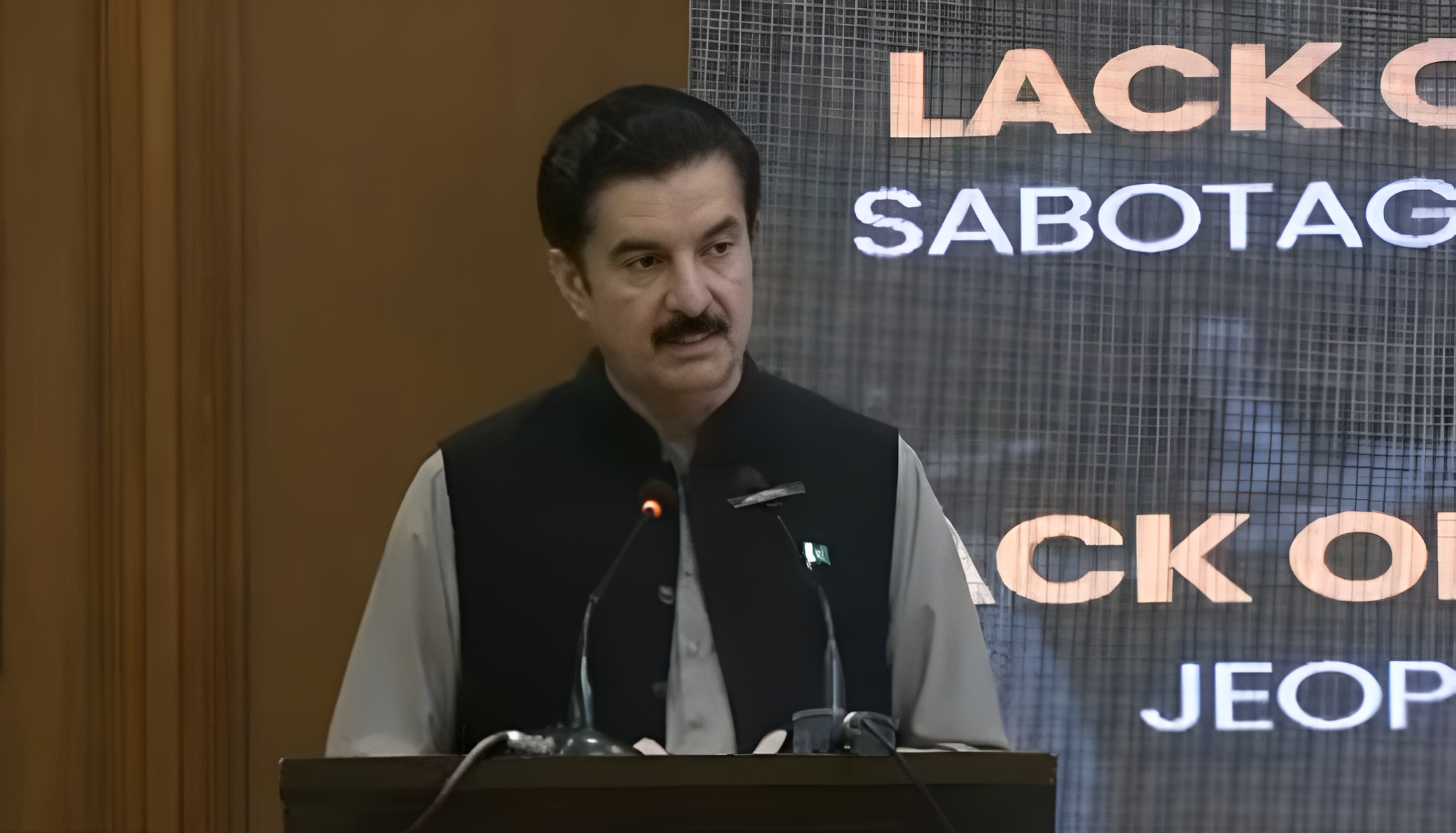
The Khyber Pakhtunkhwa government has set a target of allocating Rs70 billion for security under its proposed “Strong Khyber Pakhtunkhwa” plan, as the province continues to face significant shortages of police personnel, operational vehicles and modern security equipment.
The targets were shared during a special briefing on the province’s security situation at Governor House in Peshawar, attended by Governor Faisal Karim Kundi, provincial advisers, senior civil officials and media representatives.
Adviser for Home and Tribal Affairs Kifayatullah Khan and Home Secretary Amjad Ali Khan briefed participants on existing security challenges, measures taken so far and the province’s future security strategy. A question-and-answer session was also held, attended by the governor, the home adviser, the home secretary and Inspector General of Police Abbas Ahsan.
According to the briefing, the previous provincial government allocated only 3.2 per cent of the total security budget to the merged districts. The police department is facing a shortage of 10,587 personnel, while the Counter Terrorism Department (CTD) lacks 638 officers.
The briefing further revealed that the provincial police face a 36 per cent shortage of operational vehicles, while only 12 per cent of the force has access to anti-drone systems. It also highlighted challenges arising from the merger of 15,186 Khassadar personnel into the police, most of whom were reportedly illiterate.
The rehabilitation of counterterrorism infrastructure has also been affected by delays in funding. Of the approved Rs6.4 billion, only Rs1 billion has so far been released.
Highlighting the human cost of the security situation, the briefing stated that 1,003 military personnel, 627 police officials and 808 civilians were martyred between 2024 and September 2026.
Also Read : Breakthrough in Skardu Family Murder Case as Kurram Police Arrest Two Suspects
During the first nine months of 2026 alone, 255 military personnel, 302 police officials and 304 civilians lost their lives. Despite challenging conditions, security forces eliminated 3,788 militants over the past three years, according to the briefing.
Under the proposed Rs70 billion security allocation, Rs59.8 billion will be earmarked for the police and Rs10.3 billion for the CTD. In comparison, a total of Rs98 billion was spent on security over the past 10 years.
The future strategy also aims to increase police fortification to 75 per cent, improve surveillance capacity from 15 to 60 per cent and enhance night-fighting capabilities from 18 to 50 per cent.
The plan further proposes increasing the police's anti-drone capability from one to 50 per cent, raising the armoured capacity of CTD vehicles from 16 to 70 per cent and expanding jammer coverage from three to 50 per cent. The CTD's operational jurisdiction will also be extended to all 34 districts of the province.
Additionally, District Nerve Centres and a Safe Cities Authority will be established in 10 districts, while the police personnel shortage is expected to be reduced from 15 to five per cent.
The briefing also proposed establishing faceless anti-terrorism courts to expedite proceedings against militants while protecting witnesses.
To counter misinformation and fabricated narratives on social media, the government plans to deploy artificial intelligence tools. Smart front desks will also be established at 406 police stations in major cities across the province.
Other proposed measures include strengthening Dispute Resolution Councils (DRCs), establishing tribal liaison committees, holding monthly open courts and regularly organising jirgas in all districts.
The briefing also proposed increasing the Shaheed Package and Security Challenge Allowance to improve the morale and welfare of security personnel.



Comments
No comments yet. Be the first 🙂