


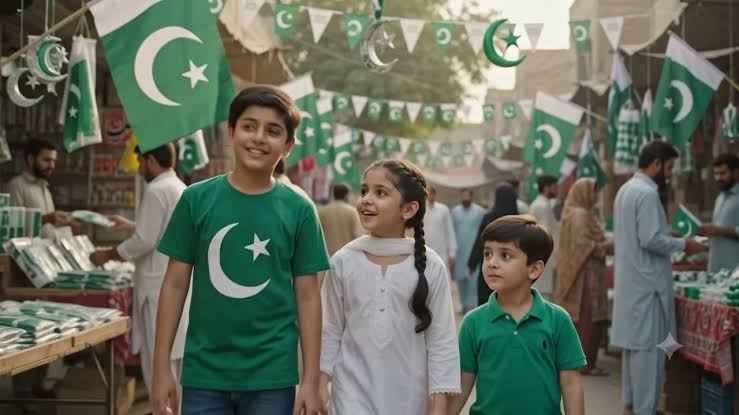
14 August is the day in Pakistan’s history when a nation saw its dream of freedom become a reality. This day is not only about waving the green and white flag, listening to national songs, or attending celebrations; it is also connected to our memories, emotions, and the little joys that remain safe in our hearts since childhood.
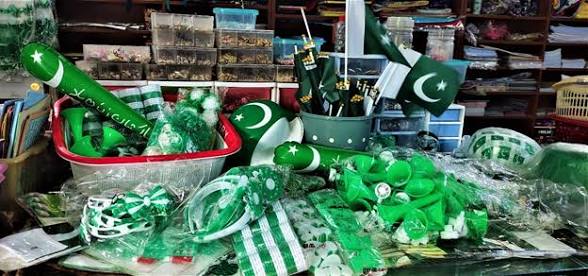
Every year, when 14 August arrives, streets, markets, and homes are decorated in green and white. Children buy flags, flags are raised on houses, and a festive atmosphere can be seen everywhere. But everyone has their own special memory associated with Independence Day. I have one such beautiful memory connected with flags and flour.
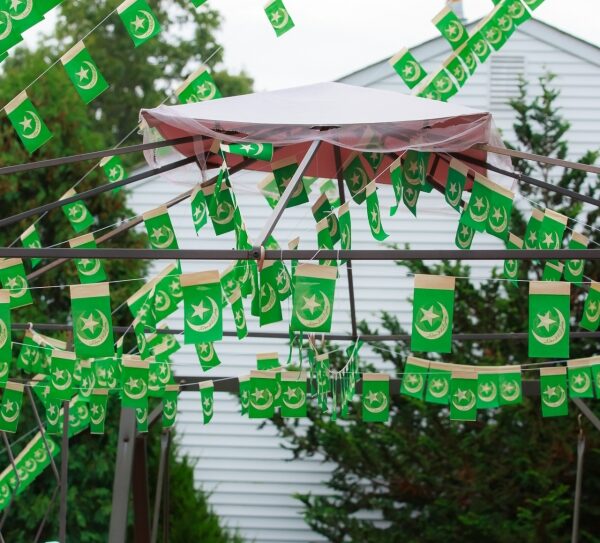
In childhood, 14 August was not just a national day for us; it was a festival of happiness. We would start preparing several days in advance. We would buy colourful paper, make small flags, and then decorate the walls, doors, and windows of our home with them.
At that time, we did not always have glue or tape at home, so we would ask our mother for a little flour. She would smile and give us some flour, and we would happily use it to stick the flags on the walls.
Sometimes, my siblings and I would decorate the house together, and sometimes our mother and father would also join us. At that time, all of this was simply a game and a source of happiness for us.
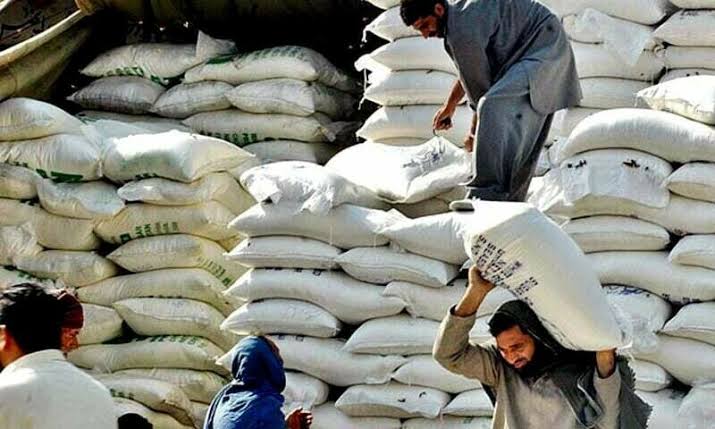
We had no idea that the flour we used so carelessly to put up flags would one day become an important part of the household budget.
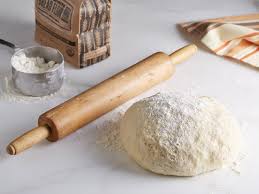
Sometimes, we would even take a small piece of dough from the kneaded flour and play with it. We would make different shapes with our hands, show them to each other, and laugh. At that time, we knew nothing about inflation, had no worries about household expenses, and had no concerns about the future. It was simply a carefree childhood, when even the smallest things could bring great happiness.
Then time passed. Childhood was left behind, and life introduced us to realities we had never even imagined at that time.
Today, when 14 August arrives, flags still look beautiful, national songs still bring joy to the heart, and the green and white colours still make the surroundings look beautiful. But along with these celebrations, the realization of life’s realities has also become deeper than before.
Today, those same children who once asked their mother for a little flour to put up flags are working from morning till evening to meet the needs of life. Some are doing jobs, some are running businesses, some are working as labourers, while others are struggling day and night in search of a better future.
The struggle today is no longer just about fulfilling our wishes. Rent, electricity bills, children’s education, medical expenses, groceries, and other daily necessities all have to be covered through the same hard work. The responsibility of supporting parents and building a better future for one’s children also rests on the shoulders of this generation.
That is why flour is no longer just an ordinary item kept in the kitchen. For many households, it has become an important part of the monthly budget.
Today, if a child takes a small piece of dough from the kneaded flour to play with, the mother might immediately say, “Son, don’t waste the flour.”
It is a simple sentence, but behind it lies a mother’s concern, a limited household budget, and the whole story of the current economic situation.
Inflation has not only increased the prices of goods; it has also changed the way we live. Now, when we go to the market, we think about our needs before our desires.
Also Read : Tradition or Choice: Where Should We Draw the Line?
Before buying anything, we consider its price, and many wishes are postponed simply because basic household necessities are more important.
A mother calculates the household expenses, a father works extra hours to meet his children’s needs, and the younger generation is carrying not only the burden of its own future but also the responsibilities of its families.
Is freedom only about raising the green and white flag on our homes, listening to national songs, and celebrating on the streets? Or does freedom also mean that every child has the right to education, every young person has access to dignified employment, every family can easily meet its basic needs, and no mother has to worry even about a small piece of dough being wasted?
Perhaps the true beauty of freedom lies in seeing its benefits reflected in the lives of ordinary people.
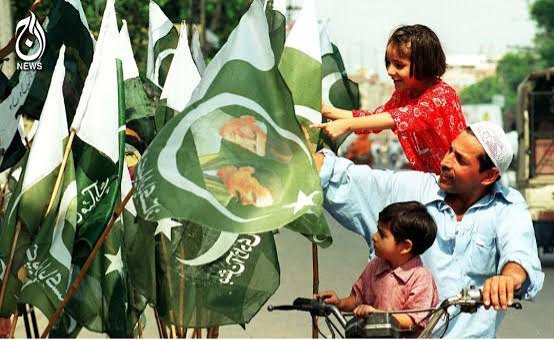
We should certainly celebrate 14 August. We should put flags on our homes, give flags to children, and teach them about the history of this day. But alongside the celebrations, we should not forget those who continue working to feed their families even on a day of celebration.
The labourer who leaves home in search of work even on a holiday, the shopkeeper who keeps his shop open on a festive day, the driver who takes people to their destinations, and the parents who put their children’s needs before their own wishes—all of them are also part of our story of freedom.
14 August gives us an opportunity not only to remember our past but also to understand our present and think about our future. Freedom gives us not only a country; it also gives us the responsibility to make that country better.
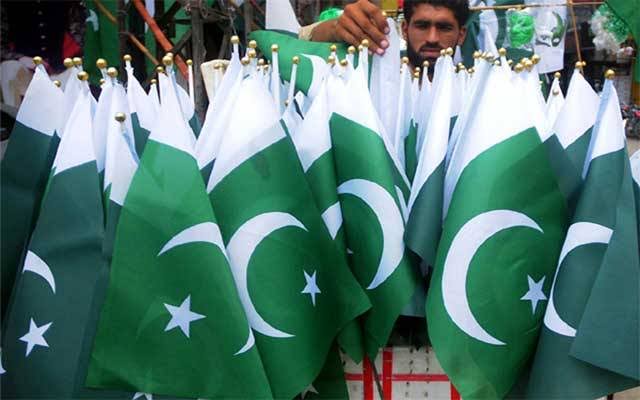
Today, when we see the green and white flag, perhaps we should also remember our childhood. Remember the time when a little flour we asked from our mother became a way for us to put up flags. We should also remember those parents who put aside many of their own needs to give us small moments of happiness.
The flour with which we once decorated our celebrations of freedom is the same flour that our entire generation now works hard to afford, along with other basic necessities of life.
Time has changed, circumstances have changed, but that childhood memory is still alive in our hearts.
Perhaps this memory teaches us that happiness does not always come from expensive things. Sometimes, a small piece of dough, a few flags, and the company of our parents can become the greatest happiness of childhood.
And perhaps one beautiful meaning of freedom is also to preserve those simple joys, value the people who make sacrifices for us, and strive to build a society where future generations of children do not have to worry about basic necessities in order to enjoy their small moments of happiness.
Note: This article reflects the personal views of the author and does not necessarily represent the views of the organisation.
.jpeg)
.png)
1.jpeg)

Comments
No comments yet. Be the first 🙂