


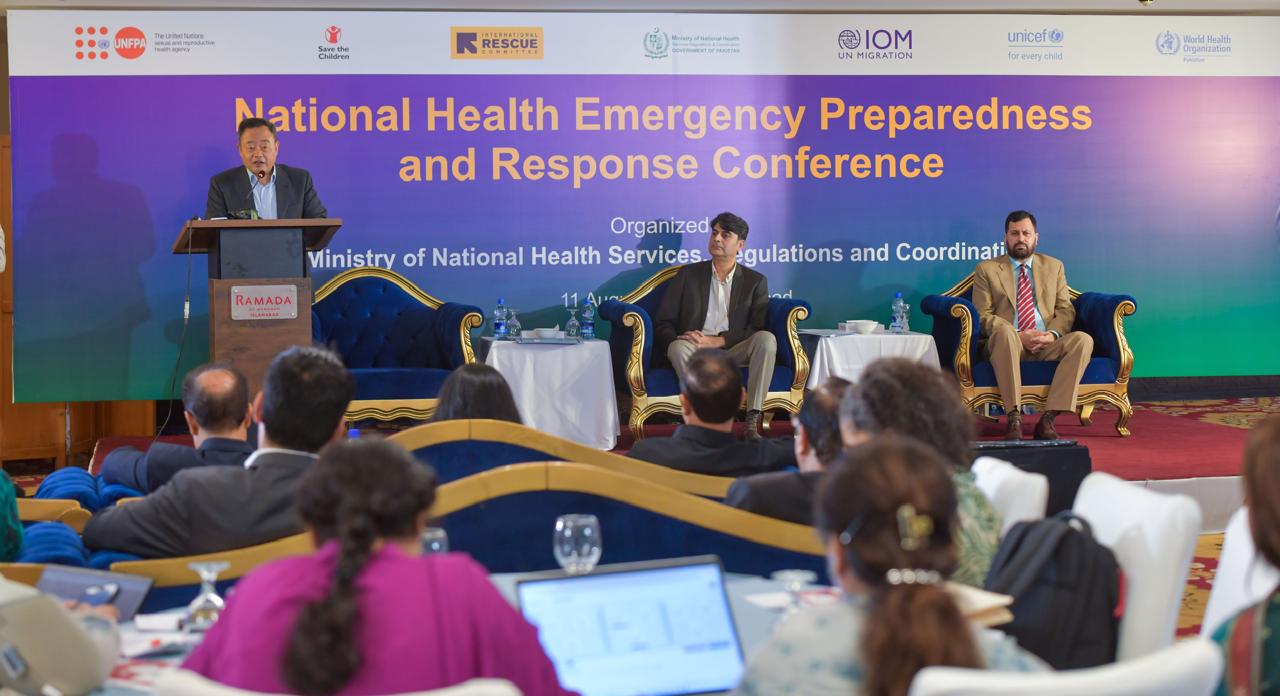
The World Health Organization (WHO), together with the Government of Pakistan and humanitarian partners, is supporting efforts to strengthen the country’s long-term preparedness and response to climate-driven emergencies as the health sector prepares to activate the Monsoon and Flood Contingency Plan 2026, with plans to assist up to 1.8 million people in high-risk areas.
The initiative was highlighted at the National Health Emergency Preparedness and Response Conference, convened by the Ministry of National Health Services, Regulations and Coordination and supported by WHO, UNFPA, IOM, UNICEF, the International Rescue Committee and Save the Children.
The conference focused on strengthening preparedness before disasters strike, improving coordination across the health sector, ensuring timely sharing of reliable data, optimizing resources and securing predictable funding to maintain essential health services during emergencies.
Pakistan faces growing risks from climate-related hazards, including floods, heatwaves, droughts and air pollution. Flooding in particular can disrupt health services and increase the risk of waterborne and other infectious diseases, placing vulnerable communities at heightened risk.
“Preparedness and timely health emergency responses save lives,” said WHO Representative in Pakistan Dr Luo Dapeng. “In a context marked by increasing climate-driven natural disasters, investing in preparedness and a science-based health emergency response is not only the right thing to do to protect lives; it is also the smartest and most cost-effective decision.”
He emphasized that predictable financing, strong coordination and timely, evidence-based interventions can help reduce both loss of life and the economic costs of delayed emergency action.
Pakistan is among the countries most vulnerable to climate change and extreme weather events. The scale of the challenge makes preparedness increasingly important, particularly in communities exposed to recurring floods and other climate-related hazards.
Also Read : Shinwari Fighters Bring Double Gold Glory to Landi Kotal
The health sector’s contingency planning aims to ensure that essential services remain available during emergencies, while strengthening the ability of authorities and partners to identify risks early, coordinate action and reach vulnerable populations quickly.
“Pakistan's geographical location means that we are among the first to experience the effects of climate change,” said Federal Minister of State for Health Dr Malik Mukhtar Ahmad Bharath. “What we need to discuss today is what our preparedness should look like before we have to respond.”
The conference underscored the need to move beyond responding to individual disasters towards sustained investment in preparedness, resilient health systems and coordinated action that can protect communities before, during and after climate-related emergencies.







Comments
No comments yet. Be the first 🙂