



A few days ago, I was traveling in a rickshaw. Since the journey was a little long, I started talking to a woman sitting beside me.
During our conversation, she asked me where I worked. I told her that I worked with a non-governmental organization (NGO) that works in the areas of health, education, and youth development.
Its various programs include initiatives aimed at improving young people’s skills, promoting education, and providing health-related services.
She herself was an SST teacher at a school — an educated woman who taught children and played a role in shaping the next generation every day. But when she heard about my work, her response surprised me.

She said that the NGO sector is not viewed positively in society. People say different things about this field, and working in it could also have a negative impact on my future. She even advised me not to tell people that I worked for an NGO because they might not have a good opinion of me.
I asked her why. How could work that is aimed at helping people and addressing issues related to education, health, women, and children be bad for someone’s future?
After hearing her words, I remained silent for a while, but one question stayed in my mind: If an educated woman who teaches at a school has such a perception of NGOs, then what must ordinary people think? And, more importantly, what is a teacher teaching her students? Do we become educated simply by studying books, or does having a broader mindset matter as well?
In my opinion, it is not right to label any field as good or bad simply on the basis of what people say. The NGO sector, like any other sector, is a field of work where different people work for different purposes. Many organizations work on education, healthcare, children’s rights, women’s empowerment, poverty, the environment, emergencies, and other social issues.
People working in this sector also earn a living through their hard work and contribute to society. Therefore, simply saying that working for an NGO is not considered respectable does not make someone’s work or character wrong.
Also Read : From Classroom Humiliation to Adult Insecurity: The Lasting Impact of a Teacher’s Words
However, there is another side to this issue that cannot be ignored.
It is also true that not every organization is the same, and the working environment is not the same everywhere. In some places, local culture, traditions, and people’s sentiments are not given enough consideration.
Sometimes, outsiders or organizations begin working in a community without properly understanding the local people’s mindset and culture. This can create misunderstandings among local communities, leading them to view the entire NGO sector through the same lens.
It is not fair to judge an entire sector negatively because of the wrong practices of a few organizations or individuals. However, NGOs must ensure that they respect the culture, traditions, and sentiments of the communities in which they operate. Good work is not simply about doing something for people; it is also about helping them while respecting their dignity, culture, and feelings.
If an organization ignores people’s culture in the name of helping them, it is natural for questions to arise in their minds. Therefore, NGOs should consider it their responsibility to work transparently, involve local communities, and provide people with accurate information about their work.
On the other hand, society also needs to understand that before forming an opinion about an organization or a particular sector, we should look at the work it actually does. If something wrong has happened in one place, it does not mean that everyone associated with that sector is wrong.
Perhaps the woman’s words during that rickshaw journey affected me more because she herself was a teacher. A teacher does not simply teach children from textbooks; they also play an important role in shaping their thinking. Children learn not only academic knowledge from their teachers but also how to view people and society.
If a child learns from a teacher that a particular profession or group of people can be judged as good or bad simply on the basis of what others say, their thinking may also become limited.
We need to teach our children to understand the facts before forming an opinion about any person or profession. They should ask questions, do their own research, and then form an opinion.

Working for an NGO does not define a person’s character, just as working at a school does not guarantee a person’s character. What truly matters is a person’s attitude, intentions, work, and how they treat others.
That brief conversation in the rickshaw that day left me with a lot to think about. I realized that society needs not only educated people but also people with open and broad-minded thinking.
We should question NGOs about how they operate, but we should not label the entire sector negatively based only on rumors or the experiences of a few individuals.
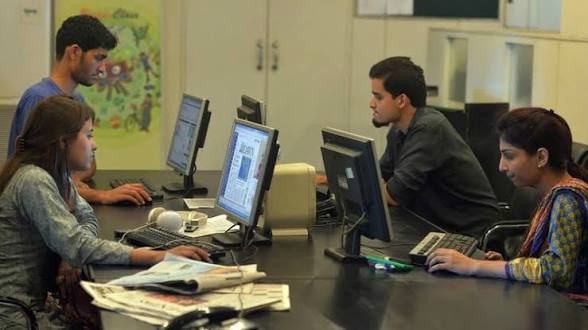
What is needed is for NGOs to understand their responsibilities while society also keeps an open mind. Where there is wrongdoing, it should be pointed out, and where good work is being done, it should also be acknowledged.
Because the true identity of any sector is not determined by what people say about it, but by the work being done within that sector. And perhaps this is what we most need to teach the next generation: Do not consider something bad simply because people say it is bad. First understand the reality, ask questions, do your research, and then form your own opinion.
Note: This article reflects the personal opinion of the author and does not necessarily represent the views of the organization.




1 Comments
Simply desire to say your article is as astounding.
The clarity in your post is just great and i can assume you are an expert on this subject.
Well with your permission let me to grab your RSS feed to keep updated with forthcoming post.
Thanks a million and please continue the enjoyable
work. xnxx
Look into my web page :: web site, <a href="https://app.xnxxtubexxx.cc/">Florine</a>,