


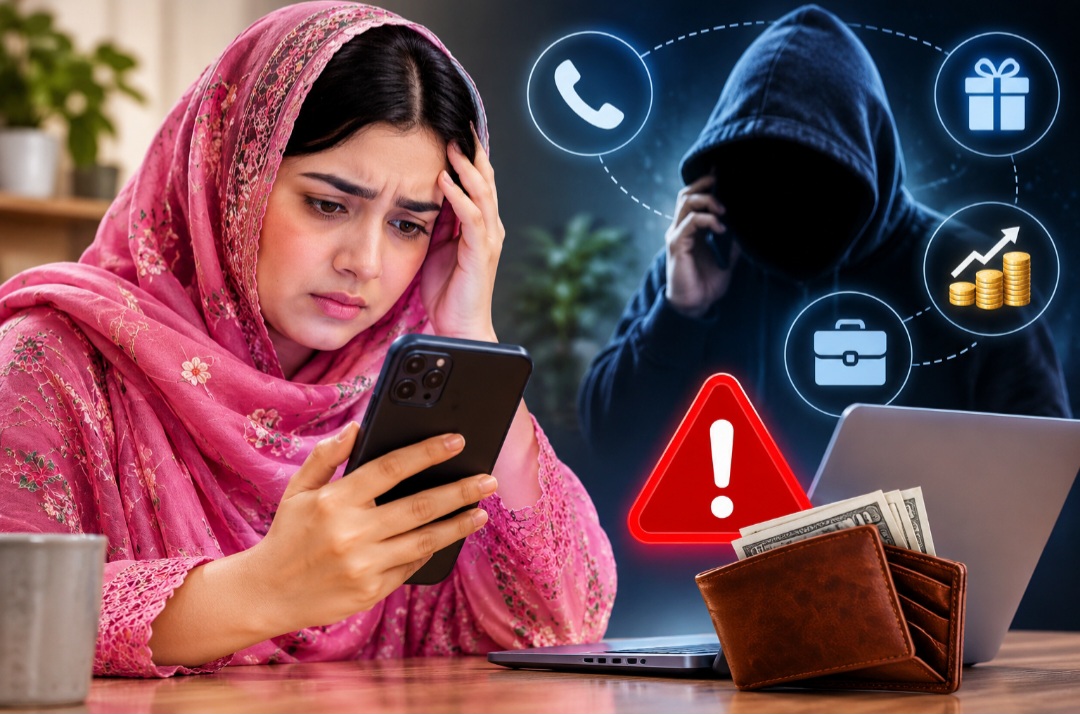
There was a time when the mention of robbers immediately brought to mind pistols, guns and armed robberies. However, criminal methods have changed over time. Today, some people use sweet talk, false promises and phone calls instead of weapons to steal people's hard-earned savings. Sometimes, they pretend that money has mistakenly been transferred to an Easypaisa account, while at other times, they lure people with promises of work-from-home opportunities and high profits.
Various forms of online fraud are emerging these days. People receive calls from unknown numbers claiming that money has mistakenly been transferred to their Easypaisa accounts and asking them to return it. Some fraudsters lure people into online games by promising huge winnings within minutes, while others collect money from people in the name of work-from-home opportunities and investments.
Online assignment work has also become a common method of fraud. People are offered opportunities through different groups and platforms to earn money by completing assignments from home. Initially, they are asked to pay a registration fee and assured that they will receive work and payment after submitting the fee. Some people pay the fee, complete the assignments and submit them, only to be told later that they must add more members to the group. In some cases, the individuals collecting the fees simply stop responding. As a result, people lose not only their money but also the payment for their hard work.
I also experienced a similar suspicious incident involving my Easypaisa account. I already had Rs7,000 in my account when I received a call from an unknown number. The caller claimed that he had mistakenly transferred Rs7,000 to my account and asked me to send the money back.

I told him to check his transaction history because if the money had actually been transferred to my account, there would be a record of it. Although my account already contained Rs7,000, I had not received any new transaction from him.
Despite this, he continued giving me instructions. At times, he asked me to enter a code, while at other times, he told me to send money to a specific number. I could not understand what he was trying to make me do. When the situation began to seem suspicious, I took precautionary measures and transferred the money in my account to my husband's account. I then asked the caller to check his account again and clearly told him that I had not received any money from him. After that, I ended the call and blocked the number.

Following this incident, several questions came to my mind. How did the caller know that I had Rs7,000 in my Easypaisa account? Where did he get my mobile number? If he had not transferred any money, what amount was he asking me to return? I still do not have answers to these questions, but this experience certainly taught me that it is not wise to trust every phone call.
Also Read : When Small Disagreements Turn Deadly: Is Pakistan Becoming an Intolerant Society?
Messages on WhatsApp claiming that someone has won a prize, fake warnings about account closures and online investment advertisements are also being used to deceive people. Some advertisements claim that investing a small amount can generate several times more profit within a few days. People believe these promises and transfer their money, only to find that the other party sometimes stops responding altogether.
To tackle this issue, public awareness and action by the relevant authorities are equally important. In Pakistan, the National Cyber Crime Investigation Agency (NCCIA) is responsible for handling complaints and investigating cybercrimes. The agency advises citizens to remain cautious of unknown links, never share their PINs, passwords or one-time passwords (OTPs) with anyone, and verify the recipient's details before transferring money.
Various institutions and financial service providers also warn users through phone calls, advertisements and awareness messages not to share their confidential information with anyone. Instead of dismissing these instructions as mere formal announcements, people must take them seriously and follow them. Victims of online fraud can contact the NCCIA helpline at 1799 or register complaints through its online complaint portal. They can also visit their nearest cybercrime reporting centre.
The State Bank of Pakistan (SBP) has also issued instructions to banks and microfinance banks to strengthen digital banking security and take measures to prevent financial fraud. These measures aim to protect customers' accounts and money and ensure timely action on fraud-related complaints.

However, alongside institutional efforts, personal caution is equally important. If an unknown person claims that money has mistakenly been transferred to your account, do not immediately return it on their instructions. First, check your transaction history and verify the claim with your relevant financial institution.
Similarly, thoroughly investigate before paying any registration fee for online assignment work or work-from-home opportunities. Never share your OTP, PIN or confidential codes with anyone, and do not blindly trust promises of quick profits.
The time has come for us to be as careful in the online world as we are in our daily lives because not every robber carries a gun. Some people exploit our needs and trust to steal our hard-earned money. A moment of carelessness can cost someone their entire savings.




Comments
No comments yet. Be the first 🙂