


.jpeg)
Early in the morning, a young person leaves home carrying educational certificates and a single hope in mind, heading toward a government office, examination centre or private institution. After hours of travel, waiting, tests and interviews, the result often comes down to only a few names being selected from hundreds, or even thousands, of candidates competing for a limited number of positions. The remaining candidates begin waiting once again for the next advertisement, the next examination and the next hope.

In Pakistan, this competition for employment is no longer simply a race to secure a job. It has become a long and difficult test of building a future after completing one’s education. According to the Pakistan Bureau of Statistics’ Labour Force Survey 2024-25, the unemployment rate stands at 10.9 percent, while among people holding Master’s, MPhil and PhD degrees, the rate is 11.7 percent.
The problem is even more pronounced among women, as the unemployment rate among women with Master’s, MPhil and PhD degrees has been recorded at 24 percent.
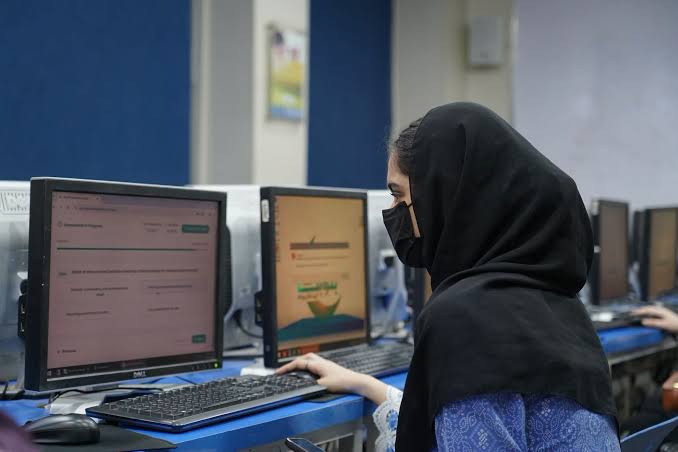
The issue is not limited to the unemployment rate. The number of young people pursuing higher education in Pakistan has also continued to grow. According to Higher Education Commission data, the number of students enrolled in higher education increased from 1,138,729 in 2012-13 to 2,272,166 in 2020-21. In other words, educational opportunities and the number of degrees increased, but employment opportunities did not grow at the same pace for every young person completing their education.
This gap becomes most visible when applications pile up for a single vacancy. Sana, a 35-year-old from Peshawar, has a Master’s degree in Islamic Studies. She has appeared in examinations for various government positions several times, but the age limit has now itself become a barrier for her.
Sana says she applied for various positions, but she is now no longer eligible for many vacancies where the age limit is set at 30. According to her, sometimes thousands of people apply for only three or four positions. In such circumstances, it becomes extremely difficult for every candidate to succeed.

But for Sana, the problem is not only the shortage of vacancies. She says she also tried to find employment in the private sector alongside government institutions, but there too she faced questions about the recruitment process. She says she approached four to six private institutions for jobs, but in some places she felt that the institutions had already decided which candidate they wanted to hire and the recruitment process was completed afterwards.
Sana says, “If an institution has already decided to select a particular person, then what is the need to advertise the position and ask other candidates to apply and appear for interviews?”
According to her, such practices cost candidates not only their time but also money spent on travel, applications and other expenses. After years of trying to find employment in both the government and private sectors, she is now working as a private tutor.
However, experts say that young people’s complaints cannot be applied to every institution in the country. There are many government and private institutions in Pakistan where recruitment is conducted through formal examinations, eligibility criteria and merit.
The real issue is that when the number of candidates becomes far greater than the available positions, the gap between those who succeed and those who are left behind becomes very wide. It is within this gap that complaints about nepotism, personal preferences and merit also emerge.
The experience of 27-year-old Asma from Malakand also reflects the exhaustion of searching for employment. She applied for a temporary lecturer position at a government institution. According to her, she left home at 8 a.m., travelled for around two hours and waited at the institution for her interview until 5 p.m. When her turn finally came, she was told that the institution intended to rehire its existing staff.

Asma asks why the position was advertised in the first place if the decision had already been made, and why candidates were asked to apply and travel such a long distance for an interview. She says she returned home at 7 p.m. An entire day was spent travelling and waiting, but in the end, she did not get the job.
In their search for employment, some candidates also face criteria that, in their view, are given more importance than their actual qualifications. Saima, who is from Kalam in Swat, applied for a government job and says she met all the required criteria. However, she was rejected during the interview solely because she could not speak English fluently.

Saima says English is not our national language, and if fluency in English was an essential requirement for the position, it should have been clearly stated beforehand. According to her, she spent around Rs10,000 trying to secure the job, but in the end, she got nothing.
In contrast to these experiences, the story of Muhammad Tariq Khan shows that success is possible after a long wait, but it may require years of continuous struggle.
Muhammad Tariq Khan, from Mingora in Swat, secured a government job on March 19, 2025, as a Grade-17 Subject Specialist in Pakistan Studies. However, it took him nearly six years of continuous effort to reach this position.
Tariq Khan completed his graduation in Pakistan Studies in 2019. He says that afterwards, he appeared in various government examinations and repeatedly travelled from Swat to Peshawar to take the tests. During this period, he also faced financial difficulties.

He says he even appeared in examinations for positions whose advertisements were issued in 2023, the exams were held in 2024, and the results were announced in 2025. According to Tariq Khan, despite all these difficulties, he did not give up his hard work or hope. He adds, “Eventually, I left my private jobs and focused solely on preparation. In 2025, I secured a government job.”
Tariq Khan says the attitude of society during his period of unemployment also affected him. According to him, he did not receive the respect he expected while working in the private sector, but after securing a government job, the same people changed their attitude towards him.
Also Read : ‘You Didn’t Value Me’: Bina’s Pain Becomes the Heart of ‘Aap Ki Izzat’

He advises young people to appear for government job examinations, but not to spend their entire lives waiting for a single government vacancy. According to him, young people should also work in the private sector in fields related to their degrees so they can gain practical experience and maintain a strong grasp of their profession.
He says young people often start preparing only after a government job advertisement is published, whereas preparation for such examinations should begin much earlier. Similarly, if a young person finds a private-sector job related to their education, they should not leave it simply because they are waiting for a government job.
Meanwhile, Fazal Haq, a secondary school teacher from Swat, says one of the main reasons thousands of applications are received for a single vacancy in Pakistan is that large numbers of young people complete their education every year and enter the job market, while government institutions do not create enough new positions to accommodate them.

Fazal Haq says he has seen even PhD holders applying for Grade-3 and Grade-4 jobs. According to him, inflation has forced people to such an extent that highly educated individuals are also willing to accept jobs below their educational qualifications simply to have some source of income.
He says complaints of nepotism and favouritism do exist in some institutions in Pakistan, but some institutions also operate on merit. The problem is that the number of candidates is far greater than the number of available government vacancies, whether a few hundred or a few thousand, making it impossible for the government to provide every educated young person with a government job.
In Fazal Haq’s view, the government should pay greater attention to sectors where there is a genuine shortage of staff. According to him, there are schools in Swat and elsewhere in Khyber Pakhtunkhwa where staff shortages persist, and permanent teachers for certain subjects are also unavailable.
He says temporary teachers could be hired according to need. This could, on the one hand, provide young people with employment opportunities and, on the other, help reduce the teaching gap in schools.
Limited employment opportunities and increasing competition are also pushing young people towards employment abroad. According to the Bureau of Emigration and Overseas Employment, 285,370 Pakistanis had gone abroad for employment by May 2025. These figures also offer a glimpse into how the search for better employment is no longer limited to one’s own city or province.

However, not every young person can afford to go abroad, and government jobs are not available for every educated individual. This is where the importance of alternative employment opportunities becomes greater.
According to senior journalist, writer, anchor, columnist, trainer and professional consultant (career counsellor) Shams Mohmand from Mohmand district, inflation and unemployment have made government jobs exceptionally important for young people. He says some young people apply even for Grade-3 and Grade-4 positions after completing MPhil and PhD degrees because they fear that once they cross the age limit, they may have no opportunities left.
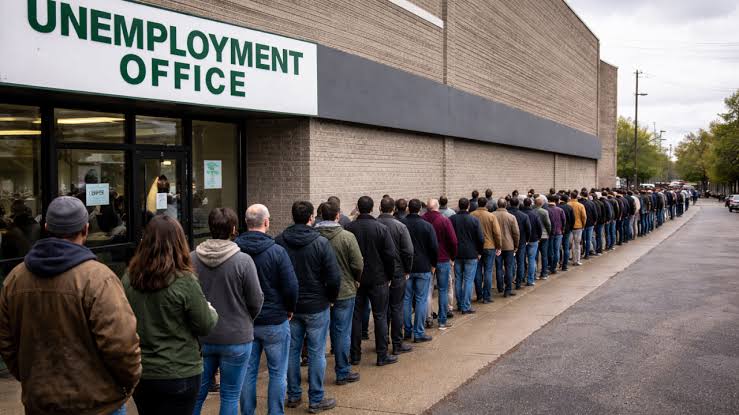
According to him, thousands of candidates apply for a single vacancy, after which only a few are selected while a large number are left unsuccessful. Repeated failures can push some young people into severe disappointment and frustration.
Shams Mohmand says the biggest complaint among the young people who come to him for counselling is that they are not receiving opportunities on merit and that their abilities are not being valued. However, his advice is that young people should not spend all their energy simply waiting for government jobs.

He says government employment is good in its own place, but working in the private sector, learning different skills and working independently are also pathways to employment. If young people acquire more than one skill, their opportunities also increase.
According to him, particularly after completing matriculation and 12th grade, young people should not simply wait for a degree but should also learn technical and professional skills. They should explore private-sector jobs and also work independently. Opportunities for working from home have also increased since the Covid-19 pandemic, allowing people to provide various services at national and international levels while staying at home. Therefore, young people should improve their skills according to the changing world of employment.
Shams Mohmand also expects the government to launch programmes that teach young people practical skills instead of relying solely on loan schemes. According to him, repaying loans is not easy for every young person, while a useful skill is an asset that can benefit them for a long time.
In his view, the government should also identify sectors where the country genuinely needs a workforce and then train young people according to the requirements of those sectors. They should also be encouraged towards entrepreneurship and self-employment. In this way, the gap between education, skills and employment can be reduced.
Experts say Pakistan’s employment crisis has not emerged simply because young people do not want to work. The problem is also that large numbers of educated people enter the job market every year, while the public sector cannot absorb all of them.

On the other hand, despite the availability of opportunities in the private sector, complaints about recruitment procedures, low wages, experience requirements and favouritism in some institutions add to the difficulties faced by young people.
Therefore, the solution is not simply to create more government vacancies. The government will also need to focus on increasing employment opportunities in the private sector, creating facilities for small businesses and skilled young people, linking technical education with labour-market needs, filling vacant positions in government institutions in a timely manner and making recruitment processes more transparent.
Another important requirement is that if a position requires specific education, experience or language skills, these requirements should be clearly stated in the advertisement. Rejecting a candidate after taking them through several stages of the recruitment process on the basis of a requirement that was not clearly mentioned beforehand wastes both their time and resources.

Similarly, if an institution has already decided to rehire an existing employee, making this decision clear before issuing a recruitment advertisement would be a fairer approach towards applicants. Transparency does not only mean selecting a successful candidate; it also means assuring unsuccessful candidates that they were genuinely given an equal opportunity.
The six-year struggle of Muhammad Tariq Khan, the opportunities closing for Sana because of the age limit, Asma returning empty-handed after spending an entire day travelling and waiting, Saima being rejected on the basis of a language requirement after spending Rs10,000, and career counsellor Shams Mohmand witnessing highly educated individuals apply for lower-grade jobs all represent different aspects of the same problem.

But there is one thing common among all of them: young people want to work. They simply need an opportunity.
A job in which they do not have to face a decision that has already been made, an examination in which their abilities are genuinely assessed, and an interview with clear and transparent criteria.
It is not possible to provide a government job to every young person, but providing every young person with a fair opportunity to earn a dignified livelihood is certainly the responsibility of the state. If thousands of young people are standing outside a single vacancy, the question is not only who among them will get the job; the question is also when and where new doors of employment will open for the thousands who are left behind.
.jpeg)
.png)
1.jpeg)


Comments
No comments yet. Be the first 🙂