


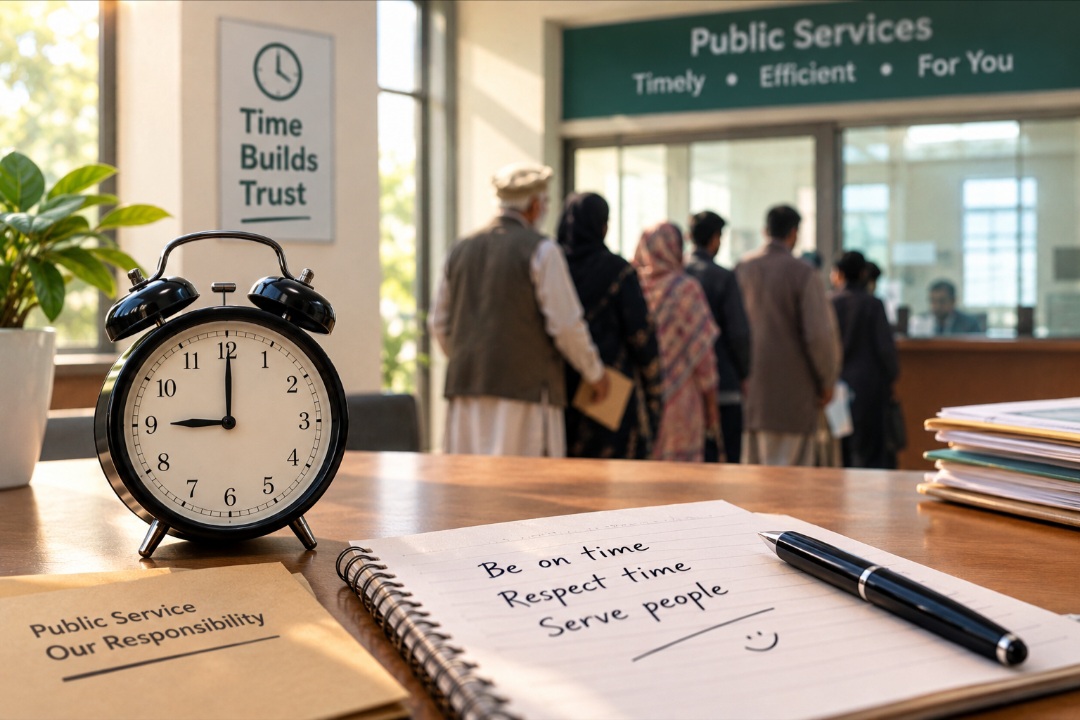
It is often said that nations that value time and practise punctuality are the ones that progress. Punctuality is one of the key factors behind the success of developed countries, where even a delay of a few minutes is taken seriously.
Unfortunately, in our country, particularly in government offices, punctuality is not given the importance it deserves. Ordinary citizens often bear the consequences of this negligence, losing not only their valuable time but also their money and other resources.

A few days ago, I was talking to a friend who shared her personal experience of the lack of punctuality in government offices. Her experience made me wonder why citizens have to face such difficulties in institutions established to serve the public.
My friend told me that one day she visited a village council office to obtain her birth certificate. The office hours were from 9 am to 5 pm. Hoping to get her work done as early as possible, she arrived at exactly 9 am. However, the officer responsible for signing the birth certificate was not there. She was told that the officer had not arrived yet and that she would have to wait. As a result, despite reaching the office on time, she could not get her work done.
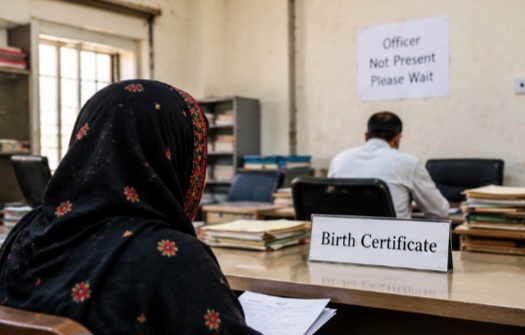
She further explained that when she visited the office again during Ramadan, she received the same response. This time, she was told to return after 12 noon. Consequently, she had to make repeated visits to the same office for a single task, even though she had arrived according to the prescribed office timings.
It is worth noting that my friend is a teacher at a government school. She explained that she had to take leave from school to obtain her birth certificate. Government employees are entitled to a specific number of leave days each year, which they generally use for essential personal matters.
If employees have to use their leave for tasks that remain incomplete because of the negligence or delays of staff at the relevant offices, it creates unnecessary difficulties. Moreover, taking leave without a valid reason or in violation of the rules may also result in salary deductions.

The question is: if government employees are expected to be punctual in performing their duties, why should officers responsible for public services not be equally committed to their responsibilities and official working hours?
Government offices are established to resolve public grievances and provide citizens with essential services. Their expenses are met through public taxes. Therefore, officers and staff working in these institutions have a fundamental responsibility to address citizens’ concerns promptly.
Instead of forcing people to wait unnecessarily and visit offices repeatedly, their work should be completed within the stipulated time. This would not only reduce public difficulties but also strengthen people’s trust in government institutions and improve the overall delivery of public services.
This problem is not limited to a single village council. Citizens face similar difficulties in various government institutions. Outside these offices, elderly people, individuals travelling from remote areas and those who have taken leave from work for essential tasks often have to wait for long periods. For some, making repeated visits to government offices and bearing additional travel expenses is difficult. As a result, ordinary citizens end up bearing the burden of officers’ delays.

Also Read : Disconnected Bara: Two weeks without internet disrupt trade and education
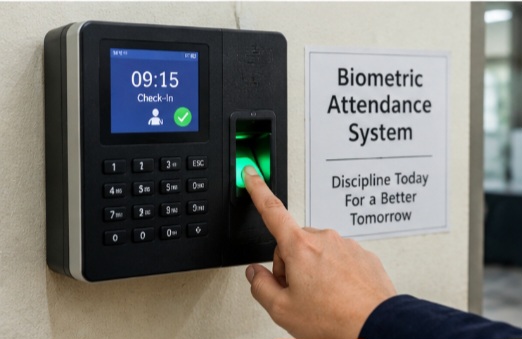
An effective system of monitoring and accountability is essential to ensure punctuality in government offices. Biometric attendance systems can maintain records of employees’ arrival and departure times. However, regular monitoring and action against violations of rules are equally necessary.
One of the major reasons behind this problem is the lack of an effective system of checks and balances. In some cases, complaints against officers are not taken seriously, and they are not held accountable because of personal connections or influence.
There is a need for transparent investigations into citizens’ complaints and impartial action against proven negligence. Holding a government position comes with authority, but it also carries the responsibility of serving the public.
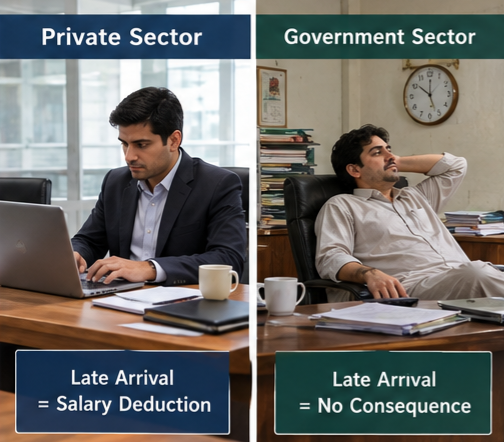
On the other hand, private institutions generally enforce punctuality more strictly. Delays or absences may result in salary deductions or other disciplinary action in accordance with established rules.

Punctuality should also be ensured in government institutions through biometric attendance systems, regular checks of attendance records and proper supervision by department heads. Punctuality has a significant impact on a person’s character and professional reputation.
People who value time and fulfil their commitments are considered responsible and trustworthy. The same principle applies to government institutions, where the timely delivery of services helps strengthen public trust.

In conclusion, I would like to say only this: time waits for no one, but individuals and nations that value time are the ones that achieve success and progress. We should practise punctuality in our own lives and respect other people’s time as well. Government officers, in particular, must realise that their delays waste ordinary citizens’ time and money.
We should resolve to make respect for time a part of our individual and collective lives because punctuality is the foundation of a responsible and developed society.
Note: This article reflects the personal opinion of the author and does not necessarily represent the views of the organisation.






Comments
No comments yet. Be the first 🙂