


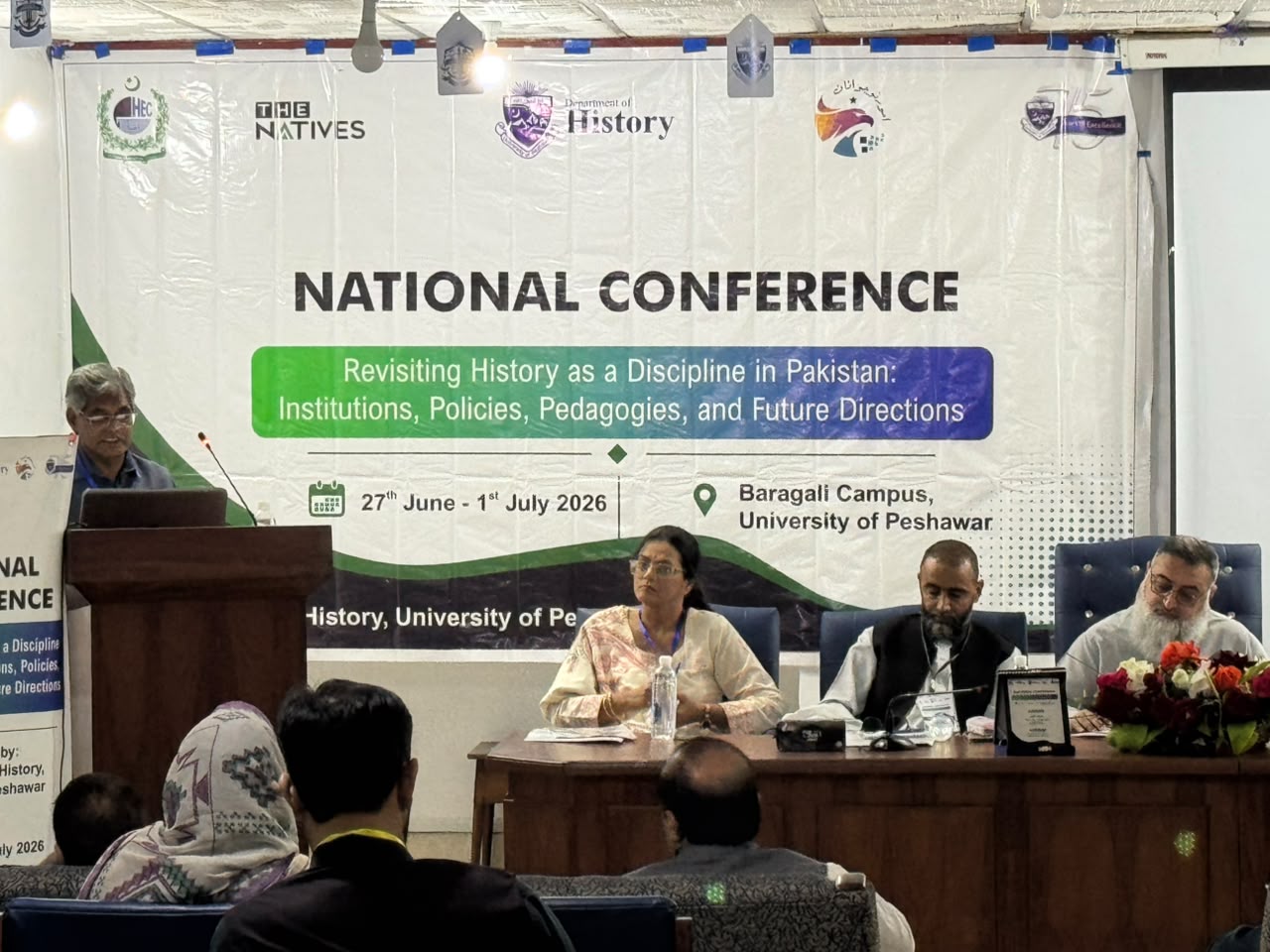
History in Pakistan has long occupied an uneasy position between academic importance and institutional neglect. In recent years, the discipline has confronted a familiar set of challenges: declining student enrolment, outdated curricula, limited engagement with new historical methods, tensions surrounding centralized academic policies and more recently the emergence of artificial intelligence as a challenge to traditional practices of historical verification.
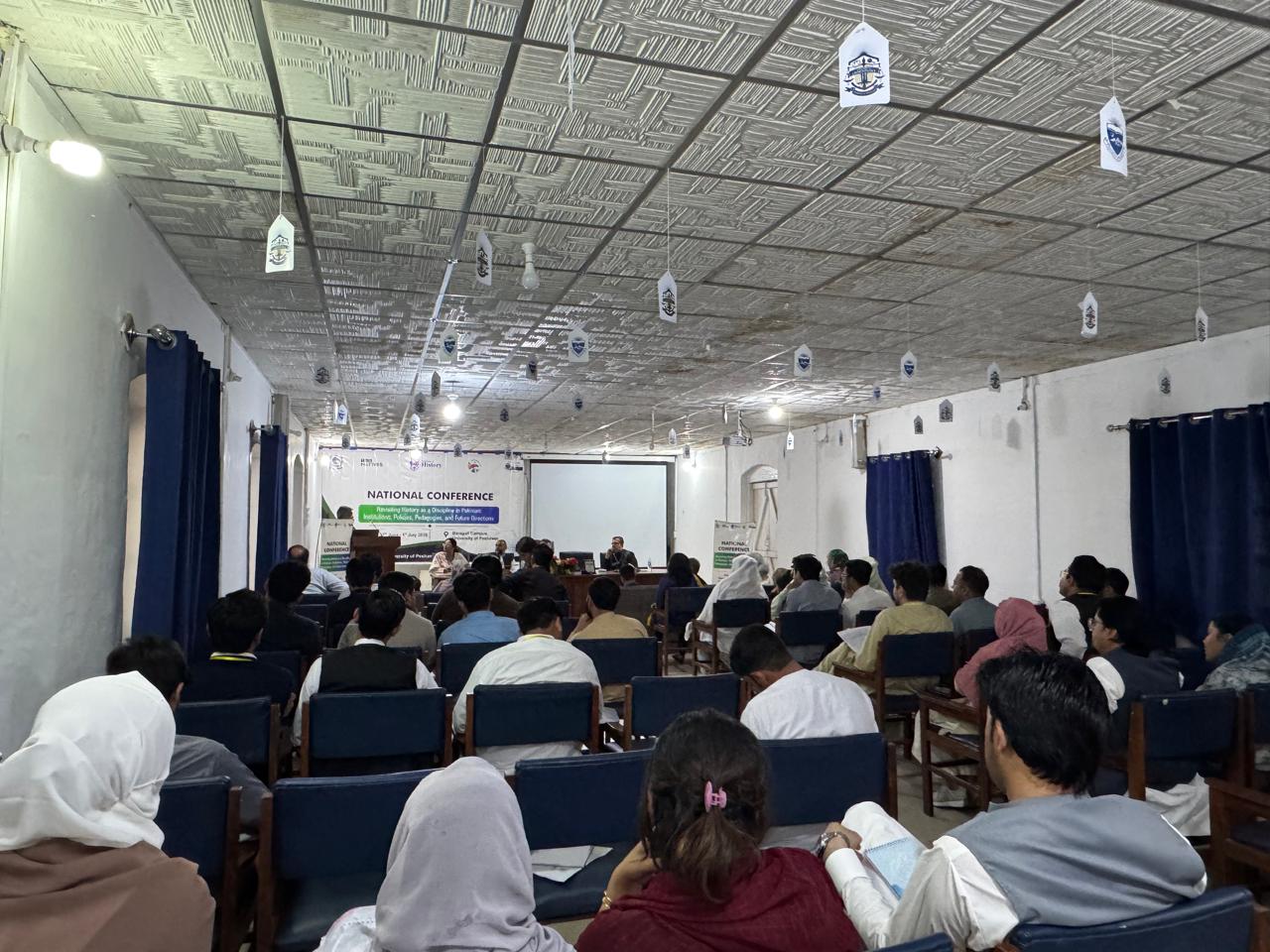
It was within this wider context that the Department of History, University of Peshawar, organized the National Conference on “Revisiting History as a Discipline in Pakistan: Institutions, Policies, Pedagogies and Future Directions” from June 27 to July 1, 2026, at the university’s Bara Gali Summer Camp. The conference represented an important attempt to examine not only the problems confronting History as a discipline but also the possibilities for its renewal.
Bringing together historians, researchers, and academics from across Pakistan, the conference created a rare platform for sustained discussion on the institutional and intellectual future of historical studies. Scholars from Karachi, Lahore, Faisalabad, Islamabad, Bahawalpur, Mardan, Peshawar, and Swat participated in the event, reflecting the national scope of the debate.
The conference also attracted a large number of students from the Departments of History, Political Science, International Relations, and Pakistan Studies, demonstrating its broad interdisciplinary appeal.
Also Read : One Room, 29 Dreams: How Amina is Bringing Education to Afghan Refugee Children
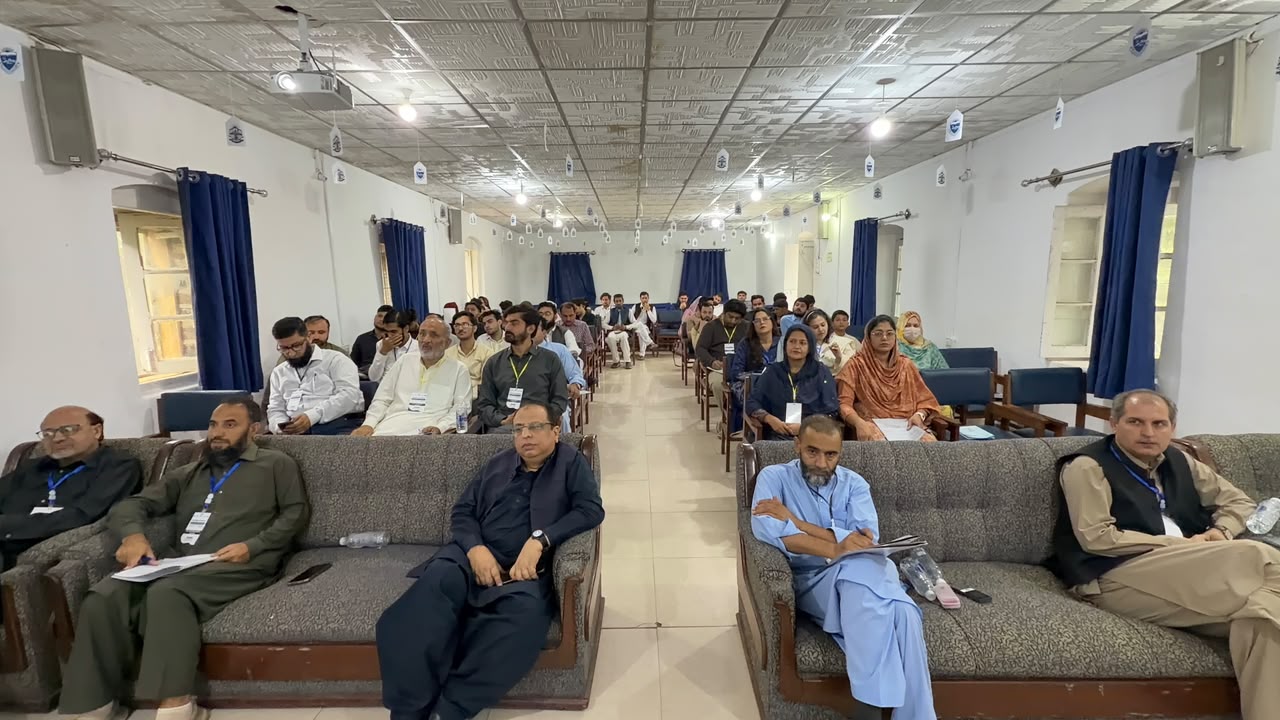
The conference featured 20 research papers, which addressed a wide range of themes including historiography, curriculum development, archival practices, regional histories, digital humanities, public history, and the changing responsibilities of historians in contemporary society. Together, these contributions reflected both the crisis facing the discipline and the continued intellectual vitality of historical scholarship in Pakistan.
A major concern throughout the conference was the institutional condition of History education. Several papers examined how curriculum structures, governance mechanisms, and recruitment policies have shaped the discipline’s current position.
Dr. Irfan Ahmed Shaikh traced the evolution of history curricula after 1947 and argued that curriculum development has often been influenced by political and ideological priorities rather than by broader developments in historical scholarship.
Dr. Amanullah Khan offered a critical examination of the Higher Education Commission’s standardized curriculum approach, arguing that excessive centralization risks reducing departmental autonomy, limiting specialization, and weakening critical historical inquiry.
Similarly, Dr. Ishtiaq Ahmad’s study of Malakand Division highlighted practical challenges, including the replacement of History with Civics at intermediate levels, insufficient institutional support, and declining attention toward the subject.
Dr. Asfandyar Durrani extended this discussion by analyzing recruitment policies and demonstrating how inconsistent approaches toward History teaching positions have affected both the discipline and its graduates.
Beyond institutional concerns, the conference emphasized the need for a broader rethinking of historical methodology in Pakistan. A significant number of papers challenged traditional approaches that have often privileged elite, state, and colonial narratives while overlooking marginalized voices and regional experiences.
Dr. Hina Khan’s paper, drawing upon the works of Paulo Freire and Edward Said, examined history education as a space where knowledge, power, and identity intersect. She argued for a more inclusive curriculum that encourages critical thinking rather than dependence on singular narratives.
Dr. Rehana Kausar’s engagement with Subaltern Studies similarly highlighted the importance of recovering the experiences of communities frequently excluded from mainstream historical writing, including farmers, workers, women, and ethnic groups.
Other contributions, including those by Dr. Saima Perveen, Dr. Zahra Akram Hashmi, and Dr. Zafar Mohyuddin, demonstrated the importance of vernacular texts, regional sources, and Sufi literature in expanding the archive of historical knowledge.
One of the conference’s most valuable contributions was its broader understanding of what constitutes historical evidence. Several papers moved beyond conventional political history and explored the relationship between history, literature, art, and intellectual traditions.
Dr. Aslam Mir’s discussion of Shamsur Rahman Faruqi’s, The Mirror of Beauty, examined how historical fiction can preserve cultural memories and social worlds that may remain absent from formal archives.
Mr. Tayyab Sher Khan’s study of Ustad Bashir Ahmed’s role in the revival of miniature painting showed how artistic traditions themselves can become subjects of historical inquiry.
Dr. Husnul Amin’s comparative analysis of Fazlur Rahman and Javed Ahmad Ghamidi further expanded the discussion by examining how questions of historical context, continuity, and interpretation shape debates within Islamic intellectual traditions.
The most contemporary challenge discussed at the conference was the relationship between History and emerging technologies. Artificial intelligence, digitization, and digital humanities appeared repeatedly as central concerns.
Dr. Muhammad Shafique and Dr. Azmatullah Khan emphasized that while AI may provide access to vast amounts of information, historians must remain committed to verification, archival research, and methodological discipline. Their arguments highlighted an important distinction: technology can assist historical research, but it cannot replace the historian’s responsibility to evaluate evidence critically.
Ms. Somal Shakeel offered a balanced perspective on digital humanities, recognizing the opportunities created by online archives, databases, and digital tools while also highlighting concerns regarding reliability, preservation, and unequal access.
Archival practices formed another important dimension of the discussion.
Mr. M. Mohsin Ali made a significant distinction between the physical preservation of records and their intellectual accessibility, arguing that archives without proper description and cataloguing remain difficult to utilize effectively.
Similarly, Mr. Ehsan Khan’s proposal for a crowdsourced methodology to document Pakistan’s neglected vernacular press offered a practical approach toward recovering overlooked historical materials. These discussions reinforced a central point of historical research: the survival of sources alone is insufficient; accessibility and proper organization are equally necessary.
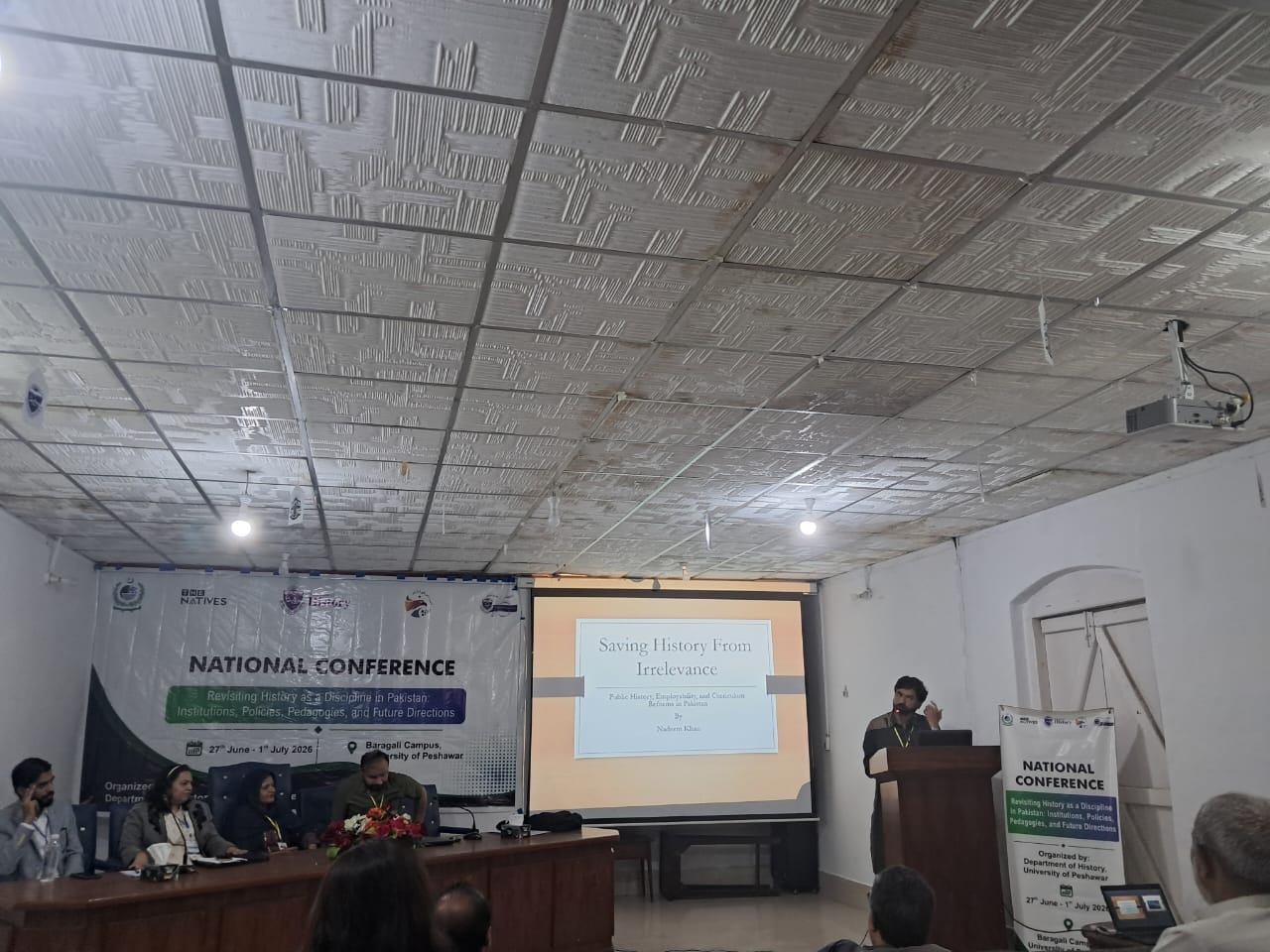
The conference also addressed the question of History’s relevance beyond universities.
Mr. Nadeem Khan argued that the discipline’s crisis is not simply a crisis of knowledge production but also one of public engagement. He suggested that history departments must expand their training beyond conventional academic pathways by incorporating public history, oral history, historical journalism, and digital storytelling. Such approaches, he argued, could strengthen both the social relevance and professional possibilities of historical education.
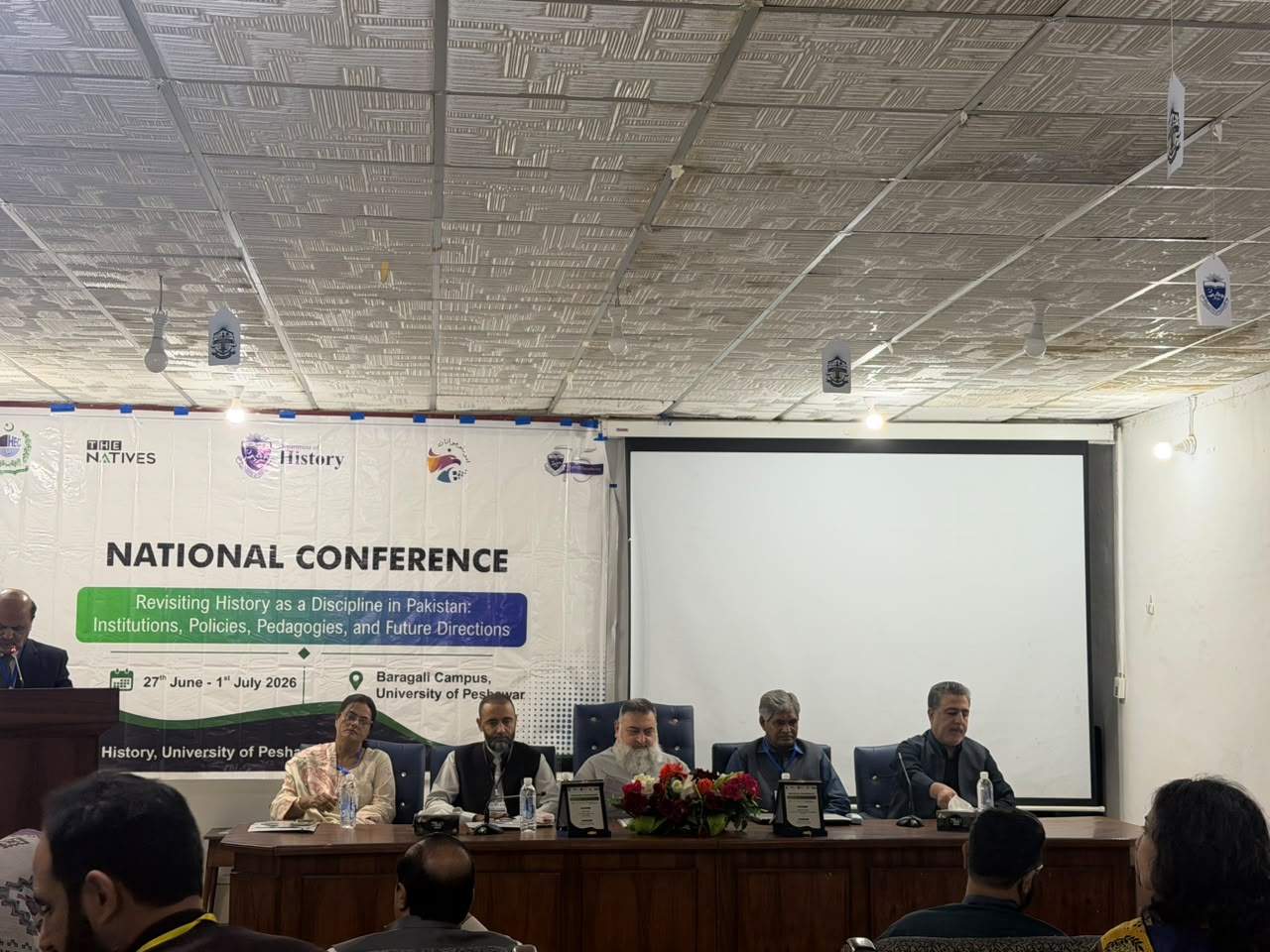
The concluding round-table discussion attempted to transform these debates into a practical roadmap. The fourteen-point recommendations included greater cooperation among history departments, the introduction of contemporary courses, a more consultative approach toward curriculum development, professional training for historians, and efforts to expand employment opportunities for History graduates beyond traditional teaching roles.
However, the significance of these recommendations lies not in their formulation but in their implementation. Similar concerns have been raised repeatedly in academic discussions; the challenge has always been converting recognition of the problem into institutional action.
The conference ultimately demonstrated that History in Pakistan is not suffering from a lack of ideas, research, or scholarly commitment. Rather, it faces a gap between intellectual debate and institutional reform. The papers presented reflected a discipline capable of engaging with new questions, methods, and technologies.
The future of History will depend on whether universities, policymakers, and historians can move beyond diagnosing the crisis and create structures that allow the discipline to flourish. The challenge is not merely to preserve History as a subject but to redefine its purpose, relevance, and contribution in the changing intellectual landscape of Pakistan.
.jpg)

Comments
No comments yet. Be the first 🙂