


.jpeg)
By Iman Zahir Shah
Islam has laid down clear rulings regarding iddah (the mandatory waiting period for a woman after divorce or the death of her husband). However, various misconceptions, cultural traditions, and social beliefs continue to surround the practice. As a result, many women face unnecessary hardships, social criticism, and psychological stress during this period.
While Islamic teachings regarding iddah are well defined, it is equally important to distinguish between authentic religious rulings and cultural practices that have become associated with them.
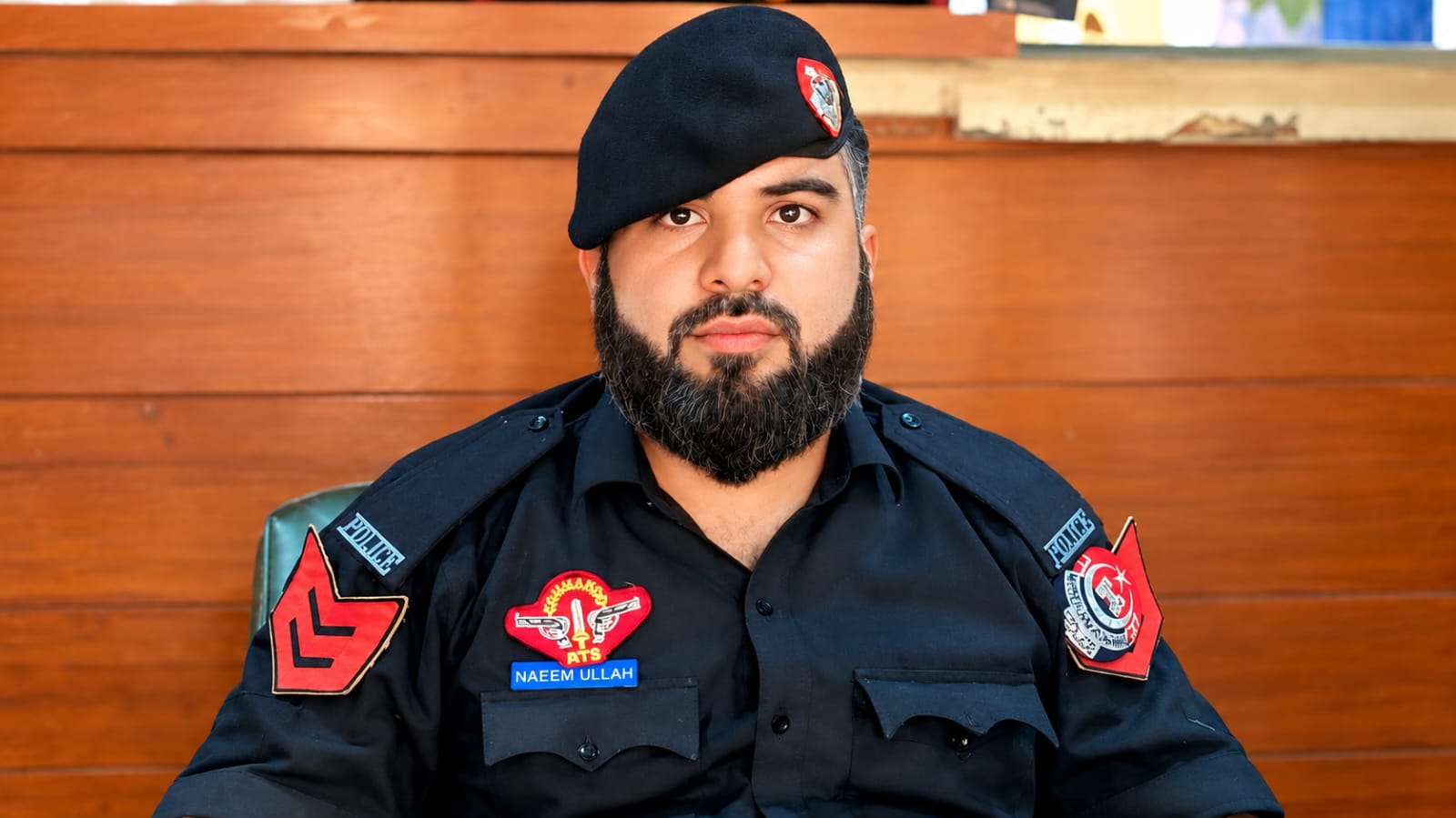
Speaking to TNN, Dr. Mufti Kareem Akhtar Orakzai, Head of the Pakistan Khateeb Council and Lecturer at Sarhad University Peshawar, said that Islam has established clear rulings on marriage, divorce, inheritance, and iddah to preserve the sanctity and stability of the family system.
According to him, iddah is a prescribed waiting period that a woman observes after divorce or the death of her husband in obedience to Allah’s command. During this time, she must observe certain religious restrictions and is not permitted to marry another man.
He explained that the purpose of iddah is not merely to determine whether a woman is pregnant. It also serves to protect lineage, uphold the sanctity of marriage, and, in the case of a husband's death, express loyalty, respect, and mourning for the deceased spouse.
Dr. Orakzai clarified that, according to the Quran and Sunnah, iddah is obligatory for every woman whose marriage has been consummated and who has been divorced, whose husband has passed away, or whose marriage has ended through khula (woman-initiated divorce) or annulment (faskh-e-nikah). Since iddah is a command ordained by Allah, observing it is mandatory for every eligible woman, and marriage during the iddah period is not permissible under Islamic law.
Zainab Rehman, a 55-year-old resident of Shaidu in Nowshera, told TNN:
“After my husband passed away, I became seriously ill during my iddah. I was so sick that I had to visit a doctor. However, when I left the house for medical treatment, many people in my village harshly criticized me. They insisted that a woman observing iddah is not allowed to leave her home and claimed that by doing so I had disrespected my late husband. Dealing with my illness was already difficult, but the people's comments made that period even more painful.”
Dr. Mufti Kareem Akhtar Orakzai further explained that if only the marriage contract (nikah) had taken place, but the bride had not moved in with her husband and the marriage had not been consummated, then the woman is not required to observe iddah after divorce. Referring to Verse 49 of Surah Al-Ahzab, he stated that in such cases a woman may remarry without observing iddah.
He also explained the different types of iddah. According to him:
•A widow must observe iddah for four months and ten days.
•If the widow is pregnant, her iddah continues until the birth of her child.
•A divorced woman who menstruates must observe iddah for three menstrual cycles.
•If she does not menstruate, her iddah is three lunar months.
•If she is pregnant, her iddah lasts until childbirth.
•The iddah after khula is observed according to the same rulings applicable to divorced women.
Also Read : Climate Change Is Changing More Than the Weather—It's Raising Questions About Women's Health
Similarly, 46-year-old Samina Shah from Akora Khattak in Nowshera told TNN that during her iddah, she had to leave home to complete the legal formalities required to transfer her late husband's pension into her name. She explained that she had only gone to obtain the necessary signatures so the pension could legally be issued in her name after her husband's death.
Samina Shah said:
“I left my home fully covered in hijab, but despite that, many people in my neighborhood and extended family criticized me. They accused me of caring more about money than respecting my late husband. These accusations and constant criticism made me feel deeply guilty, and I eventually fell into depression, even though I had gone out only to complete an essential legal process.”
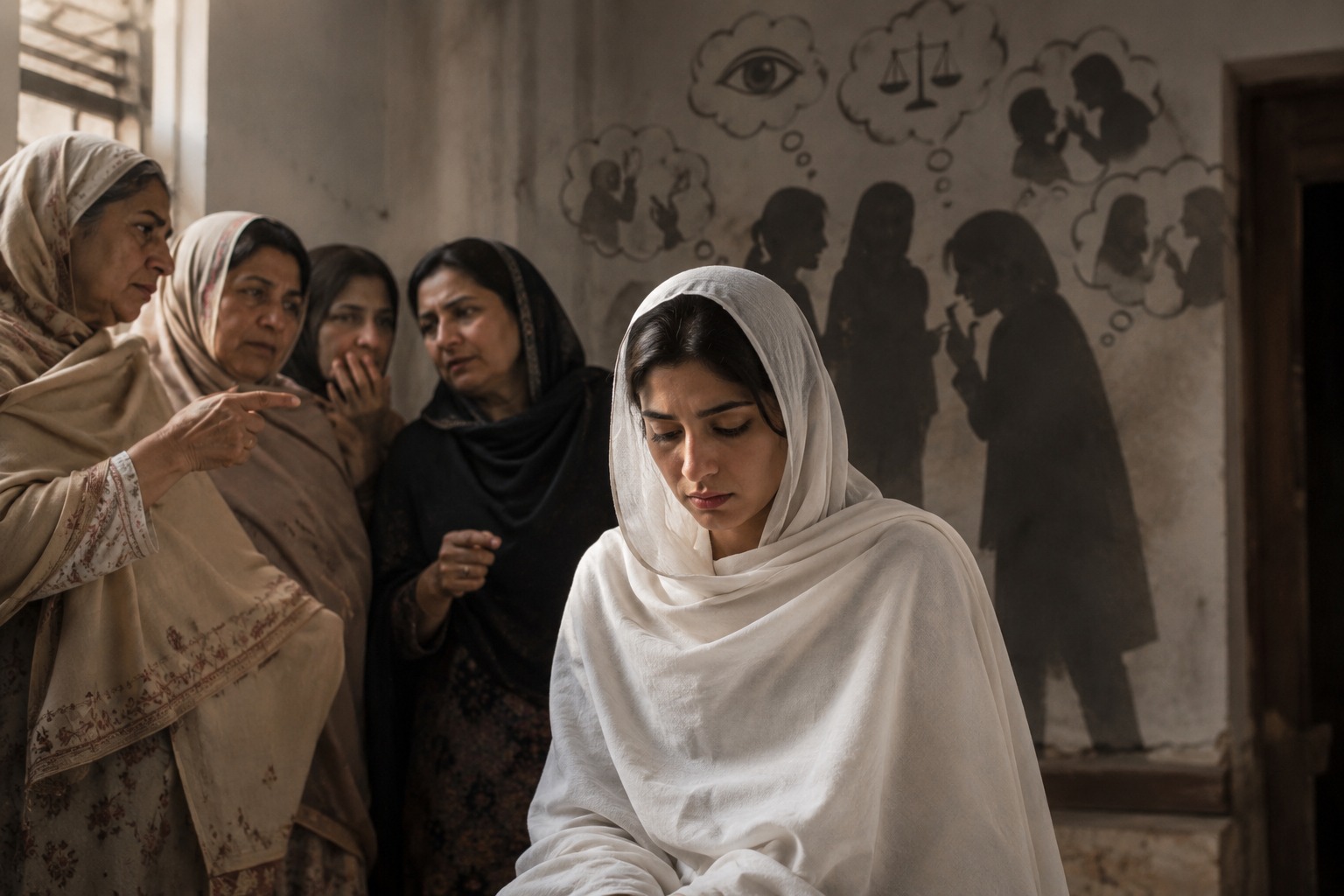
Addressing such situations, Dr. Mufti Kareem Akhtar Orakzai said that the basic Islamic ruling is that a woman should observe her iddah in her home. However, if she has no other source of financial support and leaving her job would cause serious financial hardship, she may leave home during the daytime for work out of genuine necessity, provided she returns to spend the night in the home where she is observing iddah.
Regarding medical treatment, he said that if a woman becomes seriously ill and no qualified female doctor is available, it is permissible under Islamic law for her to seek treatment from a male doctor out of necessity. However, proper observance of modesty (purdah), limiting the examination to what is medically necessary, and the presence of a mahram (a close male relative whom she cannot marry) or another woman should be ensured.
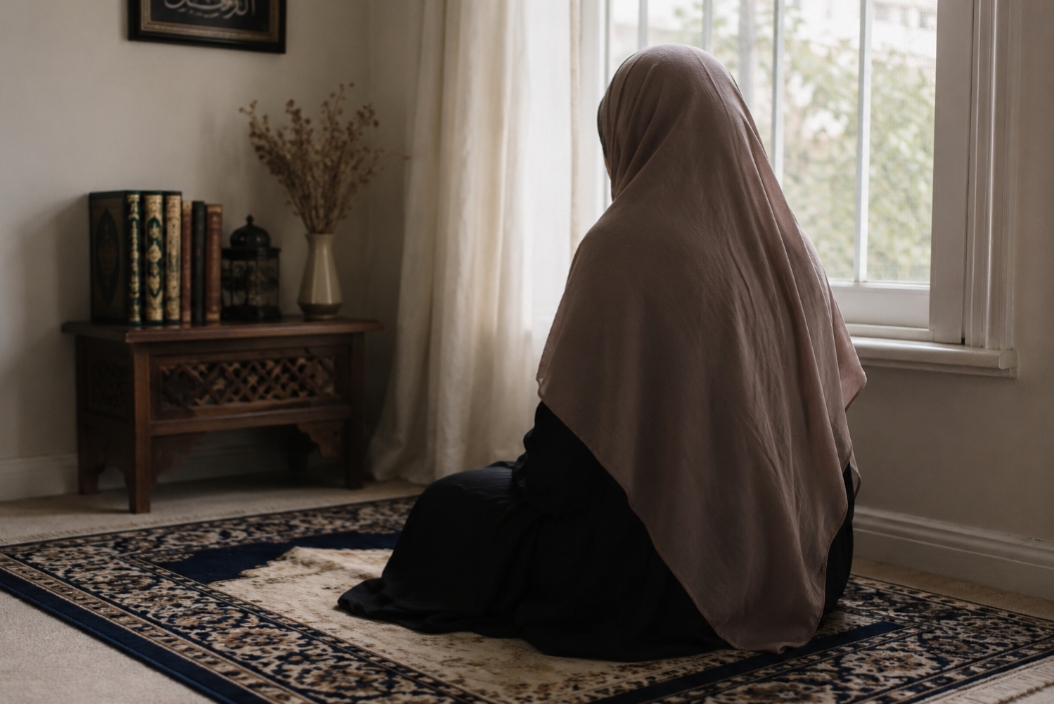
Dr. Mufti Kareem Akhtar Orakzai also rejected the common misconception that a woman observing iddah is required to wear only white or black clothing. According to him, Islamic law does not prescribe any specific color. Rather, the actual requirement is that a woman should wear modest, simple clothing and avoid adornment, flashy outfits, or attire intended to attract attention.
He further stated that attending weddings, feasts, and other celebratory gatherings is not permissible during iddah. However, if such an event takes place in the same house where the woman is observing iddah, she may remain inside the house without makeup or adornment and does not have to leave her home.
Regarding the use of mobile phones and social media, he clarified that using a mobile phone during iddah is not prohibited.

A woman may use her phone and social media as needed to stay in touch with family members, seek religious knowledge, or fulfill other legitimate needs. However, she should avoid unnecessary entertainment, unnecessary communication with non-mahram men, and sharing photos or videos that display her beauty or adornment.
He explained that the primary Islamic restrictions during iddah include avoiding leaving the house without genuine necessity, refraining from marriage or engagement to another man, avoiding adornment, wearing simple clothing, and avoiding unnecessary travel. However, leaving the house is permitted when genuinely required, such as for medical treatment, unavoidable household matters, or other legitimate necessities recognized by Islamic law.
According to Dr. Mufti Kareem Akhtar Orakzai, the most common questions people raise today regarding iddah relate to employment, medical treatment, travel, shopping, social media, wedding ceremonies, personal adornment, and the duration of the waiting period.
He emphasized that in such matters, people should seek guidance from the Quran, the Sunnah, and qualified Islamic scholars, rather than relying on hearsay or cultural customs and traditions.
.jpg)




Comments
No comments yet. Be the first 🙂