


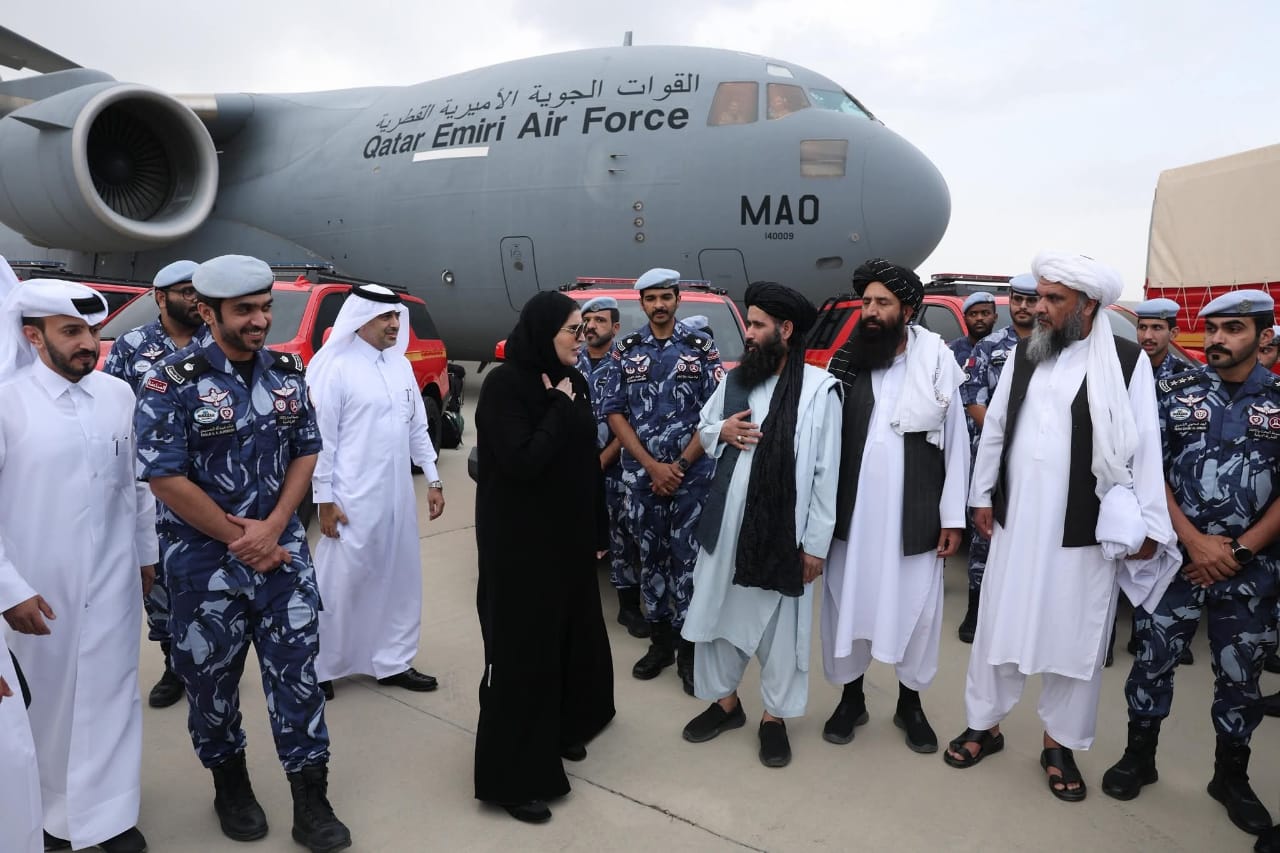
Afghanistan, a nation that has endured over four decades of conflict, foreign interventions, and humanitarian crises, has rarely seen a consistent and reliable partner on the global stage. Yet, in recent years, Qatar has emerged as one of the most influential international actors in Afghanistan’s affairs (though now seems to be in jeopardy because of the recent Israeli precision strikes targeting Hamas leadtship in Doha), serving as a mediator in peace processes, a diplomatic bridge to the international community, and a provider of vital humanitarian assistance.
From hosting the U.S. and Taliban peace talks in Doha to delivering emergency relief for earthquake victims, Qatar’s engagement with Afghanistan reflects a blend of strategic diplomacy and humanitarian commitment.
Qatar and the Taliban-U.S. Peace Agreement
One of Qatar’s most significant contributions to Afghanistan came in the realm of peace diplomacy. Beginning in 2011, Qatar allowed the Taliban to open a political office in Doha, providing a neutral platform for dialogue. At the time, this decision was met with skepticism and even criticism, as many governments were reluctant to legitimize the Taliban. However, Qatar’s foresight proved essential, as it created the only viable space where opposing sides could meet face-to-face.
This initiative culminated in the Doha Agreement, signed on 29 February 2020, between the Taliban and the United States. The deal outlined the conditions for the withdrawal of American and NATO forces after two decades of war and included assurances from the Taliban to prevent Afghan soil from being used as a base for terrorism.
Also Read: KP Food Safety Teams Seal Factories, Destroy Tons of Hazardous Food Items in Major Crackdown
While the agreement has been debated, particularly regarding its exclusion of the then Afghan government and its role in the swift Taliban takeover in 2021, it remains a historic milestone. Qatar’s diplomatic role cannot be overstated, as without Doha as the host and facilitator, the peace process may never have advanced to such a stage.
Qatar as a Bridge to the International Community
Following the U.S. withdrawal and the Taliban’s return to power in August 2021, Afghanistan faced political isolation, with most countries refusing to recognize the new authorities. In this context, Qatar assumed a unique role as a mediator and humanitarian bridge. Qatar maintained open communication with the Taliban while simultaneously engaging with Western governments, the United Nations, and humanitarian organizations. This delicate balancing act positioned Qatar as one of the few countries able to influence developments inside Afghanistan while ensuring the Afghan people were not abandoned.
Qatar also facilitated one of the largest humanitarian evacuations in modern history. Following the fall of Kabul, Qatar helped evacuate more than 70,000 Afghans and foreign nationals, providing temporary shelter in Doha and assisting with their resettlement abroad. The small Gulf nation, despite its size, shouldered a responsibility that many larger powers were hesitant to take on.
Qatar’s support for Afghanistan extends far beyond diplomatic engagement
Over the past decade, the country has positioned itself as a steadfast partner, providing humanitarian and development assistance to Afghans in times of crisis. This support includes food and medical supplies, healthcare and education initiatives, infrastructure projects, and, more recently, emergency relief operations in response to natural disasters. Qatar’s approach demonstrates an understanding that Afghanistan’s challenges require both immediate aid and long-term support for stability.
In the aftermath of the devastating earthquakes that struck eastern Afghanistan, Qatar acted promptly to provide life-saving assistance to affected communities. Thousands of families were left homeless, injured, and without access to essential services. Recognizing the urgency, Qatar launched a large-scale humanitarian relief operation, which has been described as a critical lifeline for the earthquake survivors in Kunar and Nangarhar provinces. In a single operation, four aircraft from the Qatari Amiri Air Force landed in Kabul, transporting vital humanitarian supplies. This initiative was organized by the Qatar Fund for Development (QFFD) and implemented under the direct guidance of Qatari Amir Sheikh Tamim bin Hamad Al-Thani. The mission highlights Qatar’s commitment to standing with Afghans during moments of extreme hardship, ensuring rapid delivery of essential relief.
The Qatari aid included two fully equipped field hospitals, which provide critical medical care in disaster-affected regions where local healthcare facilities were damaged or overwhelmed. Additionally, the shipment contained medical supplies, food packages, tents, blankets, and emergency shelter materials, designed to meet both immediate and short-term needs of the affected population. Officials estimated that this assistance would benefit approximately 11,000 people, addressing both life-saving interventions and community recovery. Accompanying the aid was a high-level Qatari delegation led by Maryam Bint Ali bin Nasser Al-Misnad, Minister of State for International Cooperation. The delegation also included representatives from the Qatar Armed Forces, Ministry of Foreign Affairs, Qatar International Search and Rescue Group (Lekhwiya), and QFFD. Their presence allowed Qatar to directly coordinate with Afghan authorities and international humanitarian organizations, ensuring aid was delivered efficiently and reached the most vulnerable communities.
During the mission, the Qatari delegation worked closely with local partners to oversee distribution, establish temporary field hospitals, and identify areas most in need. The field hospitals are equipped to handle emergency medical situations, including injuries from collapsed buildings, trauma cases, and other urgent health concerns. The Qatari teams also provided technical support and guidance to Afghan responders, enhancing the efficiency of relief operations in Kunar and Nangarhar.
Afghanistan has long faced the dual challenges of conflict and natural disasters. Powerful earthquakes in Herat and neighboring provinces in October 2023 and January 2024 caused widespread destruction, casualties, and displacement. In each instance, Qatar responded quickly, sending airplanes loaded with emergency relief items such as food, tents, blankets, and medical supplies. Qatari humanitarian teams worked hand-in-hand with local partners to ensure timely and effective delivery, reflecting a commitment that goes beyond politics or temporary aid.
Food, medical, and development support. Beyond emergency response, Qatar has consistently provided food and medical supplies through QFFD and the Qatar Red Crescent Society (QRCS) to meet basic needs in various provinces. In addition, Qatar has invested in healthcare and education initiatives, ensuring that Afghan children continue to access schooling and that hospitals receive critical medicines and equipment. Infrastructure and community resilience projects, though smaller in scale compared to larger donors, have contributed to rebuilding livelihoods and supporting vulnerable households.
In addition to direct aid, Qatar has taken significant steps to support Afghan livelihoods. Taliban officials have publicly acknowledged that Qatar has issued work visas for Afghan skilled workers, professionals, and technical experts, allowing them to secure employment abroad. This initiative is crucial at a time when Afghanistan faces widespread unemployment and economic collapse. By facilitating labor migration, Qatar not only provides Afghan families with income opportunities but also helps sustain remittances that are vital to the national economy.
Why Qatar’s Role Matters
Qatar’s involvement in Afghanistan is significant due to its neutral diplomacy, earning trust from all sides and enabling historic dialogues like the U.S. and Taliban peace talks. Its consistent engagement over the years, from peace negotiations to humanitarian aid, has built credibility and ensured long-term support.
By hosting the Taliban’s political office and facilitating international dialogue, Qatar has proven itself as a skilled mediator in complex global conflicts. Also, Qatar’s humanitarian commitment is evident in rapid disaster response, including emergency aid for earthquakes in Kunar and Nangarhar, delivering medical supplies, food, shelters, and field hospitals.
Beyond aid, Qatar also addresses economic challenges by offering work visas for Afghan skilled workers, helping families earn livelihoods and sustaining remittances for Afghanistan’s fragile economy. Through diplomacy, humanitarian aid, and livelihood support, Qatar remains an enduring partner, providing hope, stability, and practical assistance to the Afghan people in times of crisis.
About the Author:
Naser Khan Zazai is an Afghan journalist and MPhil scholar in International Relations at Abasyn University Peshawar, Department of Governance and International Relations.

.jpeg)
Comments
No comments yet. Be the first 🙂