


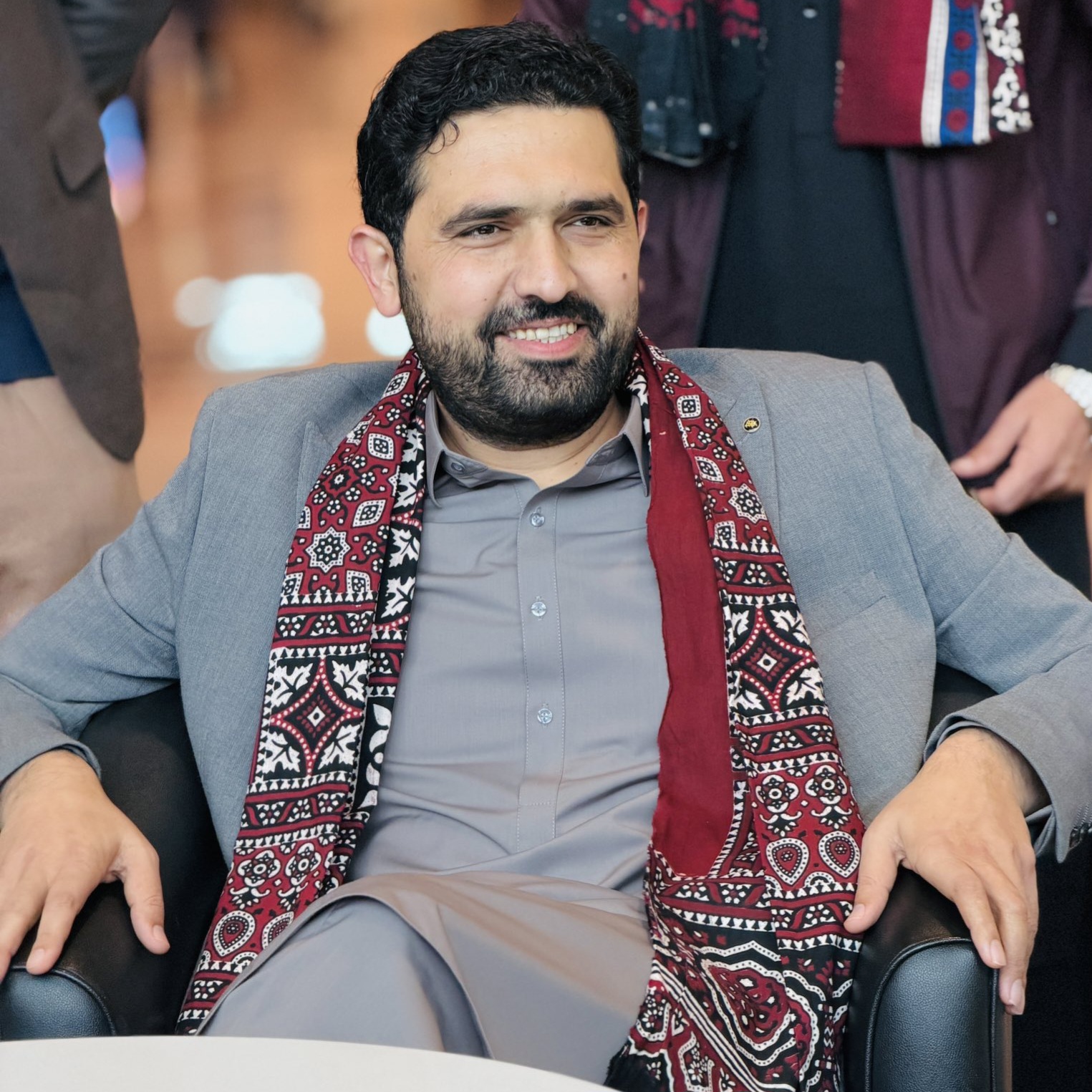
“I send a message to Suhail Afridi to prepare for a street movement; the entire nation will have to rise for its rights.”
These words were part of a tweet posted on December 20, 2025, from the X account of Pakistan’s former prime minister and PTI founder Imran Khan, who is currently imprisoned in Adiala Jail.
However, just two days after this message, Prime Minister Shehbaz Sharif, during a cabinet meeting, made a conditional offer for negotiations, successfully steering the political atmosphere toward dialogue.
Aliema Khan, the PTI founder’s sister, along with Meena Khan Afridi and Shafee Jan, had already pointed out this very pattern: whenever a nationwide movement is discussed, the government steps forward with an offer of negotiations.
Moreover, Prime Minister’s adviser Rana Sanaullah’s indication that the “five senior figures” could sit at the negotiating table, and Khyber Pakhtunkhwa Chief Minister Suhail Afridi’s signal of willingness to engage with the establishment at the provincial level, further energized the negotiation process. However, after the recent press conference by the DG ISPR, this hope now appears to be fading.
Amid this tug-of-war between negotiations and a street movement, Khyber Pakhtunkhwa Chief Minister Suhail Afridi has already visited Lahore, is now heading to Karachi, and also intends to visit Quetta afterward.
This raises the question: why is Suhail Afridi traveling from one province to another? What does he ultimately want to achieve through these visits?
To find answers, TNN spoke with senior journalists and analysts who closely follow politics.
There should be enough political space for a chief minister to visit another province
Senior journalist and anchorperson Maria Memon says that Pakistan Tehreek-e-Insaf is a federal party. If a chief minister from one province visits another province and mobilizes party workers, there should be no objection to it. She asks whether there is no political space left in this country at all.
However, she also notes that a chief minister should focus fully on governance, as the office is a full-time responsibility. Making important provincial decisions should remain their top priority.
Suhail Afridi’s visits may have two objectives
According to senior investigative journalist and analyst Umar Cheema, Suhail Afridi’s visits to other provinces may have two possible objectives.
First, he may be on a mission to promote inter-provincial harmony. Second, he may be trying to mobilize party workers and revive morale, because after Imran Khan, Suhail Afridi is considered the most important figure within PTI due to his position as chief minister.
He wants to reject the impression that PTI is a one-province party
Senior political analyst Professor Tahir Naeem Malik says that the purpose of Suhail Afridi’s visits to other provinces is to counter the perception promoted by opponents that PTI is limited to just one province.
He says that apart from Khyber Pakhtunkhwa, PTI’s organizational structure in other parts of the country is currently disorganized and plagued by mismanagement. The leadership is under pressure and workers are in hiding. In such circumstances, Suhail Afridi wants to mobilize workers for a nationwide movement.
2026 will also be a year of deadlock
According to Maria Memon, Rana Sanaullah’s signal that the “five senior figures” could sit for talks indicates that the establishment is also, to some extent, involved in the negotiation process, which is a positive development.
She says that Mahmood Khan Achakzai currently enjoys the trust of both PTI and Nawaz Sharif, and his role suggests that serious efforts are being made to exit the political crisis and reduce confrontation.
However, she believes the chances of success are low, because neither can PTI give the government everything it wants, nor is the government willing to give PTI the political space it demands. Therefore, it would not be wrong to call 2026 another year of deadlock.
The key to political stagnation lies with Imran Khan
According to Umar Cheema, political stagnation in the country will continue and no clear path forward is visible. He says this deadlock is due to Imran Khan, and if it is to be resolved, Imran Khan will have to show flexibility in his approach.
Option of Governor’s Rule in Khyber Pakhtunkhwa
Umar Cheema says that the option of imposing Governor’s Rule in Khyber Pakhtunkhwa is currently being used merely as a pressure tactic. Imposing Governor’s Rule is not easy, because new elections must be held within six months, which is a difficult process.
He adds that if the opposition completes the number game and forms a government, it would politically benefit PTI, as it would emerge as more victimized, further reducing political space for other parties.
Possibility of Governor’s Rule exists
According to Professor Tahir Naeem Malik, Khyber Pakhtunkhwa is currently severely affected by terrorism, and national security institutions, especially the Pakistan Armed Forces, are dealing with this challenge.
He says that the PTI-led provincial government disagrees with institutions on certain policy matters, which could increase tensions and may result in the imposition of Governor’s Rule.
Referring to the recent press conference of DG ISPR Lieutenant General Ahmed Sharif Chaudhry, he said that this time there was an unusual emphasis on constitutional references, creating the impression that discussions around Governor’s Rule are present somewhere.
It is worth noting that the Chief Minister of Khyber Pakhtunkhwa, Suhail Afridi, departed today on a visit to Karachi.
.jpeg)
Comments
No comments yet. Be the first 🙂