


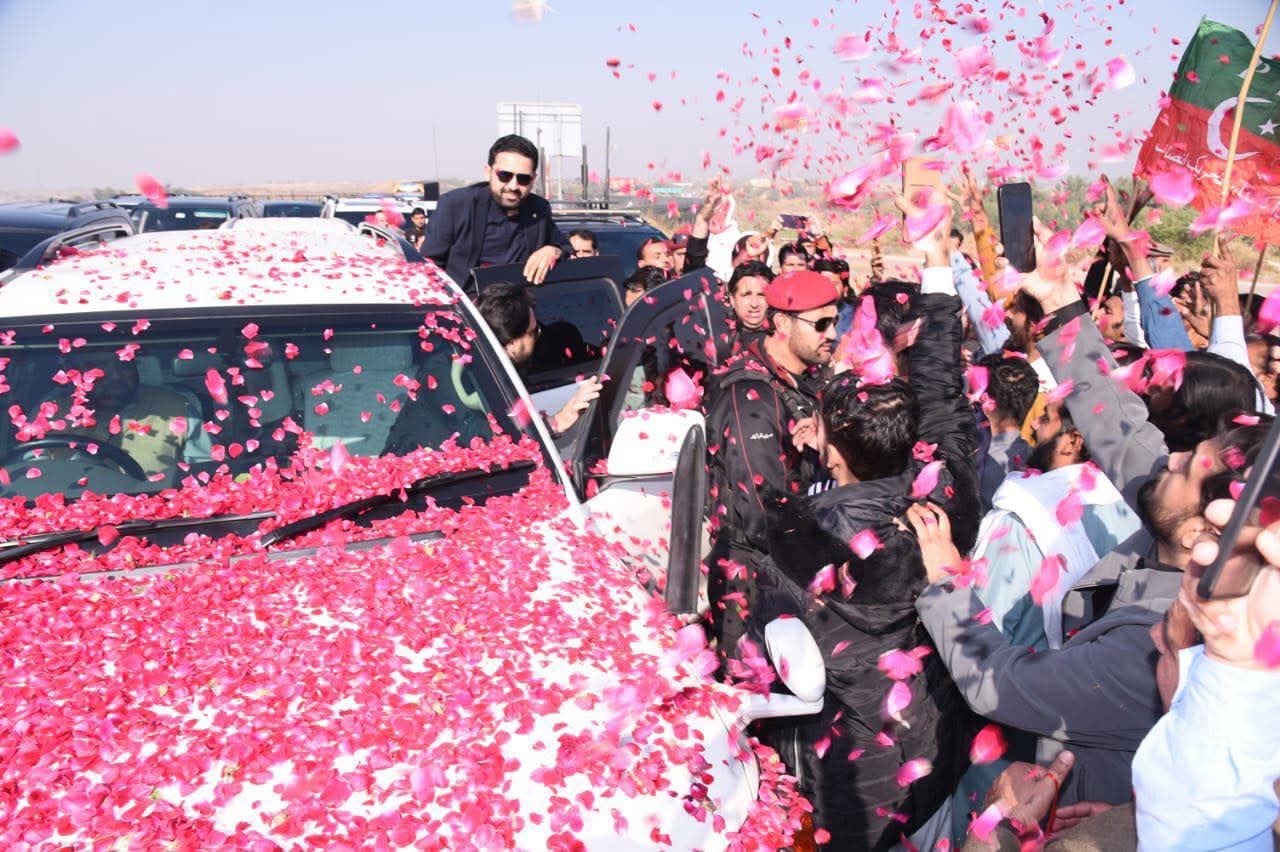
Khyber Pakhtunkhwa Chief Minister Sohail Afridi has returned to Peshawar after completing a three-day visit to Lahore, but the political reverberations of the trip continue to echo across Pakistan’s political landscape.
A day before the visit, on December 25, the KP Chief Minister’s Special Assistant on Information, Shafiullah Jan, stated on a television program that the purpose of the Lahore trip was to convey PTI founder Imran Khan’s message regarding a proposed street movement, meet families of imprisoned PTI leaders, and consult party office-bearers on organizational matters.
However, the visit ran into controversy from the very first day when tensions flared between police and KP cabinet members inside the Punjab Assembly premises. The situation was further aggravated by what observers described as inappropriate questions from some journalists and equally inappropriate responses from KP ministers, adding fuel to an already tense environment.
While the visit concluded without further escalation, its political impact lingered. Following the tour, Chief Minister Sohail Afridi sent a formal protest letter to Punjab Chief Minister Maryam Nawaz, demanding an inquiry into the incidents he faced during the visit and urging restraint to prevent similar occurrences in the future.
Pakistan Tehreek-e-Insaf has termed the visit a major success, while rival political forces have labeled it a failure. The contrasting narratives have triggered a broader debate: Was the visit politically productive? What message did the Punjab government’s conduct convey? And is there any real possibility of a street movement emerging from Lahore?
Political analysts remain divided.
Senior journalist and analyst Salman Ghani argued that Sohail Afridi visited Lahore not as a provincial chief executive but as a political leader, a fact Afridi himself acknowledged before the trip. Ghani questioned whether any provincial government would tolerate a chief minister from another province arriving with a clear political agenda. He added that while some journalists asked inappropriate questions, the responses from KP ministers were also unbecoming, harming both politics and democratic norms.
Journalist and analyst Umar Daraz Gondal viewed the Punjab government’s behavior as defensive, suggesting it reflected fear of potential political mobilization. He noted that the reception extended to Sohail Afridi fell short of accepted political norms and contrasted it with the warm public welcome Maryam Nawaz once extended to other political leaders via social media.
AFP correspondent and senior journalist Lihaz Ali interpreted the visit as a clear message that, for now, Punjab offers no political space for PTI. He recalled that even during former KP Chief Minister Ali Amin Gandapur’s visits to Lahore, political activity was effectively curtailed.
On the question of a possible street movement, Salman Ghani dismissed the likelihood of such a development from Lahore, arguing that Maryam Nawaz maintains a strong grip over Punjab’s administration and bureaucracy. According to him, PTI’s real political leverage currently rests only in Khyber Pakhtunkhwa, and a movement confined to a single province would struggle to gain national traction.
Gondal, however, suggested that the visit served as a political test—to assess whether Sohail Afridi could break the prevailing political stagnation and emerge as a symbol of resistance. While a Lahore-led street movement does not appear imminent, he cautioned that its possibility cannot be entirely ruled out, given the political impact of just one visit.
Lihaz Ali further claimed, citing sources, that the visit was undertaken on the advice of PTI’s absconding leader Murad Saeed. He argued that beyond exploring the feasibility of a street movement, the visit aimed to assess whether any political space remains for PTI in Punjab and to politically corner the Punjab government by highlighting inter-provincial tensions.
Comparing Sohail Afridi’s visit with that of former KP Chief Minister Ali Amin Gandapur, analysts noted a key difference in approach. While Gandapur kept his visits low-profile and confined to party affairs, Afridi sought direct public engagement by visiting markets and public spaces. According to Salman Ghani, this reflected Afridi’s attempt to play active politics—though, he added, the real audience for this effort may not have been the public, but the political leadership watching closely from behind the scenes.
.jpeg)

Comments
No comments yet. Be the first 🙂