


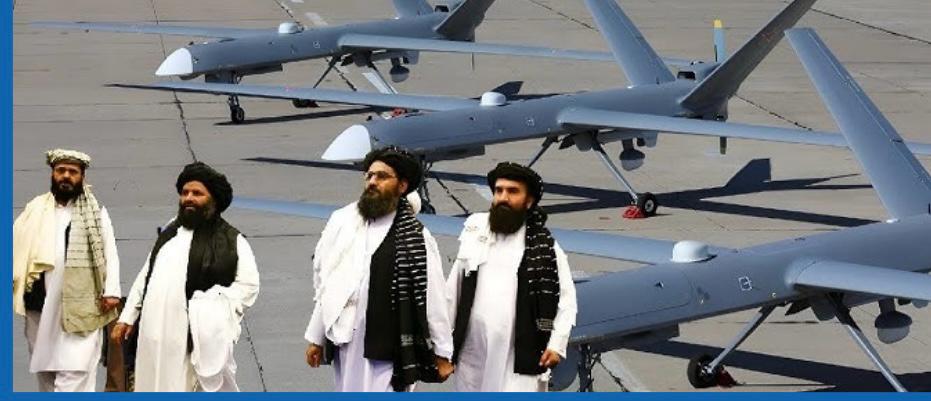
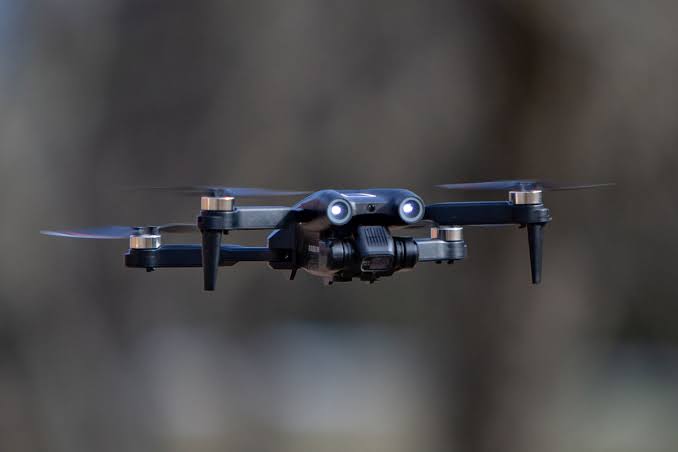
On Friday, the Taliban allegedly used small unmanned aerial vehicles (SUV drones) to target Pakistani public and security installations in Quetta, Kohat, Rawalpindi, and Islamabad. According to a Pakistani military spokesperson, the drones were intercepted and shot down before reaching their intended targets, preventing any major damage.
However, falling debris reportedly injured five civilians in these cities. Similar drones had previously been shot down in Swabi and other locations. Following these incidents, Pakistan immediately banned all drone flights within the country.
This development marks a notable shift in the Taliban’s operational strategy. Traditionally known for guerrilla warfare and ground-based insurgency tactics, the group is now incorporating drone technology to strike high-value targets, particularly military cantonments.
Also Read : War on Iran, Pakistan–Afghanistan Cooperation Is More Urgent Than Ever
The Taliban lacks conventional aerial power—it has no fighter jets, advanced air warfare training, or infrastructure for modern air operations. This raises key questions: Where are these inexpensive drones coming from, and how has the group acquired the capability to operate them effectively despite limited technological and conventional military experience?
Many experts and Pakistan Army officials suggest that these drones may have been supplied by Israel through India, citing similarities to drones used by India during last year’s conflict with Pakistan. Islamabad has repeatedly accused New Delhi of using the Taliban as a proxy to weaken Pakistan.
Israel’s potential involvement adds a new layer to the regional rivalry between India, Pakistan, and Afghanistan. During a recent visit to Israel, Indian Prime Minister and Israeli Prime Minister Netanyahu reportedly declared the Taliban’s supreme leader Hibatullah, a friend and pledged support to the group.
Pakistan’s relations with Afghanistan have deteriorated in recent years, largely due to Islamabad’s accusations that the Afghan Taliban government has failed to curb Tehrik-e-Taliban Pakistan (TTP) activities, which Pakistan blames for numerous terrorist attacks.
Cross-border tensions have escalated, with dozens of soldiers and civilians killed following Pakistani airstrikes on suspected militant targets in Afghanistan.
Diplomatic efforts to ease tensions, including talks mediated by Qatar and Turkey, reportedly ended without progress in October 2025. Since then, cross-border attacks have intensified, and Pakistan continues to target key military installations in Afghanistan, including in Kabul and Kandahar.
Pakistan’s more modern air force and superior training have provided a decisive advantage, as demonstrated during last year’s conflict with India, when Pakistan shot down seven Indian aircraft—an event frequently referenced by U.S. President Donald Trump.
Afghanistan lacks aerial power and an effective air defense system, leaving it vulnerable to deep strikes by Pakistan. In retaliation, Pakistan anticipates potential ground force incursions from Afghanistan and remains on high alert to prevent infiltration. There are also concerns about TTP elements carrying out suicide attacks within Pakistan.
Pakistan’s intelligence agencies have intensified operations against the TTP and similar groups, neutralizing many members. Nevertheless, the use of drones capable of reaching sensitive installations, such as the Pakistan Army headquarters in Rawalpindi and military deployments in Kohat, remains a significant concern for defense strategists.
The emergence of inexpensive drones could alter the dynamics of conflict. Iran, for example, has inflicted heavy damage on Israel and the U.S. using cheap Shahed drones that bypass advanced air defenses.
Countries facing these drones have sought Ukraine’s expertise, as it has developed low-cost interceptors capable of neutralizing such threats. Pakistan, heavily reliant on Chinese and U.S. technology, primarily designed to counter missiles and aircraft, faces a similar challenge.
If the Taliban continues to receive backing from Israel and India, drone attacks on Pakistan’s military installations and populated districts may increase in frequency, posing serious security risks and spreading fear among civilians.
Modern conflicts are increasingly shaped by asymmetric technologies, where relatively inexpensive tools can challenge far more advanced military systems. For Pakistan, developing effective counter-drone capabilities and strengthening intelligence operations will be essential to maintaining security in this evolving threat landscape.

.jpeg)
.png)
1.jpeg)



Comments
No comments yet. Be the first 🙂