


By Javed Khan Mohmand
Economic Survey 2025-26: 2023 Declared the Worst Year for Natural Disasters in 43 Years, Floods Emerge as a Major Threat to Growth and Employment
According to the Economic Survey 2025-26, the year 2023 was the worst year for natural disasters in the past 43 years, while floods have emerged as a major threat to Pakistan’s economic growth and employment opportunities.
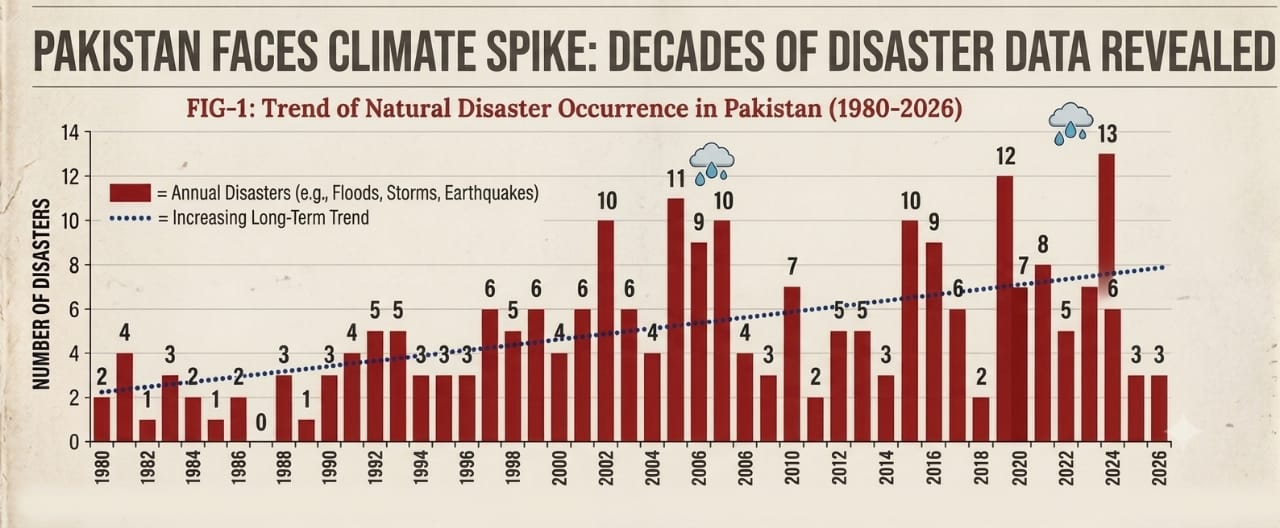
The survey, presented in Islamabad by Finance Minister Muhammad Aurangzeb, reviews climate and natural disaster data from 1980 to 2026.
According to the report, natural disasters were relatively infrequent during the 1980s, with annual incidents ranging from zero to four. However, after the 1990s, the number of disasters gradually increased, while their intensity and volatility also grew significantly over time.
The survey notes that the situation became more alarming after 2000, when the number of annual natural disasters rose to between six and eleven. Since 2015, there has been a marked increase in climate-related events such as floods, storms, heatwaves, droughts, and landslides.
The report states that 2023 was the most disaster-affected year in the last 43 years, with 13 major climate and natural disaster events recorded.
According to the Economic Survey, this trend indicates that natural disasters are no longer temporary or seasonal challenges but have evolved into a persistent structural issue. As a result, the need for stronger climate resilience, disaster preparedness, and risk management systems has become increasingly urgent.
Also Read : Northern KP on Alert as Heatwave Accelerates Glacier Melting
The survey further states that the devastating floods of 2025 caused total losses of Rs822 billion. More than 1,039 people lost their lives, over four million people were displaced, and approximately 6.5 million people were affected in various ways.
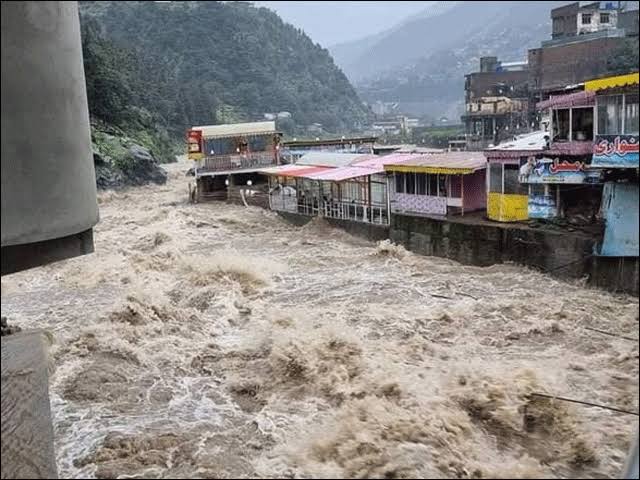
The agricultural sector suffered the greatest damage, amounting to Rs430 billion, while infrastructure losses reached Rs307 billion. Road networks alone sustained damages worth Rs187.7 billion, while residential structures suffered losses of Rs91.2 billion.
More than 229,000 homes were damaged by the floods, and thousands of kilometers of roads and other critical infrastructure were destroyed, placing immense pressure on recovery and reconstruction efforts.
Punjab was the worst-affected province, accounting for 76.8 percent of total losses, equivalent to Rs631 billion.
The report warns that flood-related impacts could increase unemployment by up to 200,000 people during fiscal year 2026. It also projects that Pakistan’s GDP growth could decline from the targeted 4.2 percent to between 3.5 and 3.9 percent.
The survey highlights that despite contributing less than one percent of global carbon emissions, Pakistan remains among the countries most severely affected by climate change.
To address climate challenges, various provincial initiatives are underway. Punjab has introduced an environmental fund and an AI-based monitoring system. Sindh is working on wastewater treatment and renewable energy projects. Khyber Pakhtunkhwa is implementing measures to protect forests and biodiversity, while Balochistan is focusing on environmental governance and pollution control initiatives.
The findings of the Economic Survey underscore that climate change is no longer solely an environmental issue. It has become a significant challenge for Pakistan’s economy, employment, infrastructure, and social stability, requiring coordinated and effective policy responses.

.jpeg)
.png)
1.jpeg)



Comments
No comments yet. Be the first 🙂