


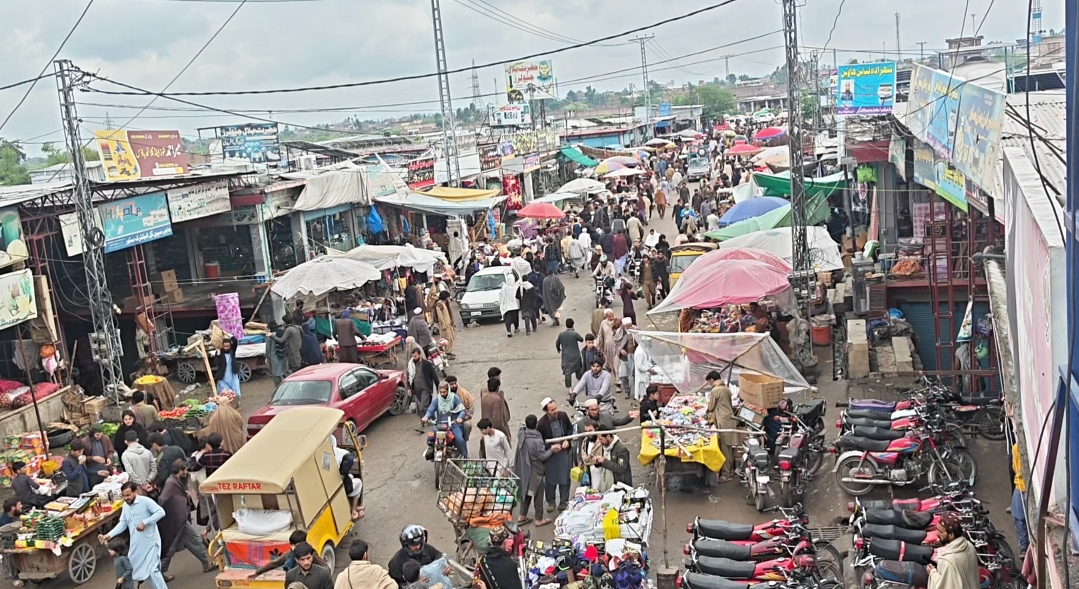
The historic commercial centers of Khyber District, Bara Bazaar and the central Garden Bazaar of Tirah, are currently facing severe decline, unemployment, and a critical shortage of basic facilities. Local traders, laborers, and displaced traders from Tirah have demanded immediate relief from the Khyber Pakhtunkhwa government, along with business revival, restoration of basic infrastructure, and compensation for losses.
Bara Traders Union President Syed Ayaz Wazir said that before 2009, Bara Bazaar was a major historic commercial hub where more than 10,000 shops and thousands of warehouses existed, and people from across the country came here for employment.
According to him, due to transit trade and other business activities, thousands of laborers were employed. However, on September 1, 2009, following a military operation against militants, Bara Bazaar was closed. It remained shut for several years, during which markets became deserted, shops and buildings suffered severe damage, and all business activities completely stopped.
Later, in February 2016, the market was reopened, but due to lack of capital among traders, business could not be revived.
He said that 11 years have passed since the reopening of the market, yet its former glory has not been restored. He added that without peace and basic facilities, development is not possible, and therefore all relevant institutions must perform their duties effectively to restore the confidence of traders and the public.
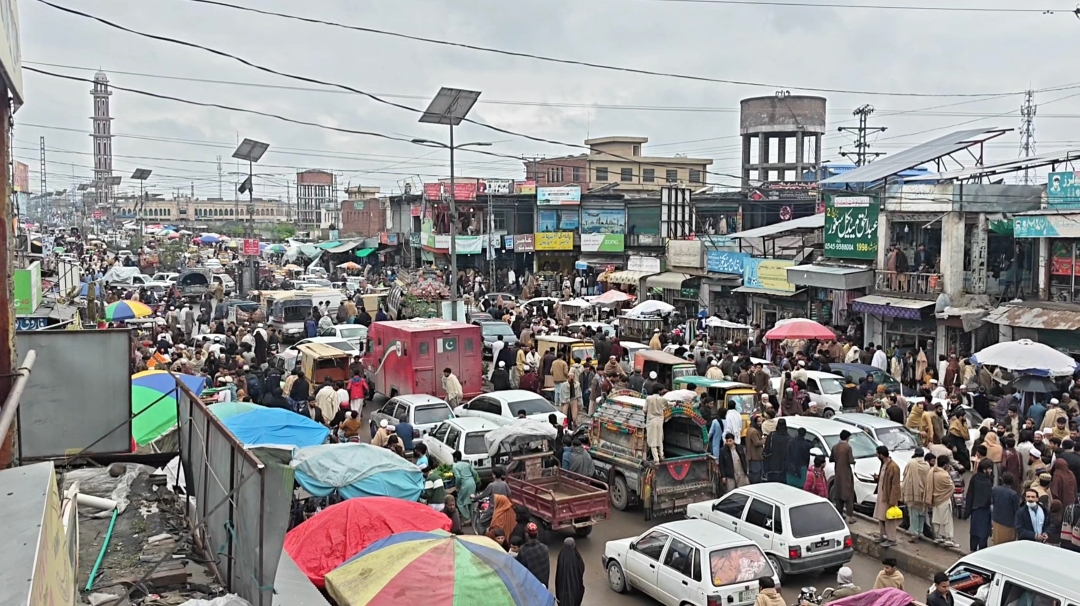
Syed Ayaz Wazir further stated that most shop roofs became dilapidated during the closure period, and incidents of roof collapses have occurred during rains, causing financial losses to traders. He demanded that the government provide interest-free loans to affected traders and immediately reconstruct damaged shops.
Also Read : “Open Torkham or Face Resistance” — Grand Jirga Issues Strong Warning
He also demanded the establishment of a modern training center in Bara Bazaar so that youth can be trained in business and employment skills. According to him, this would create new job opportunities for local youth.
He also expressed concern over the failure of the sewerage and drainage system in the market, saying that rainwater enters shops during rainfall while the role of local administration is almost nonexistent.
He urged the Chief Minister of Khyber Pakhtunkhwa to immediately improve clean water, electricity, gas, sanitation, and drainage systems in Bara Bazaar.
Meanwhile, laborers in the industrial areas of Bara also highlighted their problems, saying that although the Labor Department exists, in practice poor workers receive no facilities.
The workers demanded the establishment of a labor colony in Bara and quality educational institutions for workers’ children on the pattern of Peshawar so they can receive free and better education. According to them, thousands of workers are employed in dozens of factories, but facilities are almost nonexistent.
On the other hand, traders from Tirah Valley have also expressed severe difficulties. Tirah Traders Association President Muhammad Sher Afghani Afridi said that more than 8,000 traders from Tirah have migrated and are currently living the life of internally displaced persons (IDPs).
According to him, only 10 percent of traders have restarted business in Bara, Jamrud, and Peshawar, while the majority are facing severe financial hardship and unemployment. He said that over the past four months, the Tirah trader community has suffered losses exceeding 500 million rupees, which continue to increase daily.
He stated that in Larbagh central market there are 1,300 shops, in Bar Bagh 800 shops, and in Pir Mela Bazaar 900 shops, while hundreds of shops also exist in other markets such as Adamkhel, Shalobar Warsak, New Bagh, and Shinger Kamar Khel, including shops run by women and minority communities.
He added that many shops in several markets have been severely damaged due to rains and road construction. Sher Afghani Afridi demanded an immediate relief package for affected traders, payment of outstanding rents, and compensation for shops.
He further demanded that special grants be allocated for market rehabilitation, and that roads, drainage systems, street lights, and basic infrastructure be improved.
He also said that markets should be included in beautification projects, and steps such as fruit and vegetable markets, modern slaughterhouses, and electricity generation through hydropower projects should be taken to revive economic activity in the region.
Meanwhile, important progress has been made in meetings between jirga members and security officials regarding the return of Tirah displaced people, according to which payment processes will begin soon, and another jirga will be held on June 10, where a final return date is expected to be announced.
At the same time, dozens of affected families in the Hissara Khwar area of Shalobar are still living in caves and temporary camps under extremely difficult conditions, facing severe shortages of heat protection, water, electricity, and food.
Government representatives have visited the affected camps and assured the provision of basic facilities, but according to the affected people, conditions remain extremely difficult and urgent practical measures are still needed.
.jpeg)
.png)
1.jpeg)
Comments
No comments yet. Be the first 🙂