


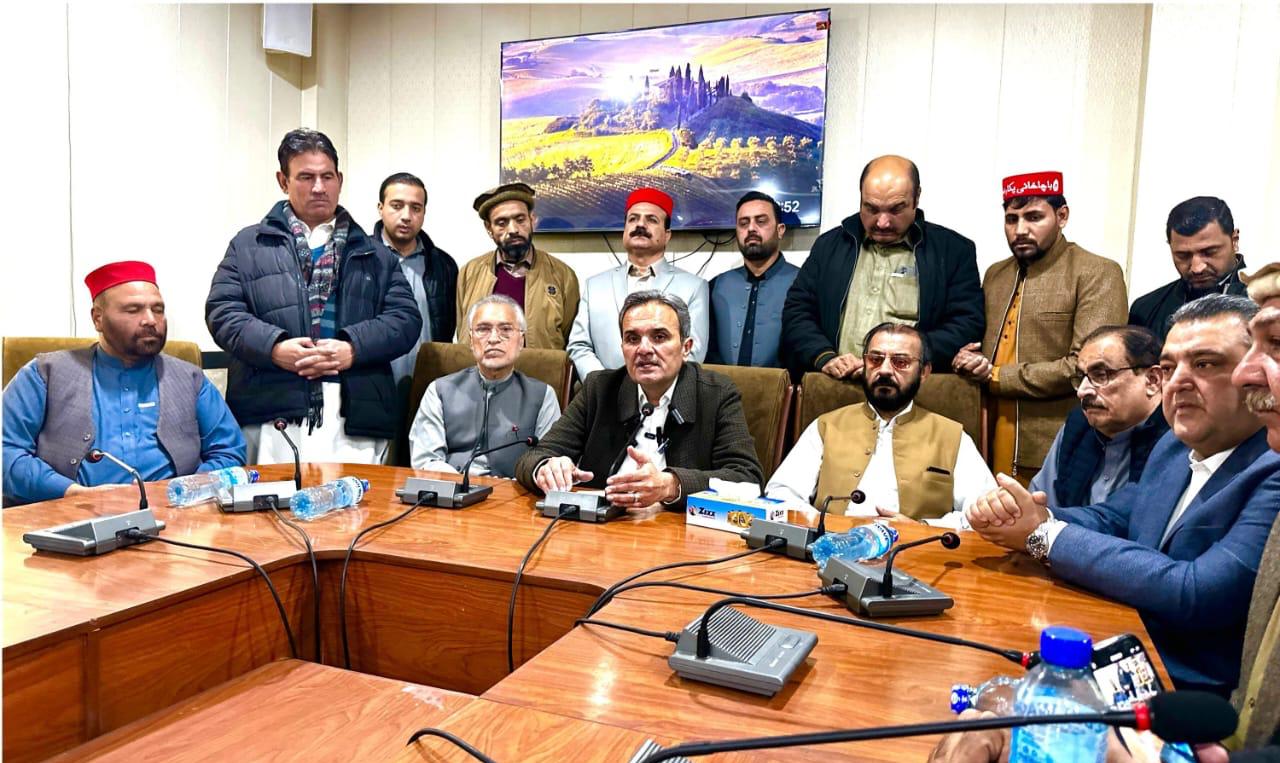
In Mardan, former Chief Minister of Khyber Pakhtunkhwa and senior Awami National Party leader Ameer Haider Khan Hoti said that the decision for the Tirah operation was made during the tenure of former Chief Minister Ali Amin Gandapur, but now attempts are being made to hide the facts. He made these remarks while speaking to the media at Mardan Press Club.
Ameer Haider Khan Hoti said that Sohail Afridi was brought in not for reconciliation but under a policy of pressure and confrontation, which worsened the situation instead of improving it.
He stated that the Tirah operation and the matters of reconciliation with PTI are interconnected, but the nation has not been taken into confidence regarding this.
He said that on the serious issue of terrorism, the Chief Minister is expressing ignorance, while both the federal and provincial governments are claiming to be unaware, even though the reality is evident. According to him, this attitude is dangerous for national security.
Also Read : Relief for Tirah IDPs: Zalmi Foundation Donates Rs20 Million
The former Chief Minister said that open politics is being played over the Tirah issue, and politics over such a sensitive matter as terrorism must stop immediately.
He expressed regret that to this day no unanimous national narrative has been formed regarding terrorism, which is further complicating the problems.
Ameer Haider Khan Hoti said that due to the absence of a clear and comprehensive plan, Pakistan—especially Khyber Pakhtunkhwa—is suffering severe damage.
He warned that the writ of the state is weakening while terrorists are growing stronger, which is an alarming situation.
He further said that protest politics and street movements have badly affected law and order in the province, while incidents like May 9 have caused irreparable damage to the country.
He added that in the pursuit of popularity and acceptance, the state system was harmed, and the negative effects are still being felt.
The former Chief Minister stressed that a country cannot function amid bitterness and confrontation. All political and state stakeholders must sit together and seriously resolve issues through dialogue so that the country and the province can move back toward peace and stability.
.jpeg)
.jpeg)
Comments
No comments yet. Be the first 🙂