


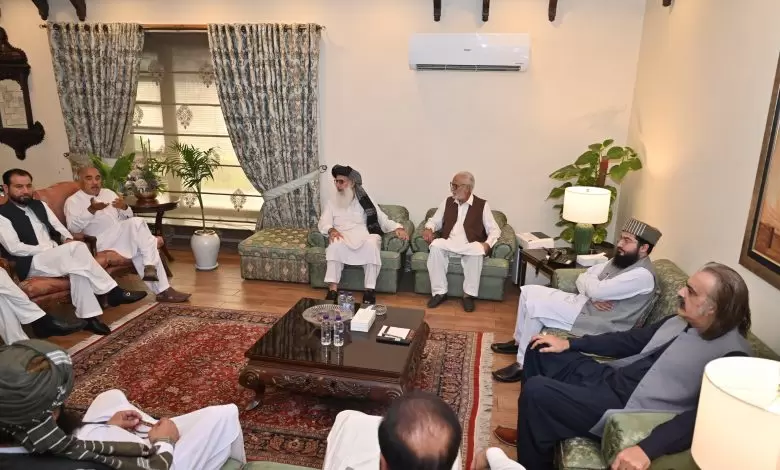
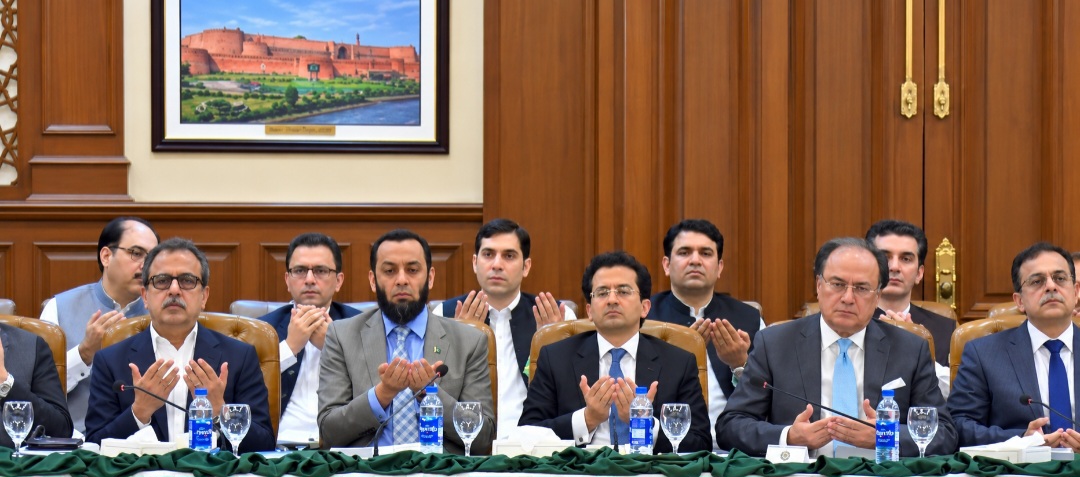
An All Parties Conference (APC) was convened in Peshawar under the leadership of Khyber Pakhtunkhwa Chief Minister Ali Amin Gandapur, drawing participation from cabinet members, lawmakers, representatives of various political parties, business leaders, and religious scholars.
The purpose of the conference was to discuss the province's overall security situation, potential military operations, federal-provincial matters, resource distribution, border security, and conditions in the merged tribal districts, with the aim of developing a unified action plan.
During his address, Chief Minister Gandapur expressed gratitude to all political leaders who participated and stated that the doors remain open for parties that chose not to attend. “This is a time to set aside political differences and unite for the collective interests of Khyber Pakhtunkhwa,” he said.
Stance on Operations and Security
The APC unanimously agreed not to allow any new military operations in the province. Gandapur emphasized that both security forces and civilians have suffered due to past operations and said, “This cycle must stop.”
He called for an end to drone strikes against militants, stating that innocent civilians often become collateral damage. Gandapur also stressed that the province has no room for so-called “good Taliban,” and urged for a unified policy treating all militants alike without distinction between “good” and “bad” Taliban.
Merged Districts, Borders, and Talks
Regarding the merged tribal districts, Gandapur said local youth from relevant tribes are being recruited to help maintain peace at the grassroots level. He asserted that border security is the responsibility of the federal government: “Let them secure the borders; we’ll handle what’s inside.”
He further advocated for the involvement of local jirgas not only to maintain peace in the tribal belt but also as a traditional and effective channel for dialogue with Afghanistan. Gandapur questioned the legality and legitimacy of holding talks with Afghan authorities without Khyber Pakhtunkhwa’s representation. “Under what capacity is Ishaq Dar discussing Khyber Pakhtunkhwa affairs with Afghanistan?” he asked.
NFC Award, Resources, and Provincial Autonomy
The APC also extensively debated the National Finance Commission (NFC) Award, outstanding dues from the federal government, mineral resource rights, and tax-related concerns. Gandapur asserted that the NFC award is a constitutional right of the province and demanded the immediate clearance of dues.
“Our minerals belong to us and will remain ours,” he stated, adding that federal taxes would not be accepted in the former FATA and PATA regions. He warned that federal forces will not be allowed to operate in the province without permission and stressed the need to respect provincial autonomy.
Unified Strategy and Formation of Jirgas
The conference resolved to establish jirgas at the district level, consisting of parliamentarians, which will be followed by a grand jirga to pave the way for peace through political and tribal consensus.
Participants were also briefed on the provincial government’s efforts and initiatives related to law and order.
Political Participation
Notable attendees included PTI’s Barrister Gohar, Opposition Leader Omar Ayub, Jamaat-e-Islami’s Professor Ibrahim, Hashim Babar of the Qaumi Watan Party, and JUI-S leader Abdul Haq Thani, among others.
.jpeg)
.png)
1.jpeg)
Comments
No comments yet. Be the first 🙂