



Every year on June 21, the world observes a special day. Many people call it the longest day of the year. This raises an important question: why is June 21 called the longest day? Does the Sun actually become larger on this day, or does something change on Earth?
The reality is that the Sun does not become bigger. Instead, the duration of daylight is the longest during the entire year. That is why June 21 is known as the longest day of the year.
In fact, the Earth continuously revolves around the Sun while also rotating on its own axis. A special feature of Earth is that it is not perfectly straight; it is tilted on its axis. This tilt is the main reason behind changes in day, night, and seasons.
As the Earth orbits the Sun, different parts of it receive varying amounts of sunlight. During one part of the year, the Northern Hemisphere tilts more toward the Sun. This situation occurs around the month of June.
Around June 21, the northern part of the Earth is tilted most toward the Sun, which causes sunlight to fall on this region for a longer period of time.
Pakistan also lies in this Northern Hemisphere, so on June 21, the length of the day is the longest of the year here as well. On this day, the Sun rises earlier than usual and sets later in the evening. As a result, we receive sunlight for a longer duration, making the day feel longer.
Also Read : “Not an Isolated Act” — Ramesh Kumar Demands Wider Investigation Into Mardan Killing
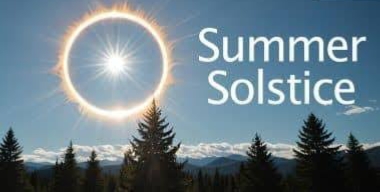
It is important to remember that the Sun does not physically become larger on June 21. It remains the same throughout the year. The only difference is that due to Earth’s movement and tilt, the Sun appears in the sky for a longer time.
After June 21, days gradually start becoming shorter. At first, this change is very slight, so it is not immediately noticeable. But as time passes, the Sun begins to set earlier and the night duration increases.
Interestingly, after June 21, days do not continue to get longer; instead, they slowly start to shorten. This change continues for several months until winter arrives, when nights become longer and days become shorter. This cycle of nature continues consistently.
According to science, there are several reasons why June 21 is called the longest day of the year.
The first reason is that on this day, the Sun remains visible for the longest time. The duration from sunrise to sunset is greater than any other day of the year.
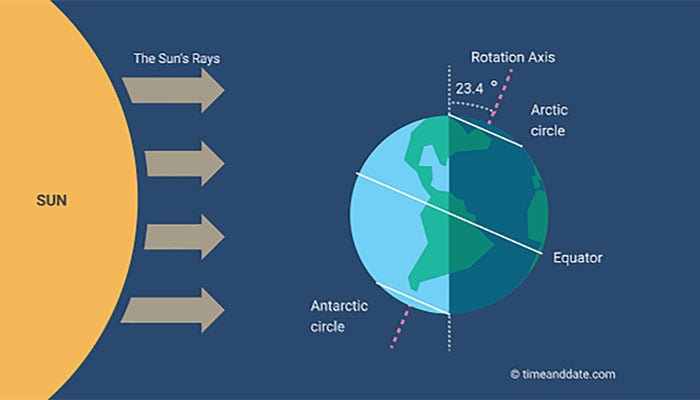
The second reason is that sunlight falls on the Northern Hemisphere for a longer time, increasing the overall daylight duration.
The third reason is Earth’s tilt. This tilt changes the duration of sunlight during different times of the year. Without this tilt, there would not be such significant differences between day and night lengths.
The fourth reason is that after June 21, a new phase of seasonal change begins. Although summer continues, the gradual shortening of days starts, eventually leading toward winter.
Now, does June 21 represent the longest day everywhere in the world? The answer is no.
June 21 is not the longest day across the entire world. It is the longest day in the Northern Hemisphere, but in the Southern Hemisphere, the opposite happens. There, days are shorter and nights are longer at the same time.
For example, in Pakistan, India, and other northern countries, days are longer in June, while in parts of the Southern Hemisphere, it is winter and days are relatively shorter.
An interesting point is that although June 21 has the longest day, it is not necessarily the hottest day. This is because Earth, air, and water take time to absorb heat from the Sun. That is why the hottest days in many regions are experienced in July or August, even though the longest day is in June.
There are also two times in a year when day and night are almost equal. This usually happens around March and September. After these days, seasonal changes also affect the length of day and night.
Similarly, in December, there is a day when the night is the longest and the day is the shortest. After that, days gradually start becoming longer again, continuing until June of the next year.
In summary, June 21 is called the longest day of the year because on this day the Sun remains in the sky for the longest period, making daylight duration the highest of the year. This is due to Earth’s axial tilt and its continuous revolution around the Sun.
After June 21, days slowly become shorter and nights longer. This is a beautiful, balanced, and fascinating system of nature that continues every year in the same way.
Note: This text is based on the author’s personal opinion, and the institution may not necessarily agree with it.
.jpeg)
.png)
1.jpeg)




Comments
No comments yet. Be the first 🙂