


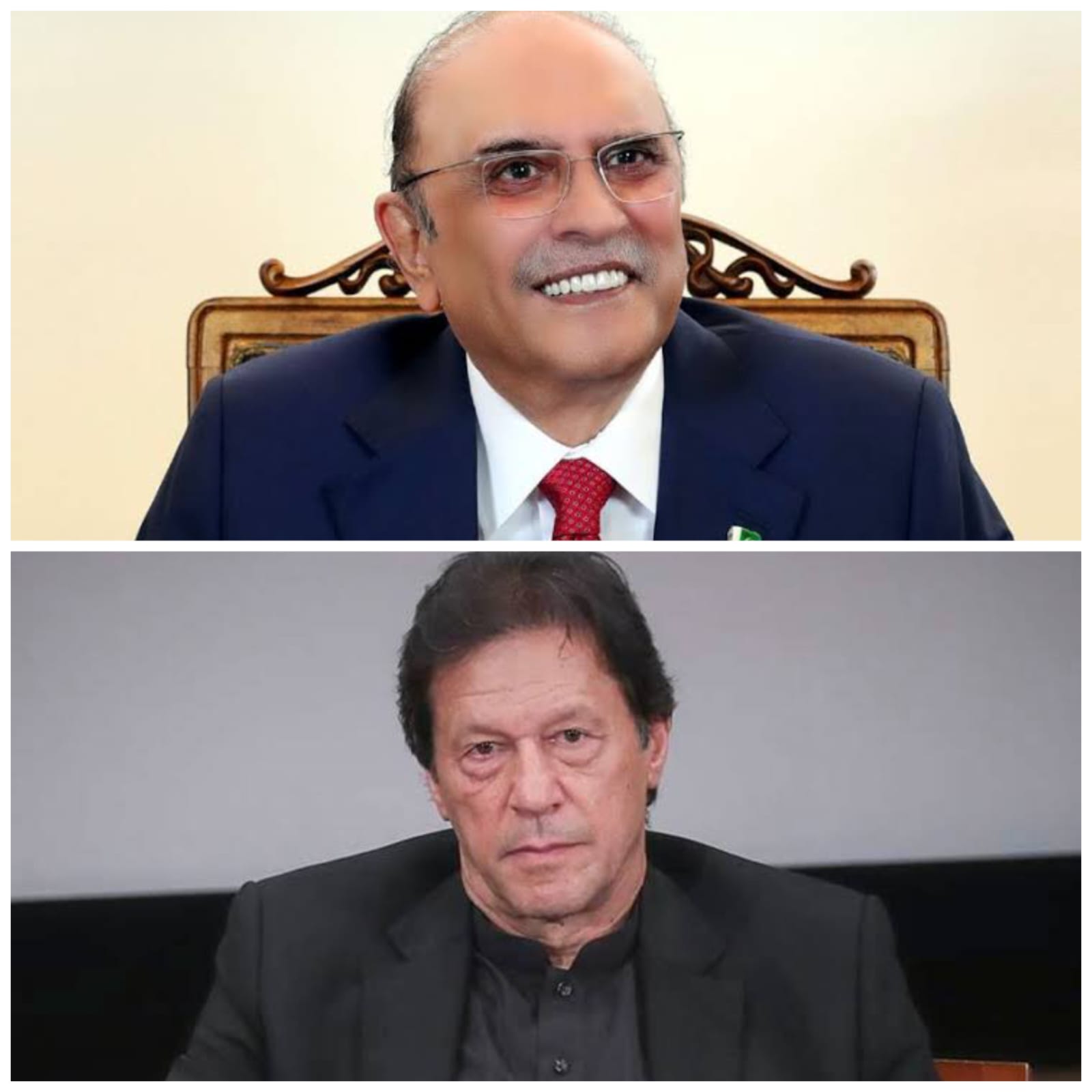
Pakistan’s political arena has never been unfamiliar with battles of narratives. At times, slogans like “Democracy is the best revenge” echo through the air; at others, fiery declarations such as “I will make them cry” dominate the discourse.
Recently, when reports emerged about Imran Khan’s deteriorating health in jail, President Asif Ali Zardari addressed the PTI founder, saying: “Prison is endured like a man; crying like a woman achieves nothing.”
This statement is not merely a political remark — it also reflects our broader political and social attitudes. There is no denying that Asif Ali Zardari himself spent nearly eleven years in prison.
He faced serious charges ranging from corruption to murder, endured prolonged solitary confinement, and experienced political victimization.
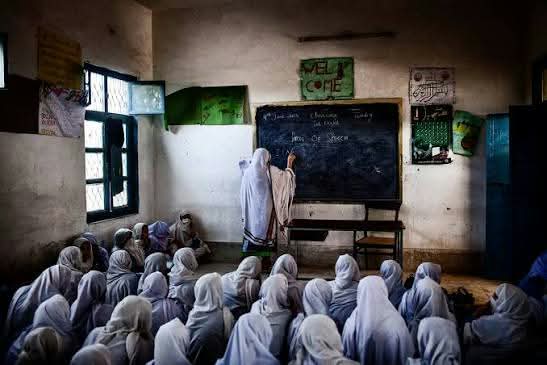
Also Read : Swabi SHO’s Orders on Women Raise Concerns Over Rights and Freedom
Perhaps his comment was rooted in memories of that past. It may have been an attempt to convey that in politics, taking major decisions and confronting powerful quarters often paves the way to prison — and that such trials should be borne with resilience rather than lament.
However, there is another — more sensitive and profound — dimension to this statement. It exposes the deeply entrenched patriarchal mindset in our society, where weakness is associated with women.
As though crying, expressing pain, or demanding basic rights are somehow “feminine” acts. But is that truly the case? Does human suffering distinguish between genders?
Supporters of Imran Khan argue that the conditions in which he is being held violate basic human rights, and that demanding facilities is every citizen’s right.
They contend that Asif Zardari himself benefited from relief after becoming part of the system, and therefore such harsh remarks do not suit him.
Zardari also referred to his sister, Faryal Talpur, who was sent to jail on the night of Eid. This reminder appeared to be a response to allegations that the current government is engaged in political revenge.
According to him, political victimization was also inflicted upon his family — women were not spared. In his view, this tradition did not originate during his tenure but flourished under his opponents.
Yet the fundamental question remains: Is going to jail an inevitable test in politics? And is demanding basic facilities in prison a sign of weakness — or a rightful claim?
Asif Ali Zardari is often called the “King of Reconciliation,” yet statements like these reveal how deep the political divide has become — no longer merely ideological, but personal and sarcastic.
On one hand, there is talk of unity and reconciliation; on the other, remarks that further inflame political tensions.
It is equally troubling that vulnerable communities are increasingly used as tools in political battles.
Outside Adiala Jail, a journalist asked Shafi Jan, coordinator to Sohail Afridi, about his alleged association with a transgender person, Gul Chahat — clearly an attempt at humiliation.
Gul Chahat’s response was piercing: “What kind of journalism is this — that you target someone by using a transgender person as a tool? Why is our gender used to demean others?” This question is not just personal; it is a mirror held up to society.
In our culture, when a man is to be portrayed as weak, phrases like “wear bangles,” “don’t cry like a woman,” or “he turned out to be a coward” are casually used.
What a profound contradiction it is: the very woman without whom human existence is impossible — who stands firm both at home and in the public sphere — is labeled as a symbol of weakness.
In reality, women often endure greater physical and social hardships than men, yet are persistently regarded as inferior.
Pakistan’s history is filled with courageous women who demonstrated extraordinary resilience. Benazir Bhutto spent the prime years of her youth in solitary confinement and harsh prisons.
Whether facing the scorching heat of Sukkur Jail or the bitterness of political persecution, she stood firm like a rock and was elected Prime Minister twice.
During the era of dictatorship, when many male leaders went into hiding, Nusrat Bhutto took to the streets, endured baton charges, and became a symbol of resistance.
Therefore, enduring imprisonment or hardship is not tied to any gender — it is a matter of courage, conviction, and resilience. Today, our politics appears trapped in personal grudges and ego battles.
When leaders cross moral boundaries to belittle one another, the damage is not limited to a single party but affects the entire nation.
The public is already burdened by inflation, unemployment, and economic hardship, yet political energy continues to be consumed in narrative wars.
One must ask: if the same time, energy, and resources were devoted to rescuing the sinking economy, providing relief to citizens, and strengthening national unity, how far could Pakistan progress?
Above all, one fundamental principle stands clear: discourse must be free from gender discrimination. Political disagreement should not become a means of personal humiliation or the denigration of any gender.
The true purpose of politics should be construction, not revenge. Unity, not ego.
And above all — human dignity must remain protected, beyond the boundaries of gender.
Note: This article reflects the personal opinion of the author and does not necessarily represent the views of the organization.
.jpeg)
.png)
1.jpeg)

Comments
No comments yet. Be the first 🙂