


When poverty knocks on a household’s door, it doesn’t just change the lives of adults — it also engulfs the childhood of children.
Those tiny hands, meant to hold books and play, begin carrying the burden of responsibilities far too early. These children grow up before their time, and the dreams that are every child’s right slowly begin to fade from their eyes.
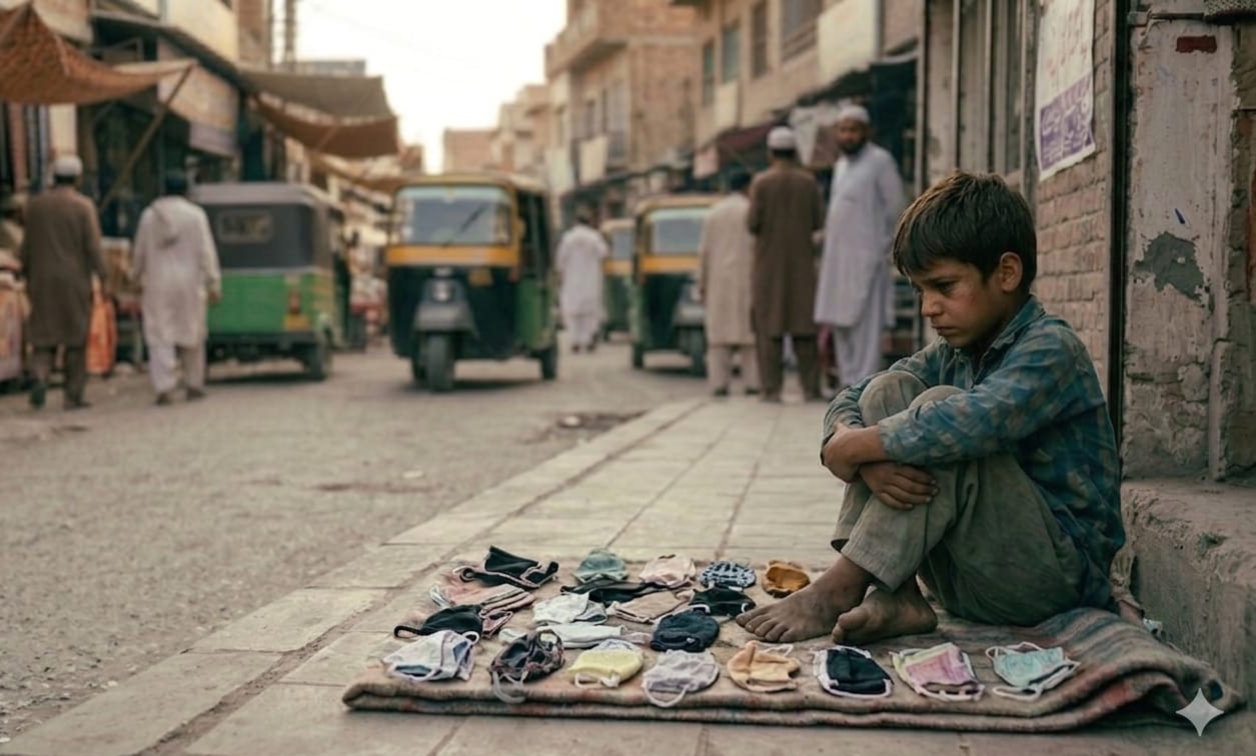
In our society, it is common to see such children every day — on footpaths, at BRT stops, traffic signals, and outside mosques — selling masks, tissues, or small items. Many of them are between 7 and 10 years old.
Seeing these innocent faces saddens the heart, but what is more troubling is when some of them turn their helplessness into a form of “performance.”
Also Read : “Nation Expects Action”: Afridi Calls on Lawyers to Rise Again
This performance often involves deliberately scattering their masks on the ground, sitting with their heads on their knees as if crying, or pretending that something wrong has happened to them. Moved by sympathy, people pick up their masks, buy something, or give them money without even purchasing anything.
At first, this comes from a place of human compassion, but over time, that same sympathy becomes an easy pathway for some children.
The issue is not just a few rupees — it is the mindset that gradually forms, teaching them that earning through pity is easier than through effort. When a child learns at a young age that emotions can be used to gain money, it starts becoming part of their personality.
On social media, several such incidents have surfaced where the same child is seen in different places, repeating the same act of crying or appearing helpless. People initially show sympathy, but when the truth emerges, their trust is broken. The biggest loss is that they then stop believing even those children who are genuinely in need.
These children leave home early in the morning and spend their entire day on the streets, exposed to dust, heat, and pollution. Their bodies grow tired, their skin is affected, mental stress increases, and they drift further away from education.
Constantly depending on sympathy or extending their hands for help also damages their sense of dignity. Over time, they may develop feelings of deprivation, irritability, and psychological stress.
An even more dangerous aspect is their upbringing. Streets are not just places of work — they expose children to all kinds of people, language, and behavior. A child who witnesses this daily unknowingly absorbs it into their personality.
It is also true that not every child selling masks is acting. Many are genuinely compelled, stepping out to feed their families and working with dignity. However, because of a few who adopt questionable methods, even the truly deserving are viewed with suspicion.
This growing social indifference eventually turns into a larger problem.
Child labor is a harsh reality. Laws prohibit it, but poverty often proves stronger than the law. In such circumstances, parents need to understand that temporary earnings cannot secure a child’s future. A few hundred rupees may light today’s stove, but they cannot build tomorrow’s life.
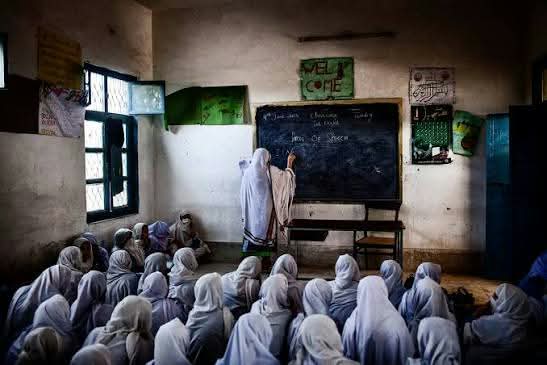
Education is the only path that can break the cycle of poverty. Basic education in government schools is nearly free, and even with limited resources — old books, simple clothing, or minimal facilities — it is still possible to study. What matters more than resources is mindset and priority.
I have seen many children who attend school in the morning and work for a few hours afterward. These children prove that poverty may be an obstacle, but it does not close the door to education.
In the end, the message is simple: parents should place not temporary earnings but a secure future in their children’s hands. Because when childhood is spent on the streets, adulthood is often spent in regret. Children do not need pity — they need education and the opportunity for a better future.
Note: This piece reflects the author’s personal opinion and does not necessarily represent the views of the organization.
.jpeg)
.png)
1.jpeg)



Comments
No comments yet. Be the first 🙂