


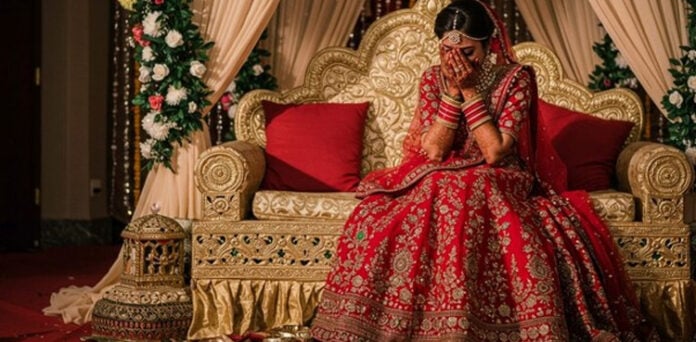
Marriage is often described in our society as the beginning of a new life. In reality, however, it is much more than that. It is not simply the start of a new chapter—it is the transformation of an entire world.
A young woman who has spent nearly 20 or 21 years of her life in her parents' home, surrounded by familiar faces, routines, memories, and the comfort of her own room, suddenly leaves everything behind to step into a completely new household.
There, she is welcomed by unfamiliar faces, new relationships, different traditions, new responsibilities, and an entirely different way of life. In doing so, she is not merely changing her home; she is leaving behind the daily routines, emotional bonds, and countless memories that have shaped her life.
In such circumstances, if only a few days after the wedding someone calls her parents and says, "Your daughter is not settling in here. Please come and take her back," those words are far more than a simple complaint. They place an emotional burden on everyone involved—a burden that is difficult to describe.
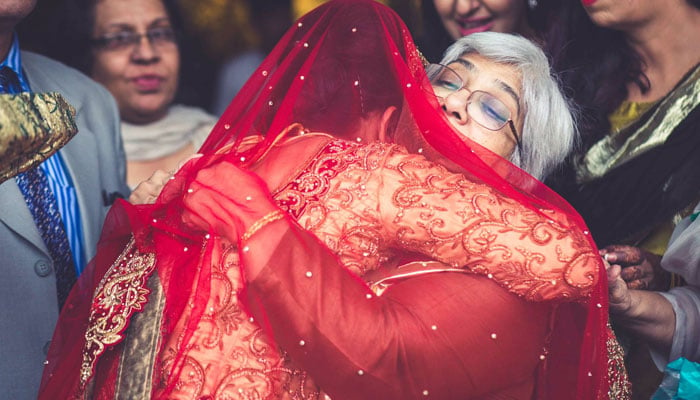
On one hand, the bride is already struggling to process her emotions. On the other, her parents are overwhelmed with worry, wondering whether their daughter is truly happy or facing difficulties they know nothing about.
The question is: How can anyone be expected to feel at home so quickly?
We all know that even moving to a different city takes time. Whether it is a new job, a new college, or a new neighborhood, every major change requires patience, adjustment, and emotional resilience.
Also Read : Dusmal: The Fabric That Binds Hearts, Families and Generations
A newly married woman does not simply change her city or house—she entrusts her entire life to a new environment. If she does not immediately feel at home, should that really be considered unusual or unacceptable?
Unfortunately, our society often misinterprets this completely natural emotional state as a flaw. If she remains quiet, people say, "She is always sad." If she misses her parents, they remark, "She still hasn't moved on from her parents' home." If she spends some time alone, they quickly conclude, "She doesn't like it here." In reality, none of these assumptions reflects what she is truly experiencing.
A new bride is simply trying to understand her emotions while adjusting to a completely different life. She wants to respect her new family, earn their trust, and become a valued part of the household. At the same time, she naturally misses her parents, siblings, her room, and the home where she spent more than two decades of her life.
These feelings are not contradictory—they are deeply human. Almost every newly married woman goes through them.
Sadly, instead of understanding this emotional transition, some families rush to complain to the bride's parents. A single phone call can multiply the parents' anxiety. They begin to fear that perhaps their daughter is unhappy, that she has made a mistake, or that she may never adjust to her new home.
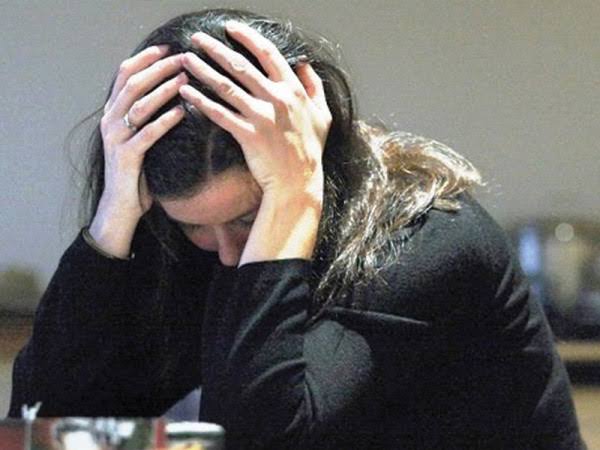
At such a delicate stage, what a new bride truly needs is encouragement, reassurance, and the feeling that she is not alone in this journey—not complaints that deepen everyone's distress.
Imagine yourself in her place for a moment. If a new member joined your household, would you expect them to understand every family member's personality, adopt every household routine, and feel completely comfortable from the very first day?
Of course not.
Then why do we expect this from a newly married woman?
The truth is that helping someone feel at home requires more than just time—it also depends on how they are treated. When a bride receives kindness, respect, acceptance, trust, and patience, she gradually begins to see that house as her own. But if her emotions are constantly questioned or her silence is misunderstood, adjusting becomes even more difficult.

It is equally important to remember that missing one's parents does not mean rejecting one's new family. Missing the people with whom she spent the first 20 or 21 years of her life is not a weakness or a fault—it is a natural expression of love and emotional attachment.
So, the next time someone says, "She isn't settling in," pause for a moment and ask yourself: If you had to leave behind the world you had known for more than two decades and begin life among strangers, would you truly feel at home within just a few days?
The answer would most likely be no.
So give a new bride time. Give her trust. Give her respect. Above all, give her a sense of belonging.
Because hearts cannot be forced to settle—they find peace through love, patience, and compassionate treatment. When a woman is genuinely accepted as one of the family, the house that once felt unfamiliar gradually becomes her own home. And that, ultimately, is the true beauty of every new relationship.
Note: This article reflects the personal opinion of the author and does not necessarily represent the views of the organization.
.jpeg)
.png)
1.jpeg)



2 Comments
Excellent article! I really enjoyed reading it. The information is well-organized, insightful, and easy to understand. Thank you for sharing your knowledge and taking the time to create such valuable content. Looking forward to reading more of your posts. Keep up the great work!
Here's a professional and appreciative comment you can post on a blog:
> Excellent article! I really enjoyed reading it. The information is well-organized, insightful, and easy to understand. Thank you for sharing your knowledge and taking the time to create such valuable content. Looking forward to reading more of your posts. Keep up the great work!