


Although 60-year-old Rukhsana Bibi, a resident of Nawa village in Nawagai Tehsil of Bajaur, spent half of her life doing household chores and fetching water for a family of ten, she always dreamed that her five-year-old granddaughter would not have to live the same life she did. Unfortunately, that dream did not come true.
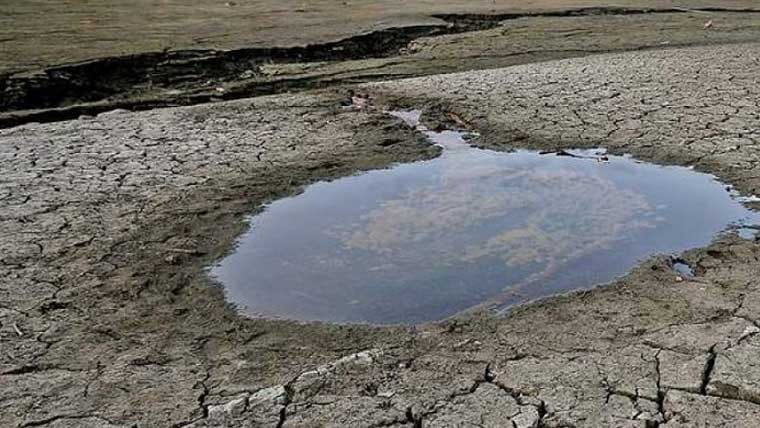
In recent years, groundwater levels in Bajaur have declined significantly, particularly in 2020 when they suddenly dropped by more than 30 feet. This dramatic decline severely affected Rukhsana Bibi’s life.
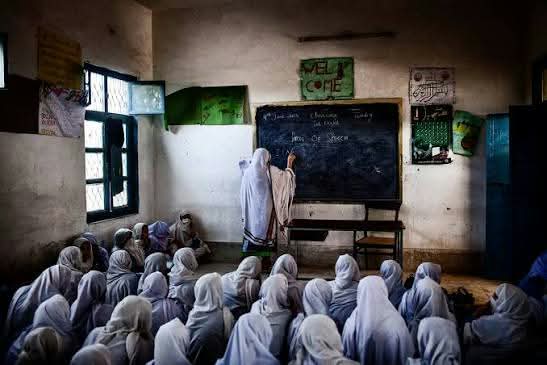
The shortage of groundwater has impacted the entire community, but it has also turned Rukhsana Bibi’s dream into an almost impossible reality. Instead of attending school, her granddaughter now spends her days collecting and carrying water alongside her mother and grandmother to meet the needs of the family, livestock, and household vegetable gardens.
Also Read : ‘Black Magic Is a Grave Crime’: Peshawar HC Affirms Life Term
Although the spring is not very far away, carrying 20 to 30 liters of water on one’s head turns a ten-minute journey into an hours-long task. These hours multiply when women have to make four or five trips a day.
Rukhsana Bibi explained:
> “We have a large family, including men, children, livestock, and vegetable gardens. All of them require water. Because of these needs, we have to make four or five trips to the spring every day, yet neither the distance nor the workload decreases.”
Rukhsana Bibi dreams of seeing her granddaughter attend school, get an education, and enjoy a better life. However, climate change has played a major role in shattering those hopes.
> “The severe shortage of water has greatly increased our difficulties,” she said.
The area where Rukhsana Bibi lives faces extreme water scarcity. Together with her daughter-in-law and granddaughter, she fetches water daily from a local spring. Every morning she wakes up hoping that one day water will be available at home, but instead the challenge of obtaining water continues to grow.
She recalled that when she was younger, she had the strength to carry water, but age and years of labor have taken a toll on her health.
> “Now I suffer from pain in my legs, head, and back, which makes carrying water much more difficult than before.”
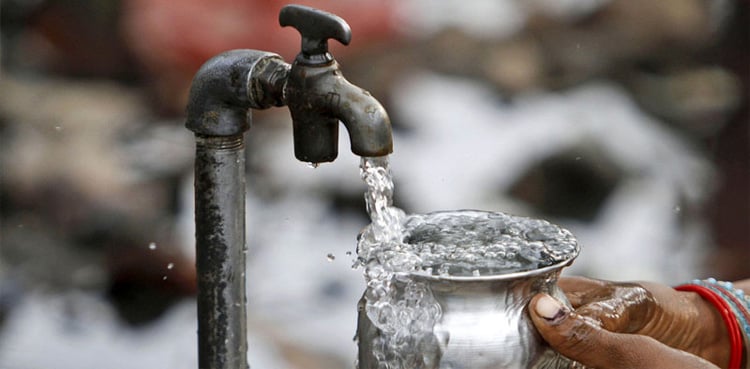
Rukhsana Bibi added that while the world has advanced with new technologies and modern conveniences, she has never had access to tap water or even a hand pump in her home during her sixty years of life.
According to documents submitted by Pakistan’s Ministry of Water Resources to the Senate in 2021, groundwater levels are rapidly declining in 28 districts of Khyber Pakhtunkhwa. In five of those districts, the situation has reached a critical level. Over the past decade, groundwater levels have fallen between 25 and 74 feet.
The most affected district is Khyber, where groundwater has dropped by 74 feet. Haripur ranks second with a decline of 62 feet, followed by Mohmand at 57 feet. Bajaur ranks fourth and Kurram fifth, where groundwater levels have fallen by approximately 26 feet.
At the United Nations Water Conference held on March 24, 2023, it was reported that between two and three billion people worldwide are affected by water scarcity. In Pakistan, groundwater reserves have declined by 5 to 66 percent over the past six years. In some parts of Khyber Pakhtunkhwa, one-third of groundwater resources have already disappeared, while in others they are close to depletion.
Nawa is a beautiful and lush area of Bajaur, but its women suffer greatly due to water shortages. The village is about three and a half hours from Peshawar. According to the Village Council of Nawa, the population is approximately 10,000 people, with women making up less than half.
The area lacks colleges for both boys and girls, has only one primary school for girls, and suffers from inadequate healthcare facilities.
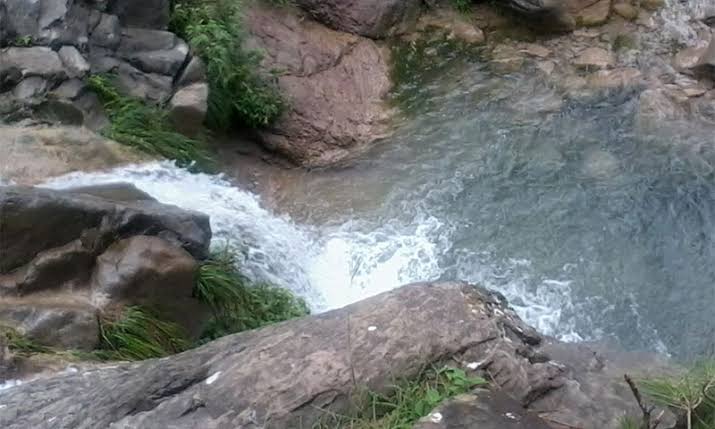
Natural springs once contributed to Nawa’s beauty, but climate change has caused four of these springs to dry up. Today, only one spring remains, from which women collect water on their heads. Others rely on wells, while wealthier residents have drilled boreholes and use solar-powered systems to extract groundwater.
Tahir, a local well digger, explained that in the past a well typically needed to be dug to a depth of around 200 feet. Today, wells often require digging up to 300 feet before water is found. As a result, both the cost and the time required to construct a well have doubled.
Another area of Nawagai Tehsil, Karkani, is similarly beautiful and green. However, women and girls there spend much of their lives securing water for their families. The area lacks basic services such as education, healthcare, and reliable water access.
Karkani has two primary schools for girls and one Basic Health Unit (BHU), while electricity is almost nonexistent.
During the Billion Tree Tsunami project, large numbers of eucalyptus trees were planted in Karkani. Since eucalyptus trees consume significant amounts of water and the area lacks natural springs, residents depend heavily on groundwater.
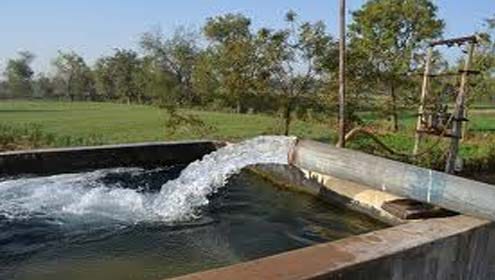
Women in Karkani obtain water from wells and hand pumps. Poor households often depend on wealthier families for access to water. Thirty-year-old Kulsoom explained that affluent residents use solar-powered systems to extract groundwater from wells.
She noted that digging a well costs between one and 1.2 million Pakistani rupees, forcing four or five households to share a single well. Poor women often have to fetch water from the homes of others.
Kulsoom described this as a difficult and humiliating process.
> “Sometimes people make excuses and tell us to come back later because they have guests. We are constantly worried about water.”
She added that the stress affects her mental health.
> “I cannot sleep. Small things make me angry. My heart feels heavy. When clothes need washing, even more water is required, and the entire day is spent trying to secure it.”
According to Kulsoom, disputes over water are common, and women often bear the consequences.
> “We are afraid of what the future holds. If our lives remain limited to fetching water, how will we find time for our children, our homes, and other responsibilities?”
Former Member of the Provincial Assembly Sirajuddin Khan claimed that during his tenure he tried to improve access to water by helping install tube wells in Karkani through community support and personal funding.
Climate activist Dr. Saadia Khalid explained that climate change has intensified drought conditions in Bajaur. Rainfall patterns have changed significantly. Previously, rain fell gradually, helping replenish groundwater. Now, heavy rainfall often occurs within just a few hours, causing floods rather than recharging aquifers.
She further noted that monsoon rains in Bajaur have become rare and that 85 percent of crops were damaged by drought during 2022 and 2023. As a result, the region faces not only water shortages but also the threat of food insecurity.
To address climate change impacts, the Billion Tree Tsunami Project was launched in 2015. By 2018, approximately 75 million trees had been planted, of which 23 percent were eucalyptus. According to the Forest Department in Bajaur, more than 100,000 trees were planted in the district, including nearly 10,000 eucalyptus trees.
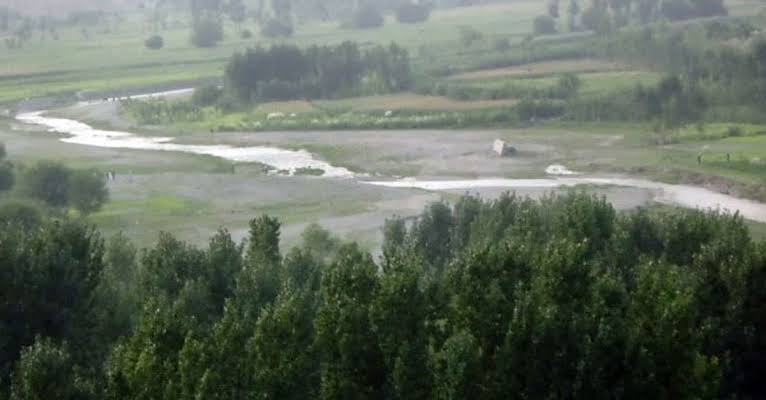
Environmental scientist Zakirullah Jan, a Water and Soil Expert with the Khyber Pakhtunkhwa Research and Development Department, stated that eucalyptus trees have contributed to declining groundwater levels because of their high water consumption.
> “A single eucalyptus tree can absorb around 56 liters of water per day from the soil.”
He stressed that future afforestation efforts should carefully consider local climatic conditions and the environmental impact of introduced species. He also recommended continuous monitoring of both surface and groundwater resources.
Bajaur has the largest population among the former tribal districts. According to the 2023 census, its population is approximately 1.25 million. Increasing population growth and urban development are putting additional pressure on groundwater resources.
Human rights activist Shad Begum emphasized that climate change disproportionately affects women. She called on government and non-government organizations to educate the public about water conservation and responsible water use.
Clinical psychologist Hafiza Zamar Malik explained that water scarcity contributes to depression among women.
> “The government must take the water crisis seriously. Until the water issue is resolved, it will be difficult for many women to overcome depression.”
Environmental and hydrogeology expert Tariq Shah noted that Pakistan ranks third globally in groundwater extraction. In Bajaur, increasing numbers of boreholes are being drilled due to water shortages, which further accelerates groundwater depletion.
He explained that agriculture once depended largely on rainfall, but changing climate patterns have reduced rainfall and increased its intensity, causing much of the water to run off instead of replenishing groundwater reserves.
To protect groundwater resources, Tariq Shah recommended storing rainwater in ponds and small dams for agricultural use, thereby reducing dependence on freshwater groundwater supplies.
.jpeg)
.png)
1.jpeg)



Comments
No comments yet. Be the first 🙂